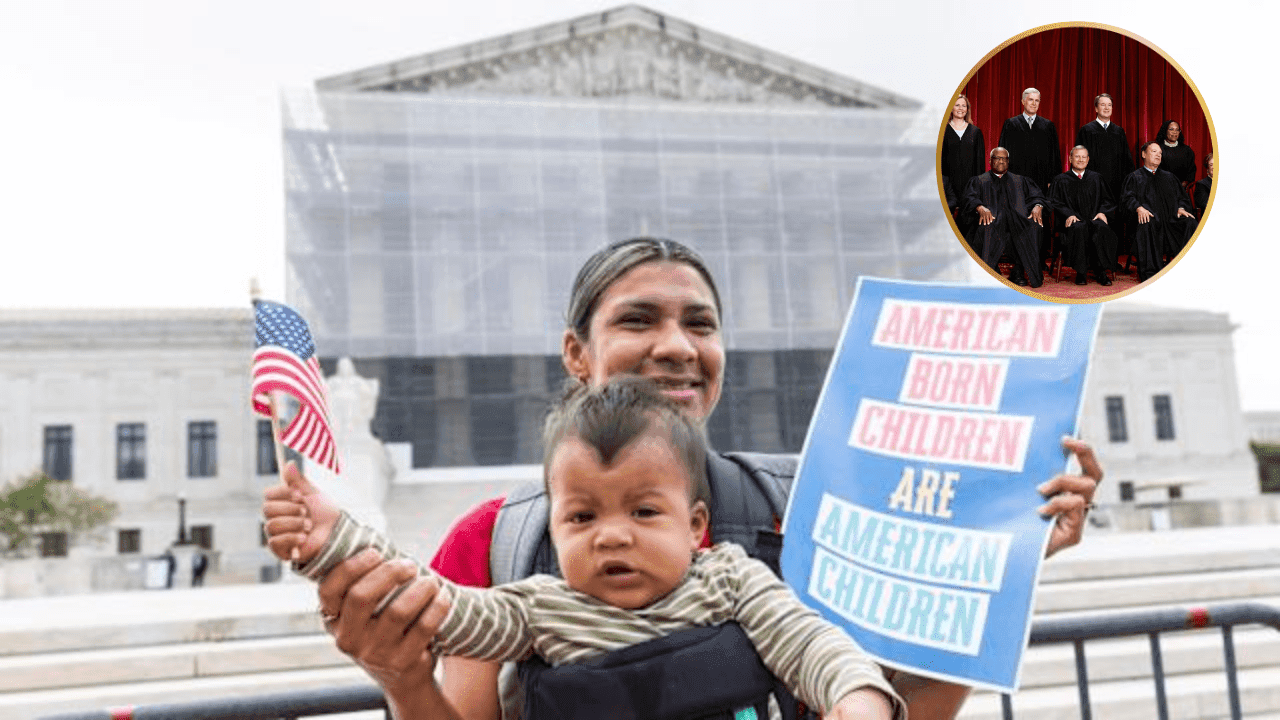
In a dramatic twist of legal intricacies and constitutional implications, the US Supreme Court finds itself at a crossroads over the issue of judges’ power in a pivotal citizenship case. On May 15, 2025, the court was a site of intense deliberation, where justices showed deep divides over an executive order from President Donald Trump.
This order, issued in January of the same year, aimed to prevent children born on US soil from obtaining citizenship if their parents were not citizens or permanent residents. This proposal starkly opposed the 14th Amendment, which unequivocally grants citizenship to ‘all persons born or naturalized in the United States.’ The courtroom was a stage for heated arguments, centered around whether this executive order exceeded presidential power and if federal judges should have the authority to issue nationwide injunctions.
Historically, the power of judges to issue broad, national injunctions has served as a critical check on executive actions deemed unconstitutional. However, critics argue this power has increasingly tied the hands of presidents, citing the surge in such injunctions during the Trump administration as problematic. This added layer of complexity has left the Supreme Court grappling with a fundamental question: Should judges possess the authority to block policies nationwide, or should their power be limited to the plaintiffs directly involved in cases? Here, the court’s decisions could potentially redefine the balance of power between the judiciary and the executive, particularly concerning immigration policies a contentious subject under Trump’s leadership.
Among the justices, opinions are polarized. Justice Neil Gorsuch, a member of the conservative majority, labeled the issue a ‘question of great significance.’ His stance reflects the court’s cautious approach toward nationwide injunctions, a view shared by the conservative bloc, including three justices appointed by Trump himself. As the Supreme Court deliberated, crowds gathered outside, some advocating for birthright citizenship while others supported Trump’s order. This demonstration of public interest underscores the broader societal implications of the court’s pending decision.
The court’s ruling could affect millions, altering the lives of those denied citizenship and reshaping future policy decisions on immigration. The stakes are undeniably high, placing the Supreme Court at the heart of a national debate that may well determine the trajectory of American citizenship laws. Looking at historical parallels, the debate harks back to periods where judicial power and executive action were similarly tested. Notably, instances during Franklin D. Roosevelt’s administration when court-packing plans were introduced to overcome judicial opposition to New Deal laws resonate with today’s events.
As the nation awaits a verdict, the broader expectation is for a decision that maintains the delicate equilibrium between preserving constitutional rights and respecting presidential powers. The outcome, whatever its nature, promises to leave a lasting impact on the American judiciary and its role in moderating executive policy.