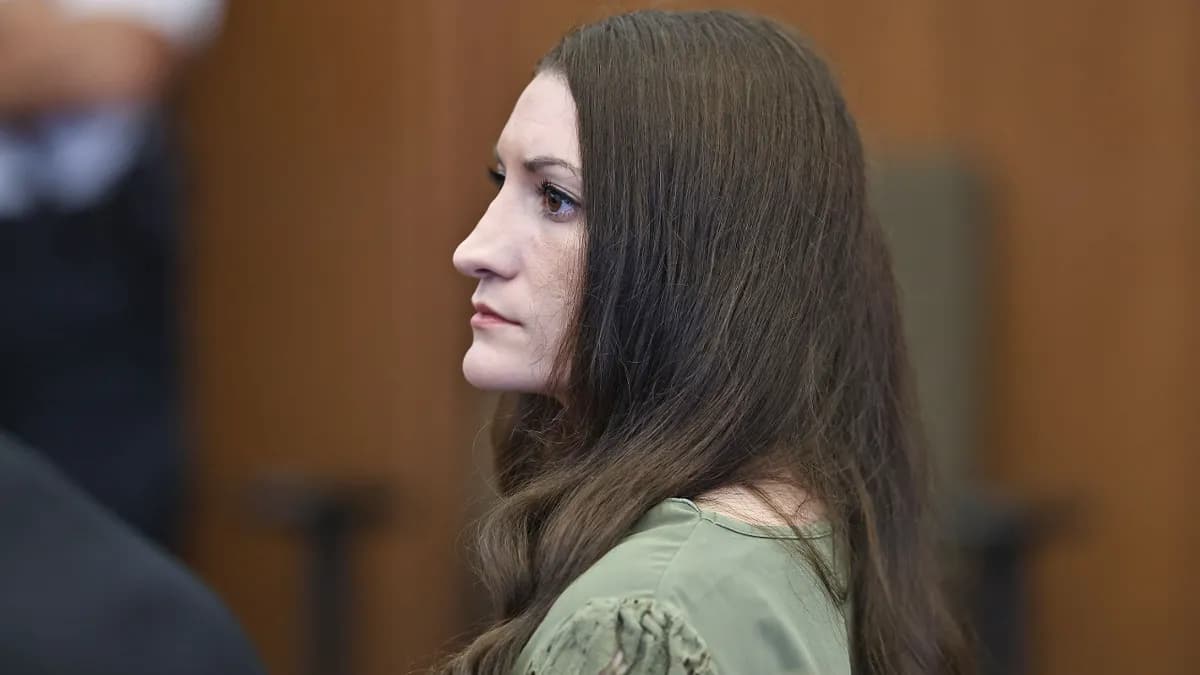
The Lindsay Clancy holdout juror says he remained convinced of her criminal responsibility, disputing fellow jurors’ accounts. His comments offer a competing explanation of deliberations that ended without a verdict in the Massachusetts mother’s murder trial.
Michael P. Desronvil said he believed the evidence supported a conviction, while the other 11 jurors ultimately favored finding Clancy not guilty by reason of insanity. Judge William Sullivan declared a mistrial on Sept. 4 after the jury failed to reach a unanimous decision.
The case concerns the deaths of Clancy’s three children: Cora, 5, Dawson, 3, and Callan, 8 months. Neither side disputed that she strangled them in 2023. The central question at trial was whether she was criminally responsible.

Holdout juror challenges account of reasonable doubt
In a statement reported by NewsNation, Desronvil rejected suggestions that he had acknowledged reasonable doubt but still refused to acquit.
“I didn’t have any doubts,” he said.
Desronvil said other jurors interrupted him when he tried to discuss possible explanations of the evidence. He maintained that the prosecution’s case convinced him Clancy understood her actions and had planned the killings.
His account conflicts with that of jury foreperson Ronni Carlson. In an earlier NBC10 Boston interview, Carlson said the holdout juror had admitted having reasonable doubt. The competing accounts do not establish precisely what each juror said throughout the private deliberations.

Why he favored a conviction
Ray Marcel, host of Fugitive TV, also discussed an hourlong phone conversation he said he had with Desronvil. Marcel told NewsNation that the juror placed particular weight on what he viewed as preparation before the killings, including Clancy sending her husband out on errands.
According to Marcel, Desronvil believed those actions showed that Clancy understood what she was doing. That was the juror’s interpretation of the evidence, rather than a finding reached by the jury.
Marcel also said Desronvil disputed the impression that he stood alone throughout deliberations. According to his account, eight jurors initially favored an insanity acquittal, two were undecided and another initially favored conviction before changing her position.
Those details come through Marcel’s description of the conversation. They should be distinguished from Desronvil’s statement and from other jurors’ recollections. NewsNation reported on the dispute and Marcel’s account.
Deadlock left the criminal case unresolved
The jury’s split resulted in neither a conviction nor an acquittal. The trial ended after seven days of deliberations, leaving the charges unresolved, according to the Associated Press.
The disagreement concerned criminal responsibility, not whether Clancy caused her children’s deaths. Her defense attributed the killings to postpartum psychosis, while prosecutors argued that she understood her actions.
Defense seeks acquittal after mistrial
On Sept. 10, defense attorney Kevin Reddington asked the judge to find Clancy not guilty by reason of insanity, arguing that prosecutors had presented insufficient evidence. An acquittal would prevent another trial, the Associated Press reported.
A hearing was scheduled for Sept. 29. The defense request is not a court ruling, and the jurors’ public comments do not resolve the charges against Clancy.