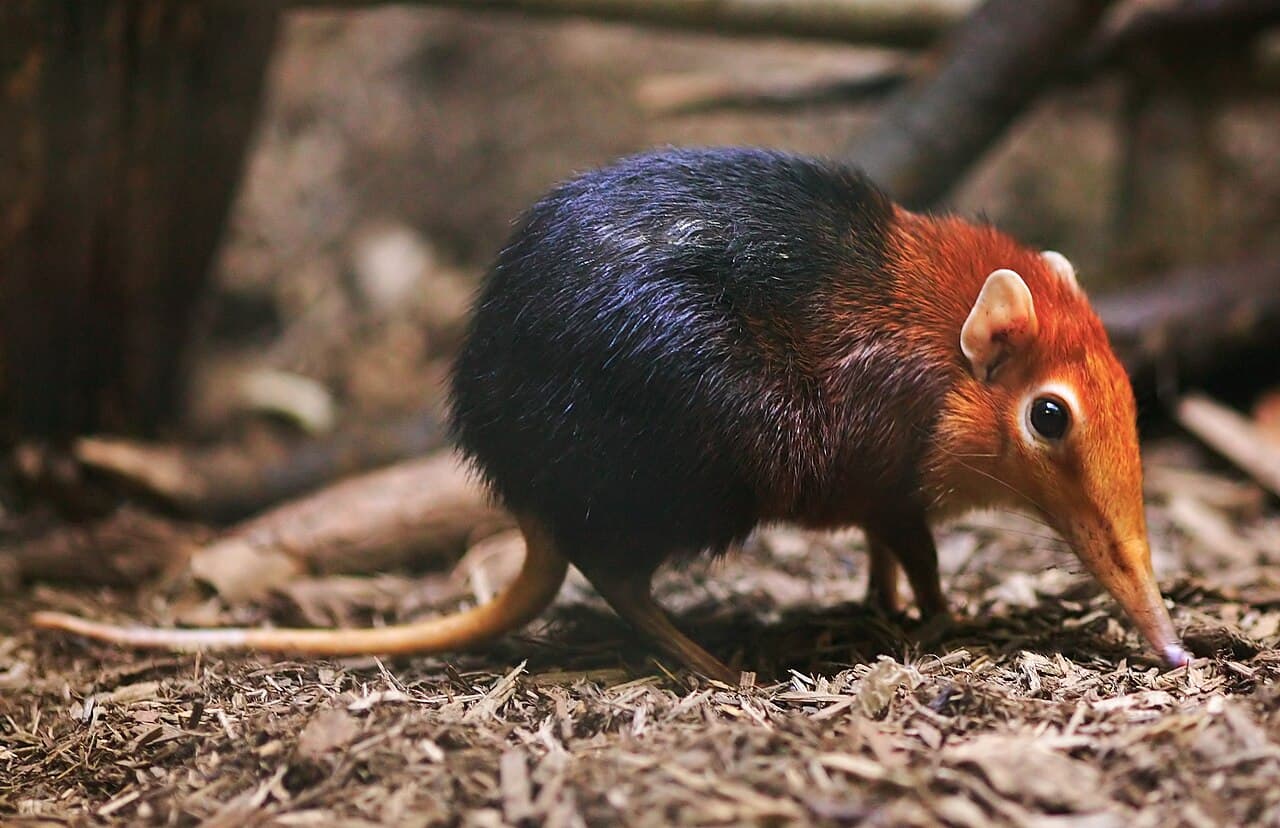
A black-and-rufous sengi moves through leaf litter with a long, flexible snout pointed toward its next meal. Its name once suggested a shrew with an elephant's nose. Its family history tells a much more surprising story.
This article focuses on Rhynchocyon petersi, the black-and-rufous sengi, a different species from the four-toed sengi already featured on Amazing Nature.
A two-tone hunter of the forest floor
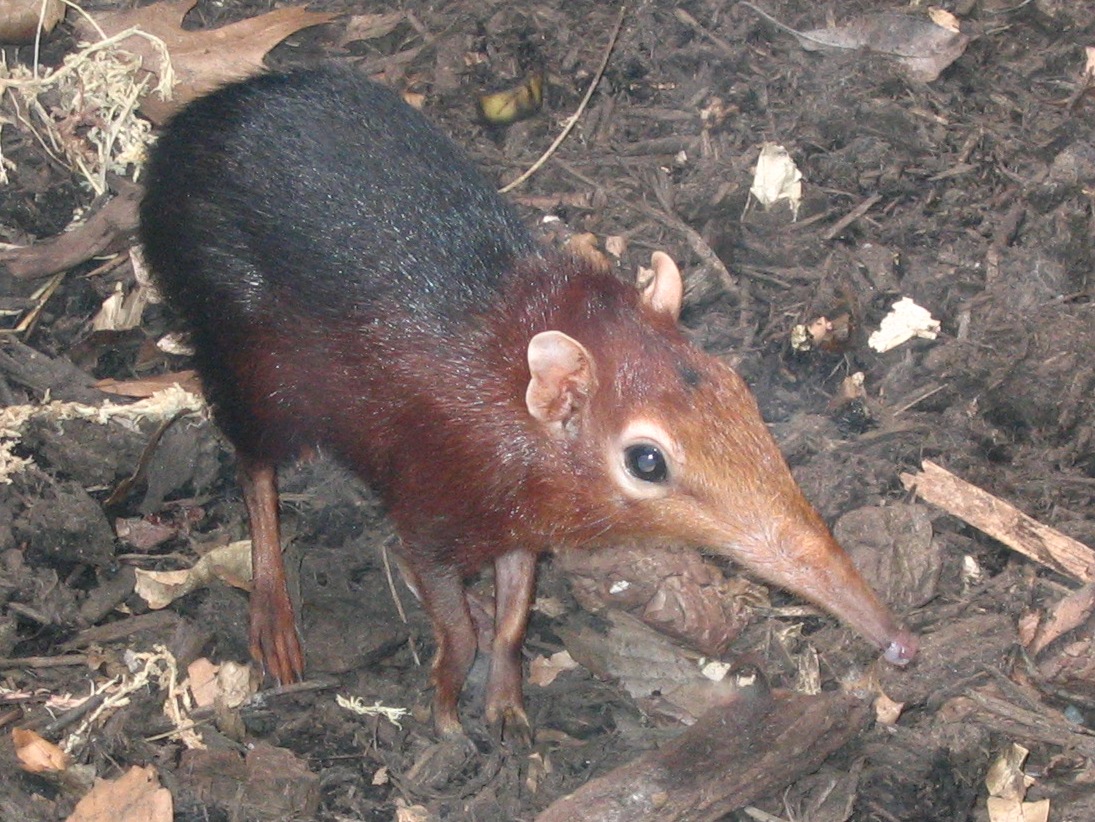
Reddish fur covers the head and front of the body, while the rear is dark. A pale ring around the eye adds another clear detail.
The Smithsonian's National Zoo places this species in southeastern Kenya and eastern Tanzania. Dense forest and shrubland provide cover for a small animal moving close to the ground.
The photographs show zoo animals, allowing a close look at a mammal that can be difficult to watch in thick vegetation.
A nose for small prey
The flexible snout helps the sengi investigate leaf litter. Beetles, ants, centipedes, and other small invertebrates are among its foods.
Long legs help it move quickly. There is no need to attach an unverified speed record to appreciate the animal's agility: the combination of slender limbs, alert senses, and searching snout is remarkable enough.
It is active by day and rests in a nest made from leaves and twigs.
Why “elephant shrew” can mislead
Sengis are not true shrews. Zoologist Galen Rathbun's biological synopsis places them among Afrotheria, the wider mammal group that also includes elephants, hyraxes, and several other African lineages.
That relationship does not make a sengi a miniature elephant. It means DNA and anatomy reveal connections that a quick glance might miss.
The same specialist account describes leaf nests in giant sengis and variation in the habits of different sengi groups.
Keeping the undergrowth alive
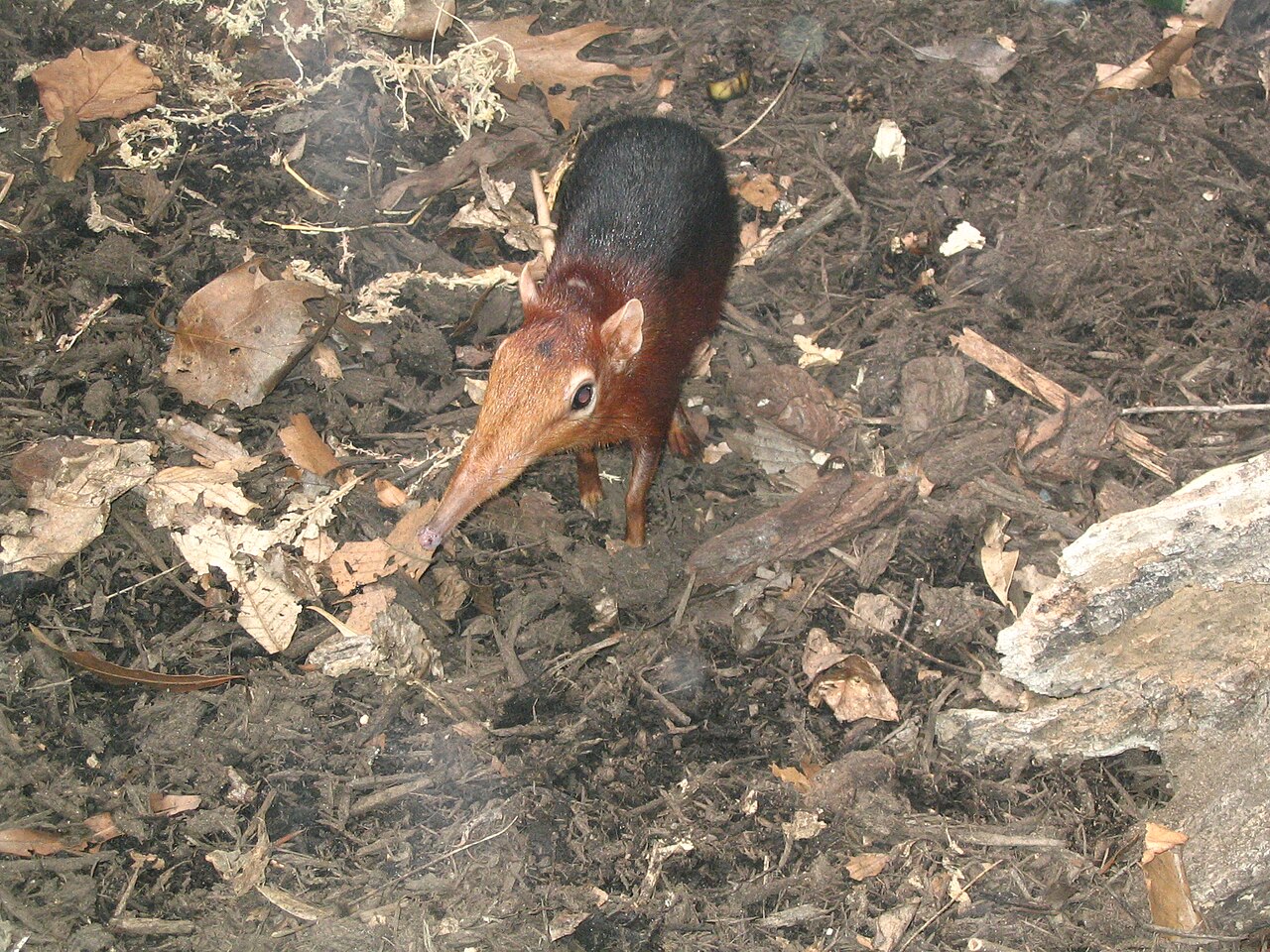
Forest clearing and fragmentation can reduce the black-and-rufous sengi's habitat. Hunting also affects animals in some areas.
Protecting a forest floor means retaining more than bare ground between trees. Leaf litter, shelter, and small prey all belong to the habitat.
A sengi invites us to look down as well as up. Beneath the canopy, a long-nosed hunter is exploring a busy world that human eyes can easily pass over.
Photo credits
Featured image: Rhynchocyon petersi from side cropped.jpg — Joey Makalintal from Pennsylvania, USA, CC BY 2.0.

Body image 1: Rhynchocyon petersi one.JPG — ZeWrestler, Public domain.

Body image 2: Rhynchocyon petersi two.JPG — ZeWrestler, Public domain.

Photographs resized to up to 1,280 pixels wide for web display.