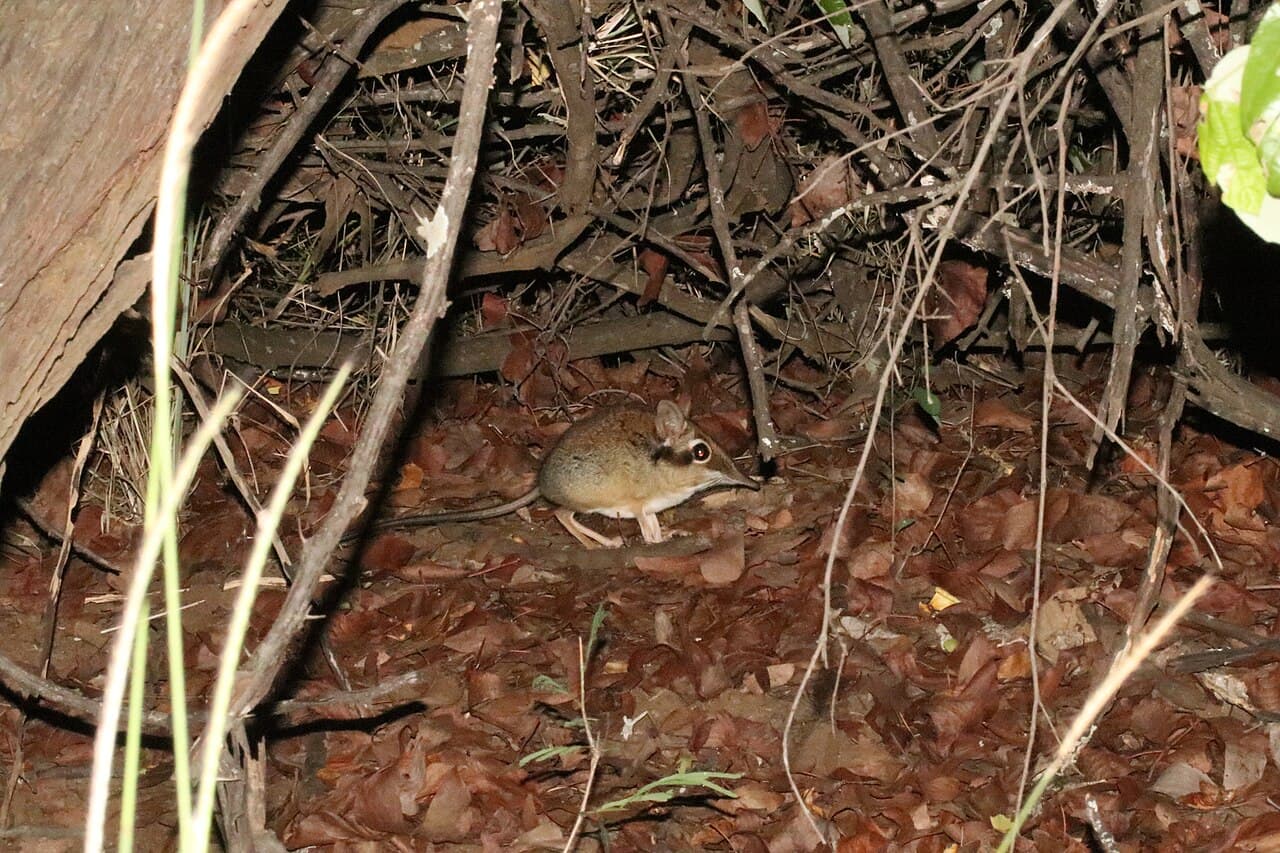
An elephant shrew's name offers two familiar animals as clues—and neither quite explains what it is. These small African mammals are also called sengis, and they are not true shrews.
Their flexible snouts may recall miniature trunks. Their real story, however, belongs to a distinct branch of the mammal family tree.
Meet the four-toed sengi
This article and its photographs focus on the four-toed elephant shrew, Petrodromus tetradactylus. Different sengi species vary in size, appearance, and habitat.
Animal Diversity Web describes this species in forest and woodland undergrowth in parts of Africa. Its name refers to the four toes on each hind foot.
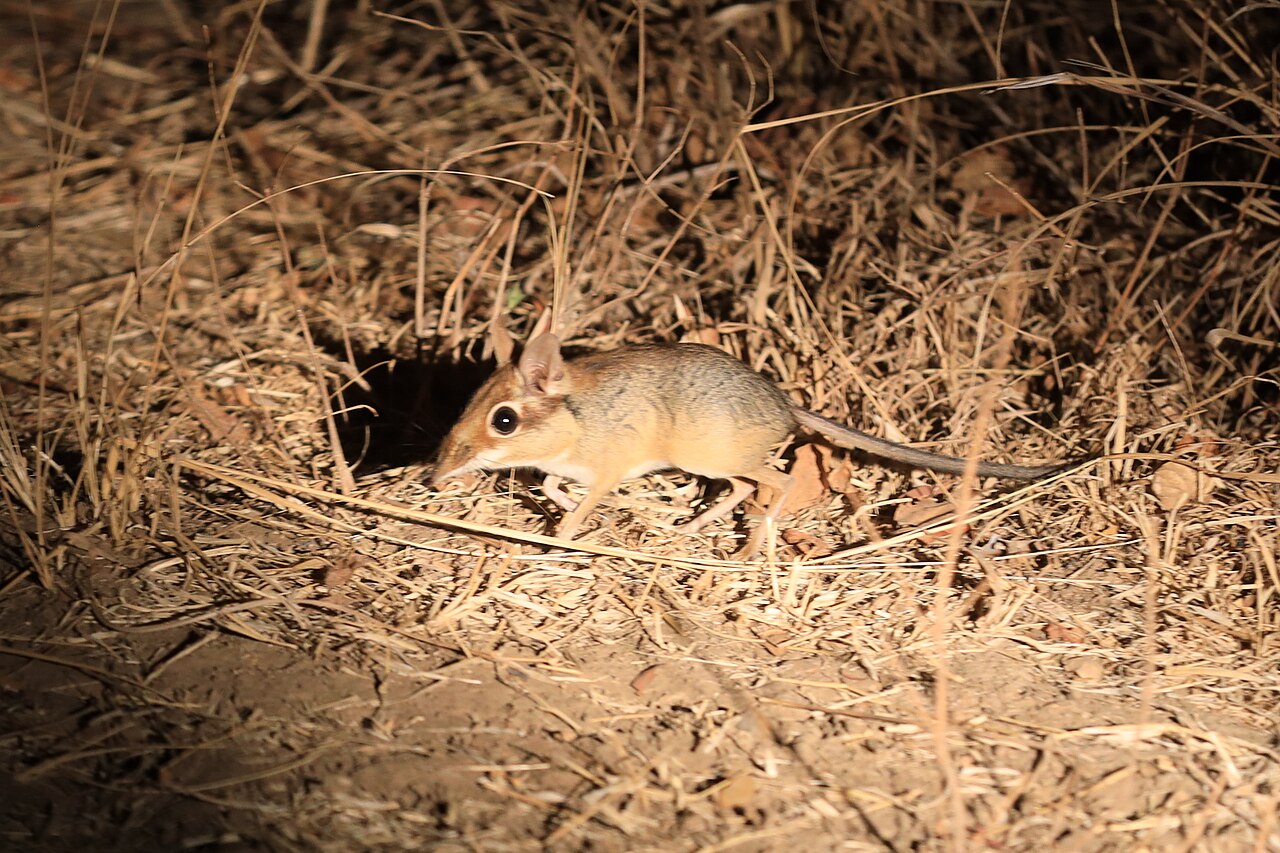
A nose for hidden food
The long, mobile snout helps the animal search for invertebrates among vegetation. Slender legs let it move quickly through its surroundings.
From a person's height, the ground cover may appear still. At a sengi's scale, it contains scent trails, cover, and small prey. A flexible nose is a practical way to investigate that busy layer.
The elephant comparison is a description of appearance, not a claim that its snout works exactly like an elephant's trunk.
Why “not a true shrew” matters
Smithsonian's profile of another sengi species explains the distinction from true shrews. Common names can preserve an early impression even when scientific classification tells a different story.
That is why identifying the species matters. A fact about a black-and-rufous sengi should not automatically be transferred to a four-toed sengi.
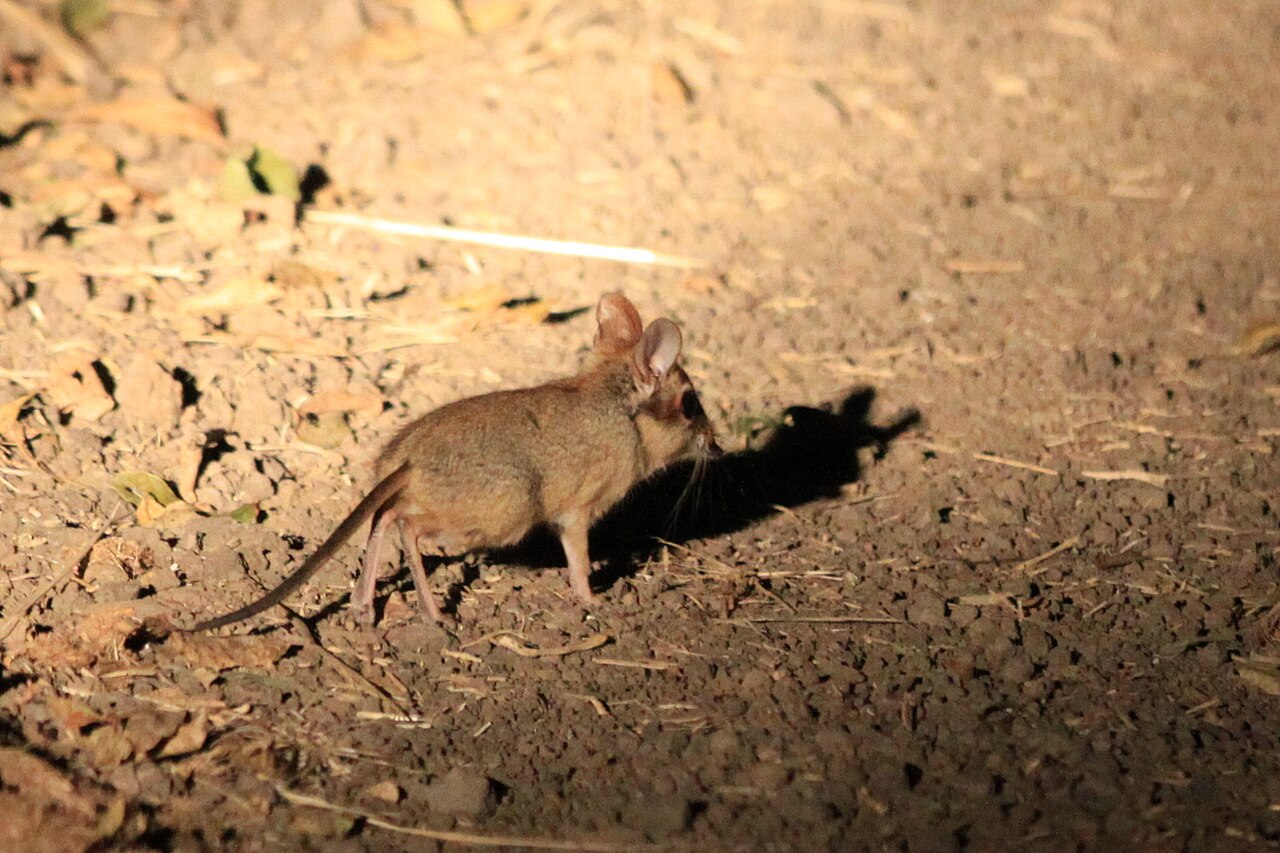
Look closely at the undergrowth
A sengi reminds us that wildlife does not have to be large to possess a striking shape or a specialized way of finding food.
Protecting the vegetation where it lives preserves a world that is easy for people to step past. Sometimes the most surprising mammal in a landscape is moving quietly beneath our notice.
Photo credits
Featured image: Ryan van Huyssteen; Source; CC BY-SA 4.0. Resized for web display.

Body image 1: Darren Obbard; Source; CC BY 4.0. Resized for web display.

Body image 2: Darren Obbard; Source; CC BY 4.0. Resized for web display.
