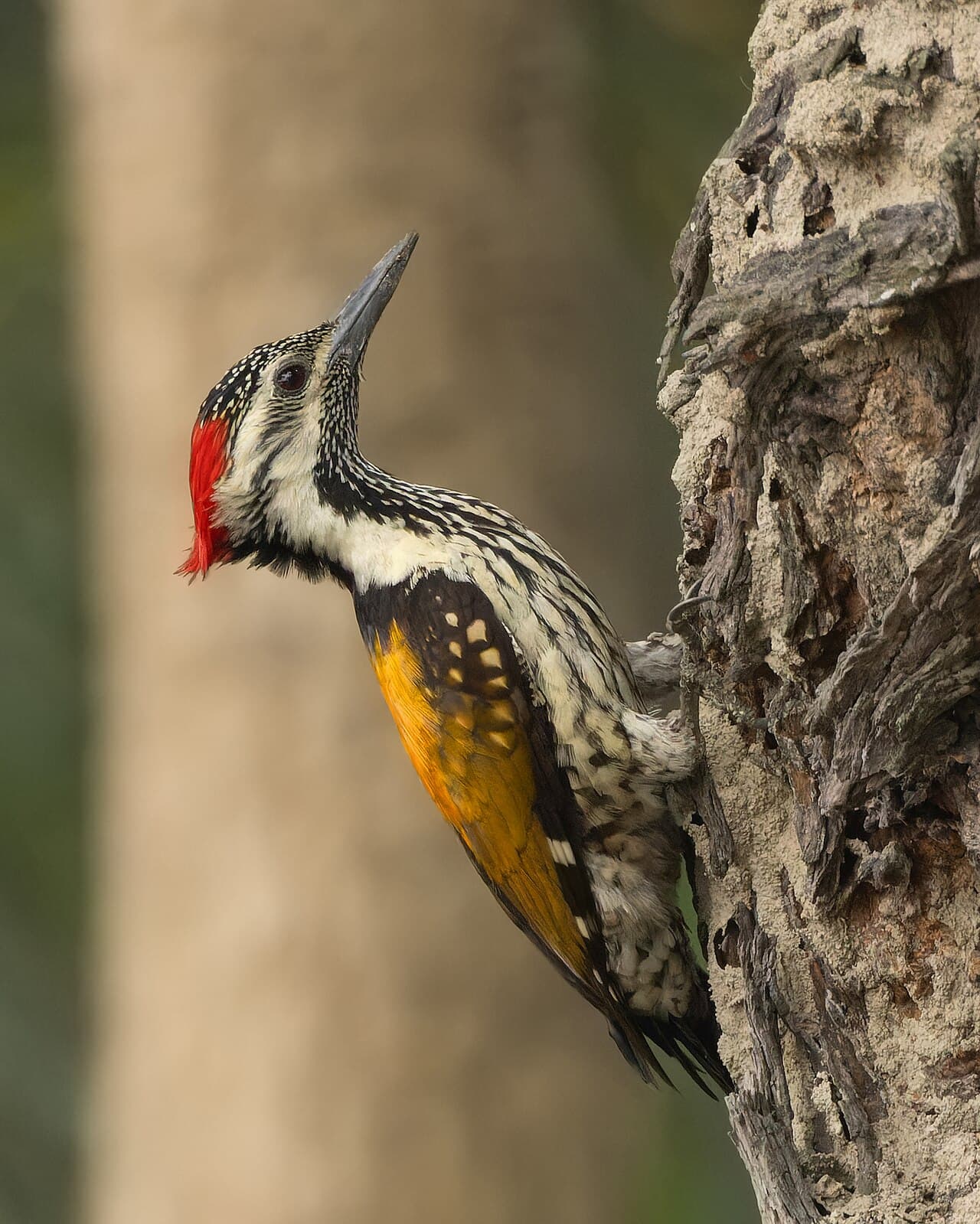
A flash of gold on a tree trunk can turn out to be a black-rumped flameback. Its bright back and red crest make this South Asian woodpecker look almost painted.
The colors are real, but the bird is more than a striking photograph. Its feet, tail, and bill belong to a life spent exploring trees.
A name that helps identification
The black-rumped flameback is Dinopium benghalense. It is also called the lesser goldenback. Similar golden-backed woodpeckers exist, so a golden wing alone is not enough for a certain identification.
The species is documented in Anna University's biodiversity register, which describes its contrasting plumage and differences between males and females.
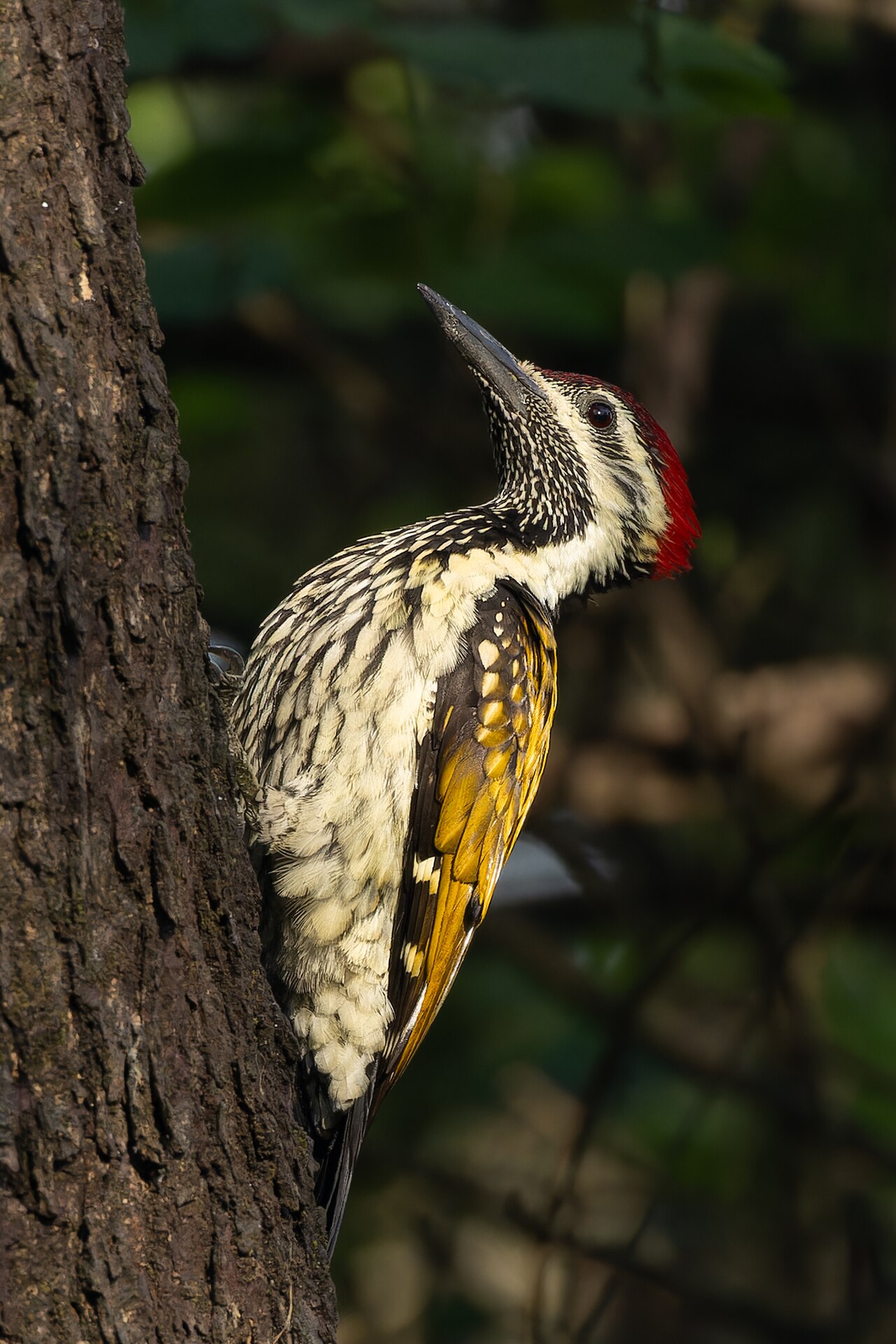
The crest gives another clue
Males have red across the crown, while females have a dark forecrown marked with pale spots and red farther back.
That detail corrects a common oversimplification: a red patch does not automatically mean the entire crown looks the same in both sexes.
Watch the head pattern along with the back, rump, and face. Identification becomes more reliable when several features agree.
A tree is a working surface
Like other woodpeckers, flamebacks cling to trunks and investigate wood and bark for food. Their upright posture lets them work across surfaces that many other birds can only perch beside.
Trees also provide nesting opportunities. A published field account of woodpeckers in Gujarat includes observations of black-rumped flameback nesting.
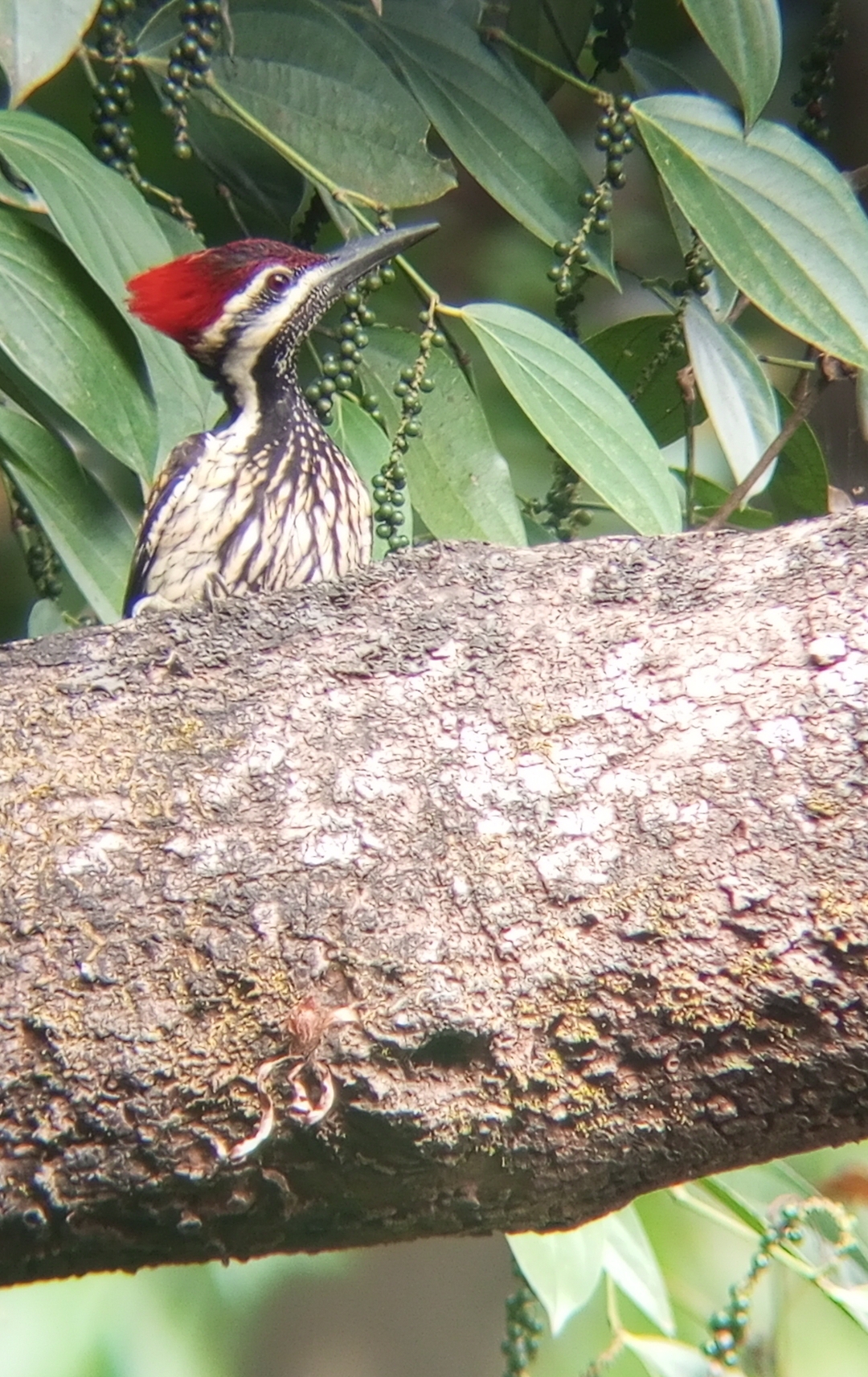
Beauty with a place in the landscape
Retaining suitable trees can preserve feeding surfaces and potential nest sites. A tidy-looking landscape with too few mature trees may offer much less to a woodpecker.
The next golden flash is worth a pause. Watch where the bird lands, how it braces itself, and what it investigates. Its movements explain the beauty almost as well as its colors do.
Photo credits
Featured image: Tisha Mukherjee; Source; CC BY-SA 4.0. Resized for web display.

Body image 1: Tisha Mukherjee; Source; CC BY-SA 4.0. Resized for web display.

Body image 2: Nativeplants garden; Source; CC BY-SA 4.0. Resized for web display.
