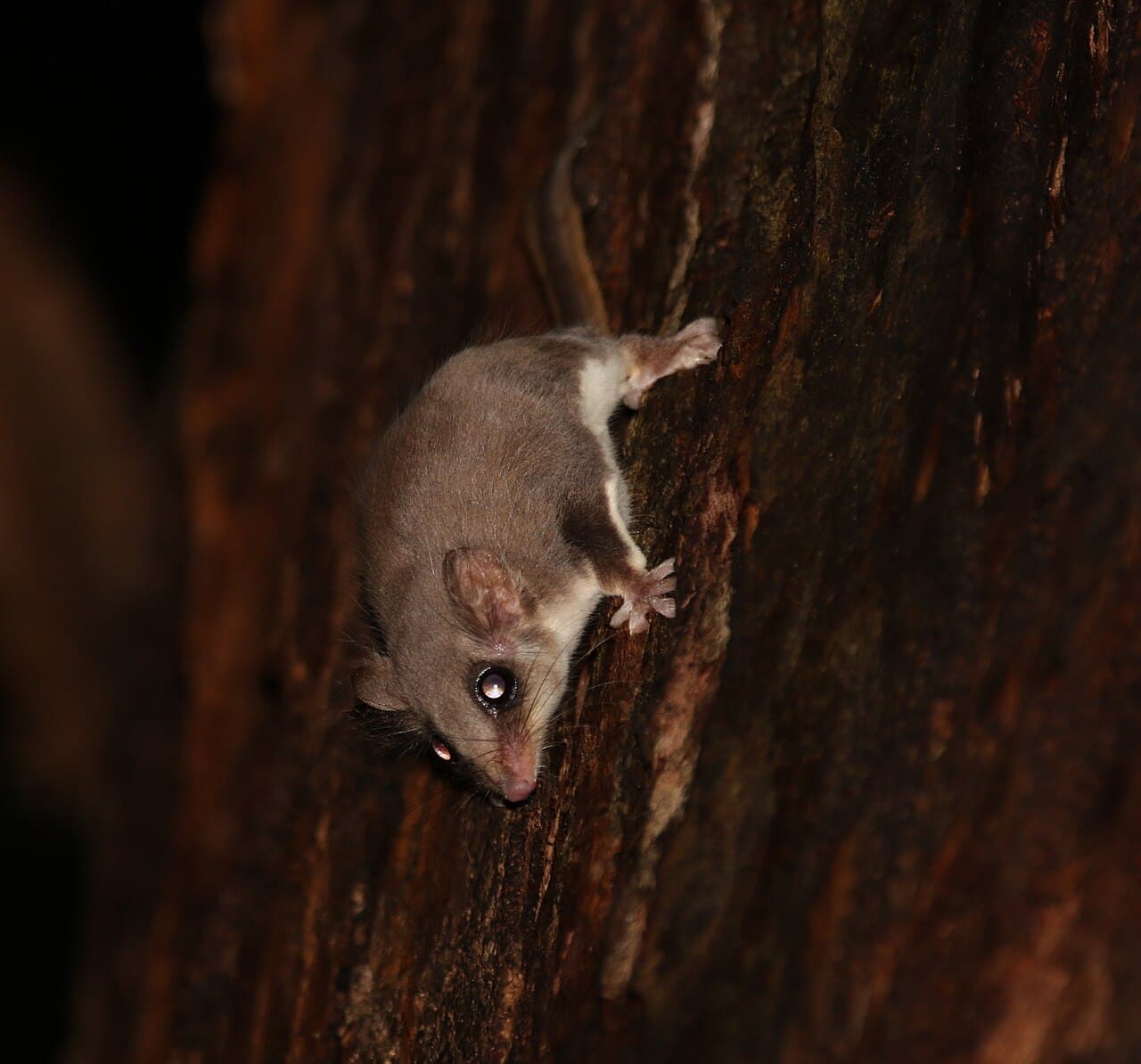
A feathertail glider's tail looks almost like a bird's feather, but the fringe is made of stiff hairs. This tiny marsupial uses its unusual tail while gliding between trees, turning a small body into an impressive woodland traveler.
Feathertail gliders belong to the genus Acrobates. They are native Australian mammals, not birds, bats, or flying mice.
A feather made of hair
A flattened tail carries long hairs along its edges. That creates the featherlike shape behind the animal's common name.
The Australian Museum describes the tail as a rudder during gliding. A membrane between the limbs provides the surface that supports the animal in the air.
A glide begins from a height. The animal stretches out and travels downward through the air; it does not flap wings or power its way upward like a bird.
Tiny feet with a strong grip
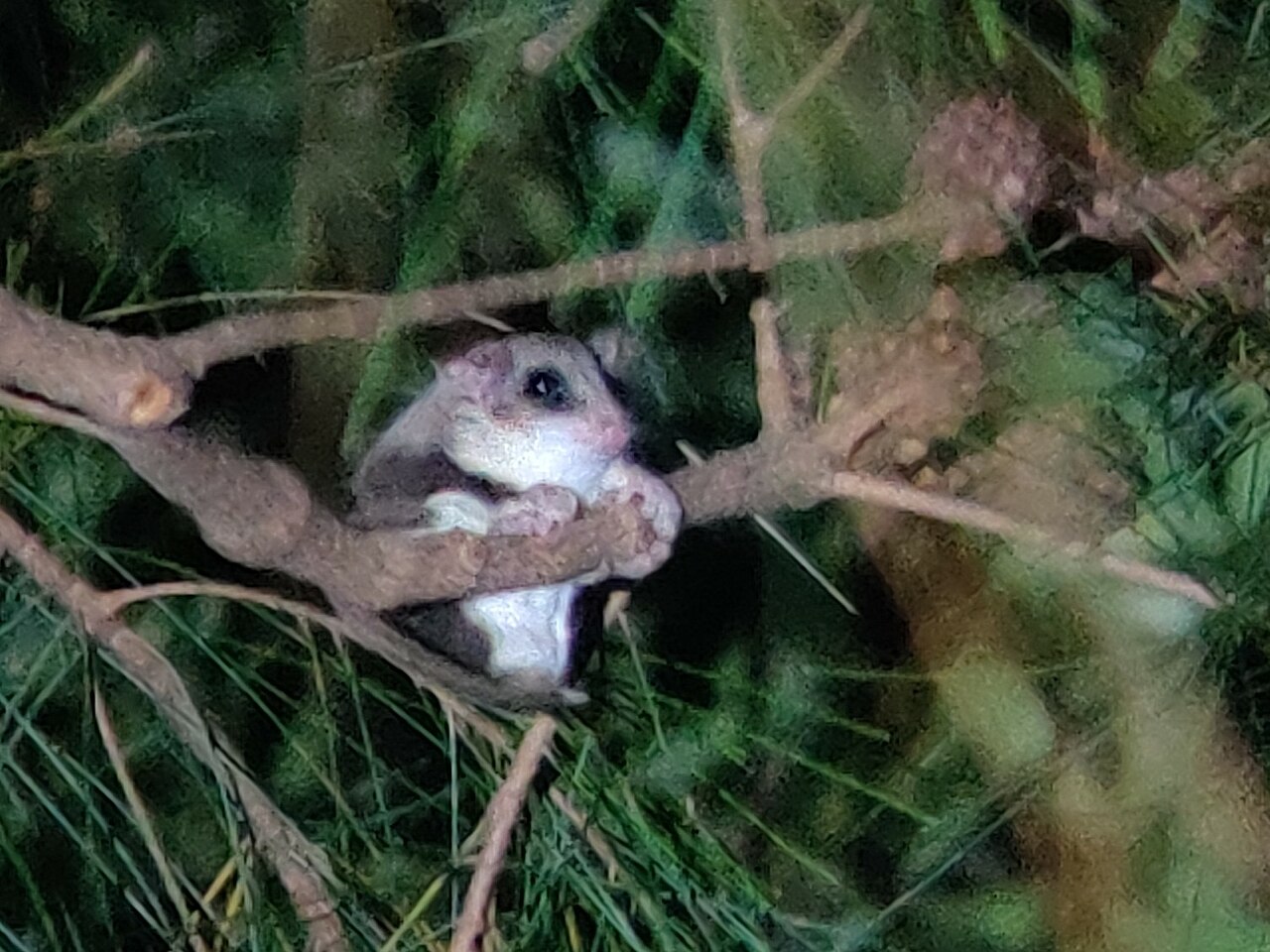
Large toe pads help feathertail gliders cling to surfaces. For such a small animal, moving along bark and thin branches demands secure contact.
Their small size also changes how we imagine a forest. A modest gap between trees can be a major journey for a mammal with a body only a few centimeters long.
Gliding offers a way to cross that space without making the full trip down one trunk and up another.
A nighttime menu in the trees
Feathertail gliders live in forest and woodland. Nectar, pollen, and insects form part of their food supply.
That links them to flowering plants as well as the small animals living among leaves. A useful habitat needs food and shelter through changing seasons, not simply a few isolated trees.
One common name, more than one species
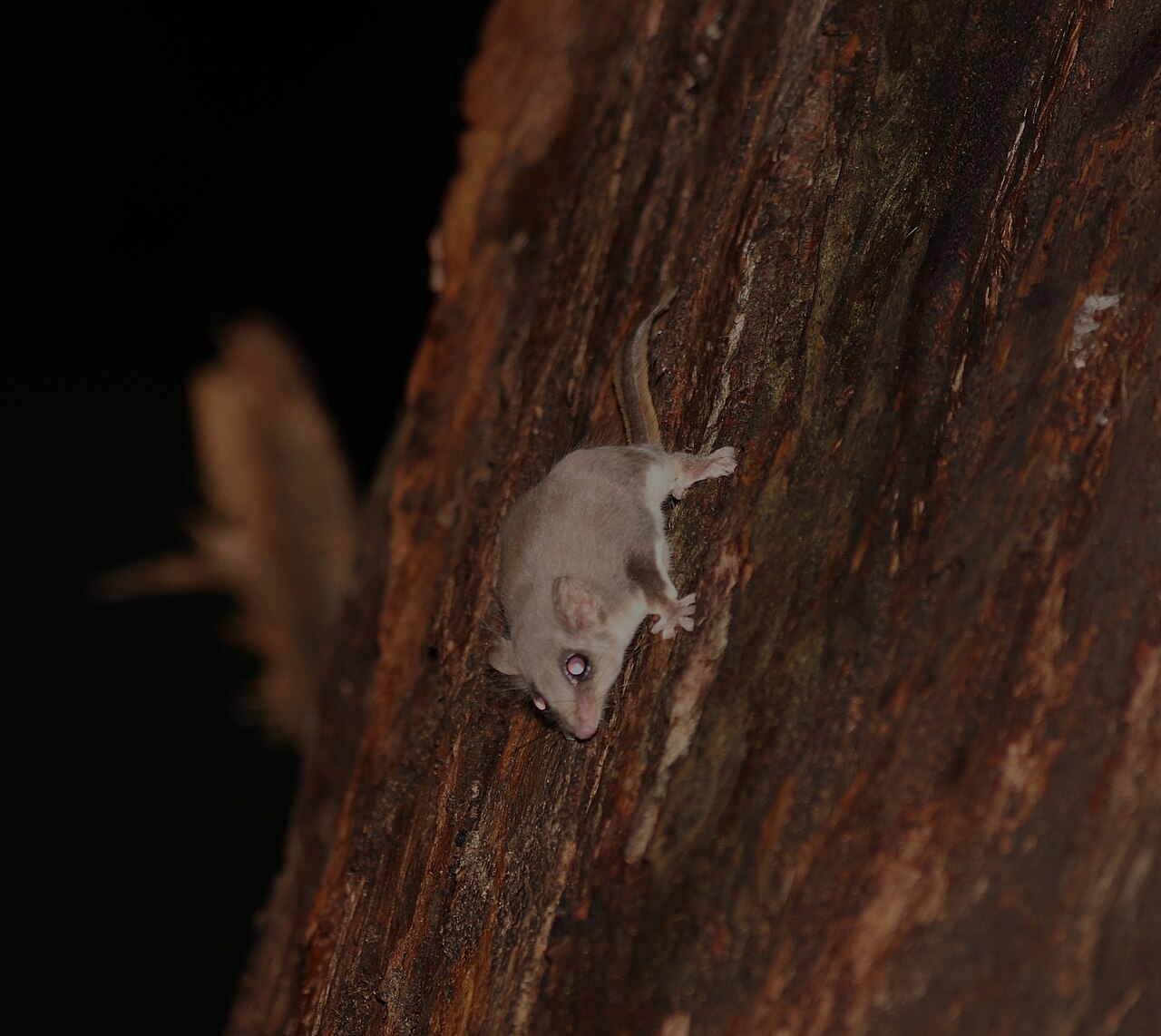
A Mammalian Species review distinguishes Acrobates pygmaeus from the broad-toed feathertail glider, Acrobates frontalis. Older references may use “feathertail glider” more broadly.
The photographs here are catalogued as A. pygmaeus. This article explains the group's shared gliding features without treating every old record as interchangeable.
Maintaining connected woodland and protecting animals from introduced predators helps preserve their living space.
The feathertail glider is a wonderful reminder that a spectacular aerial adaptation need not come with a large body. Sometimes the surprising detail is a fringe of hair at the end of a tiny tail.
Photo credits
Featured image: Acrobates pygmaeus 176707409.jpg — Greg Tasney, CC BY-SA 4.0.

Body image 1: Acrobates pygmaeus 171410041.jpg — Nathan Ruser, CC BY-SA 4.0.

Body image 2: Acrobates pygmaeus 176707411.jpg — Greg Tasney, CC BY-SA 4.0.

Photographs resized to up to 1,280 pixels wide for web display.