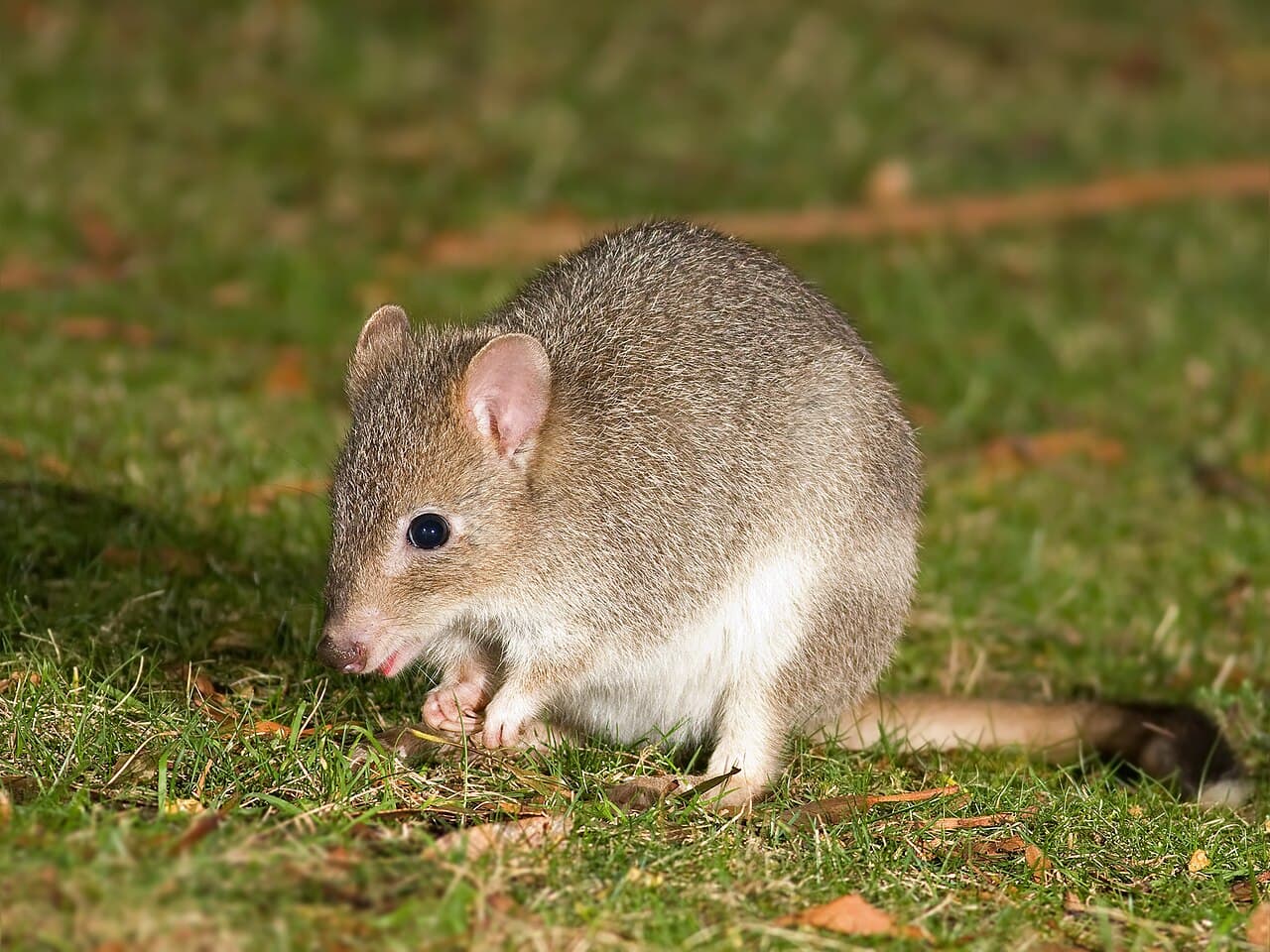
An eastern bettong can carry a bundle of nesting material without holding it in its mouth. It curls its tail around the load and takes it home, turning a balancing appendage into a useful carrier.
The eastern bettong, Bettongia gaimardi, is a small hopping marsupial. Its long tail, rounded body, and nocturnal habits belong to an animal whose ecological role is larger than its size suggests.
A tail that can hold a bundle
The Tasmanian Department of Natural Resources and Environment describes bettongs collecting grass and other material for a domed nest.
The tail curls downward around the bundle. This gripping ability is useful for carrying material along the ground; it does not mean the animal hangs from trees by its tail.
The completed nest provides cover during daylight, when the bettong rests.
An underground food search
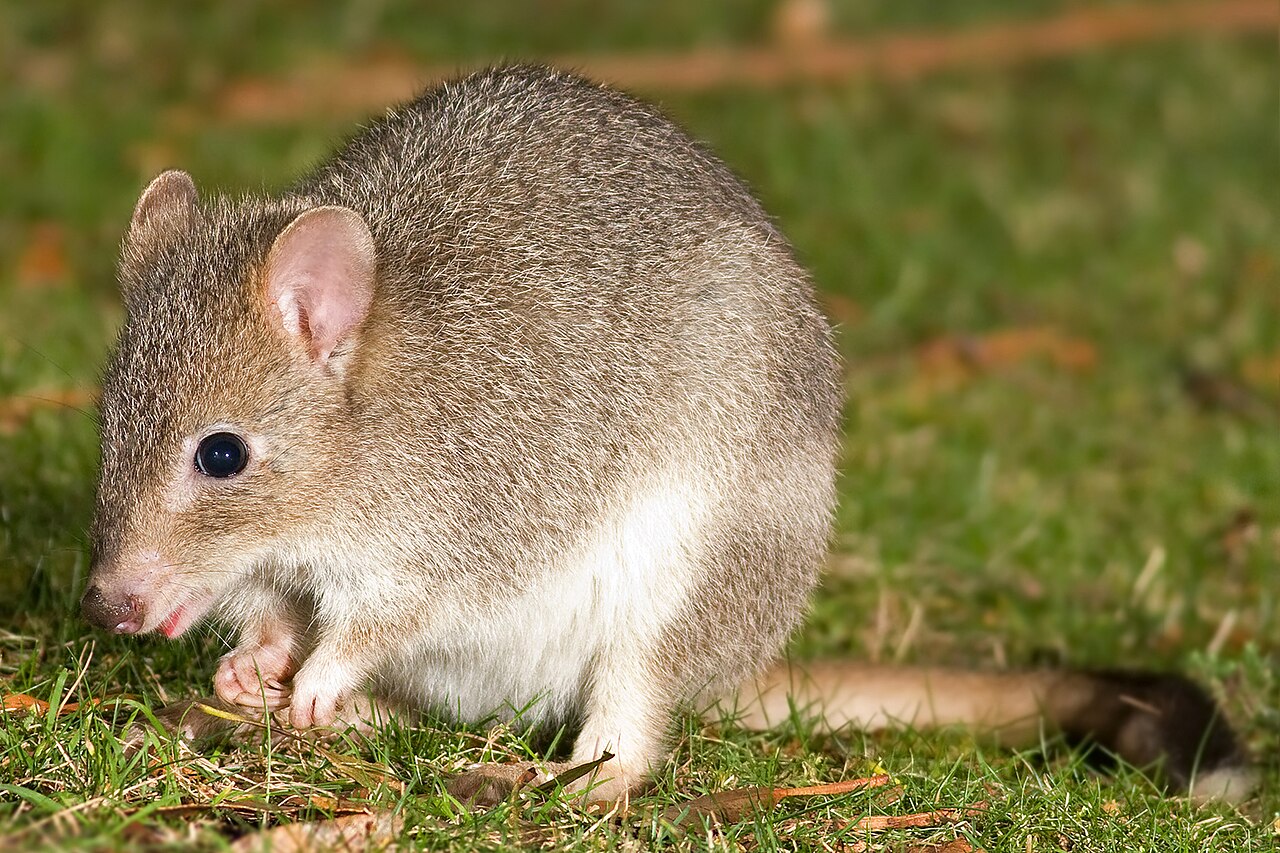
Eastern bettongs eat underground fungi along with foods such as roots, seeds, bulbs, and insects. They emerge after dark to forage.
A patch of woodland may look quiet while hidden food sits below the surface. The bettong's searching and digging reveal another layer of that habitat.
Dry, open eucalypt forest and grassy woodland are important homes. Shelter and feeding places must both be present for a population to persist.
Lost from the mainland, then brought back to protected sites
Eastern bettongs survived in Tasmania after disappearing from mainland Australia in the early twentieth century.
The Australian Government's species account describes translocations of Tasmanian animals to protected sites in the Australian Capital Territory.
Introduced predators and habitat changes were central to the mainland loss. Reintroduction therefore requires more than releasing animals into any available woodland.
A comeback needs a suitable landscape
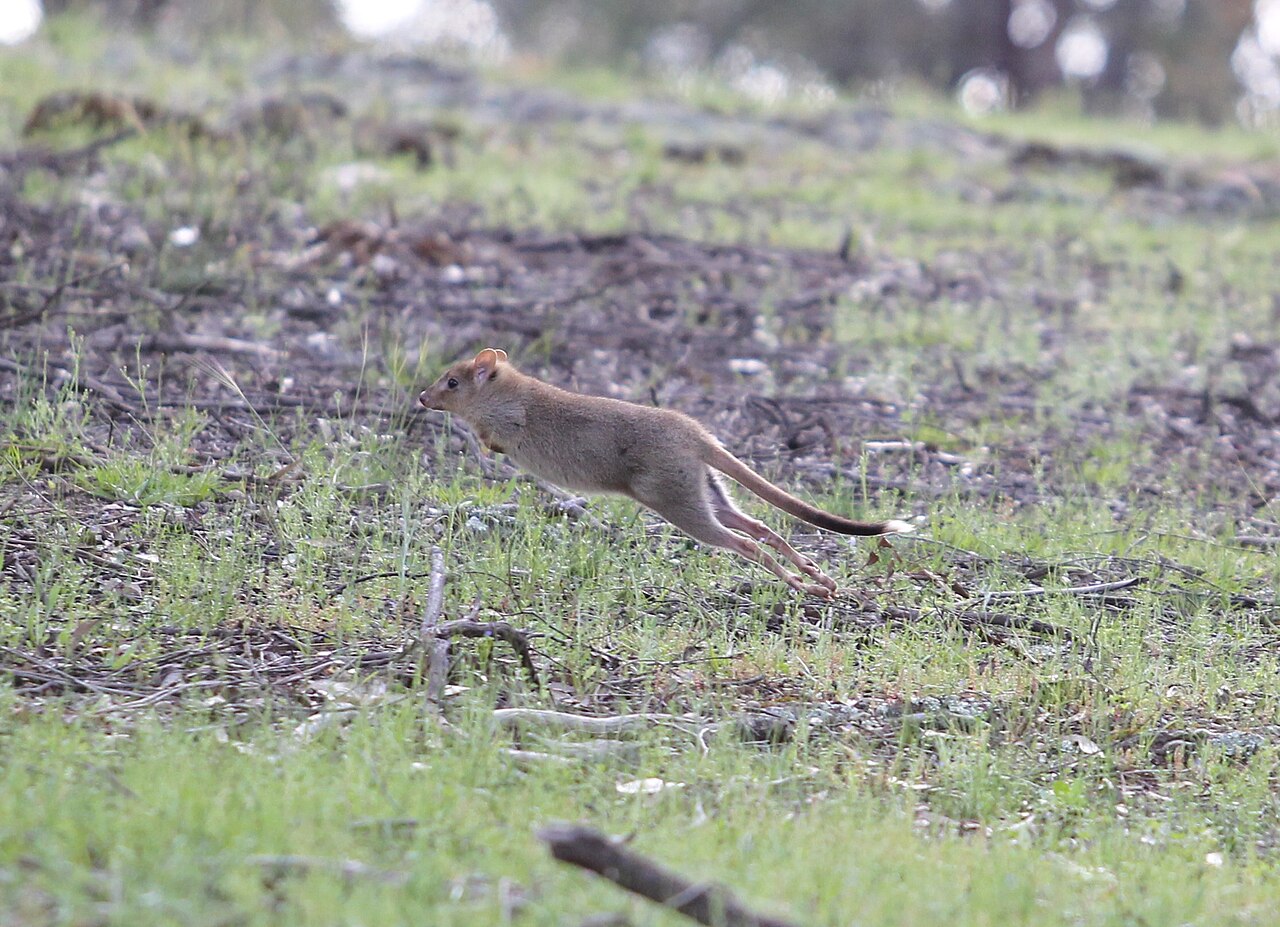
Managing predators and maintaining habitat are essential to successful recovery. On Tasmania, private land also holds important bettong habitat, making land management outside reserves relevant.
A tail carrying grass is a charming image, but it is also a glimpse of practical survival. The animal needs safe places to gather, travel, feed, and rest.
Eastern bettongs remind us that conservation can restore missing relationships. Bringing back a small marsupial can also bring back a way of living with the woodland floor.
Photo credits
Featured image: Bettongia gaimardi.jpg — JJ Harrison (https://www.jjharrison.com.au/), CC BY-SA 3.0.

Body image 1: Bettongia gaimardi 2.jpg — JJ Harrison (https://www.jjharrison.com.au/), CC BY-SA 3.0.

Body image 2: Eastern Bettong, Mulligans Flat Nature Reserve, ACT.jpg — Wildlifecartoons, CC BY-SA 4.0.

Photographs resized to up to 1,280 pixels wide for web display.