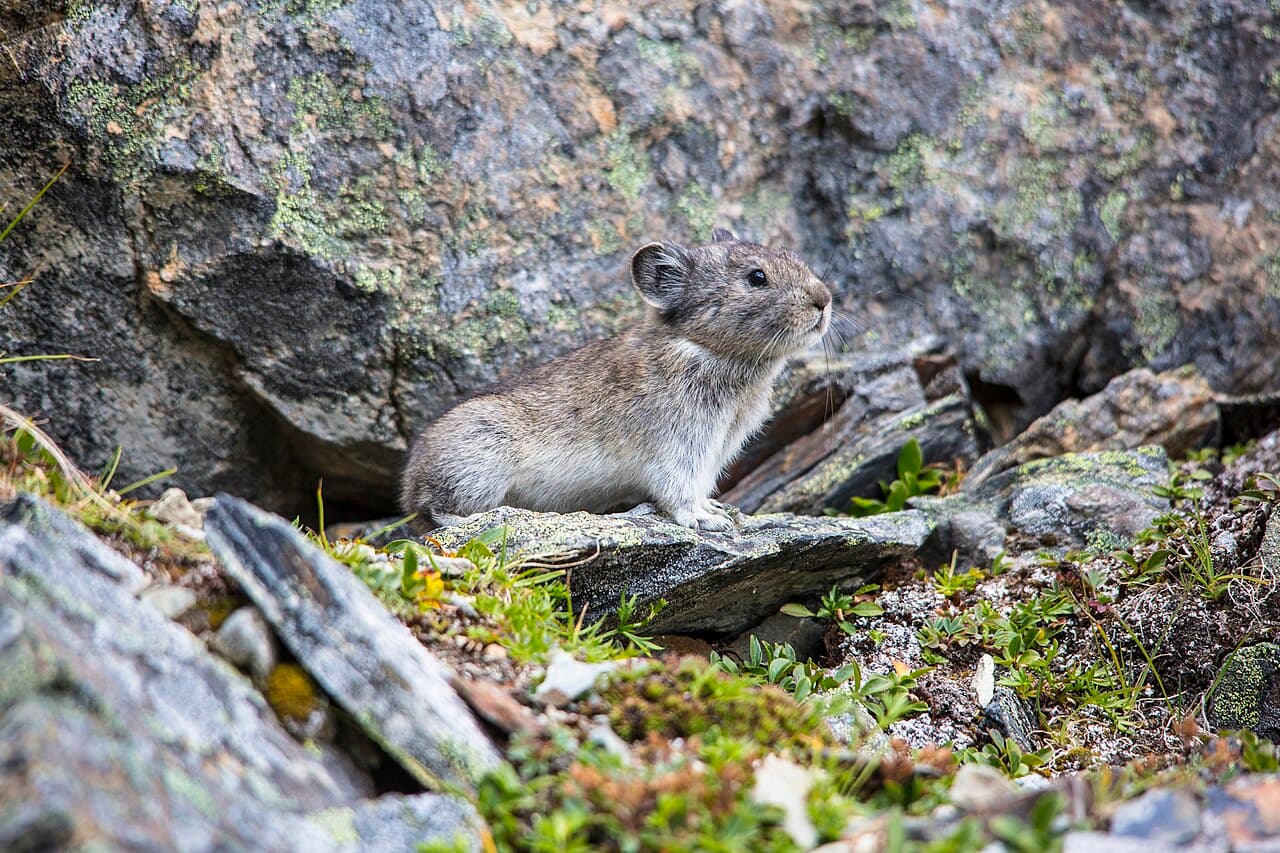
A collared pika prepares for winter by making hay. It clips plants, carries them to rocky storage places, and builds a food supply for the cold months ahead. This little mountain mammal stays active instead of hibernating.
The collared pika, Ochotona collaris, is a relative of rabbits and hares. It is also closely related to the American pika, Ochotona princeps, but the two are separate species.
A round-eared rabbit relative
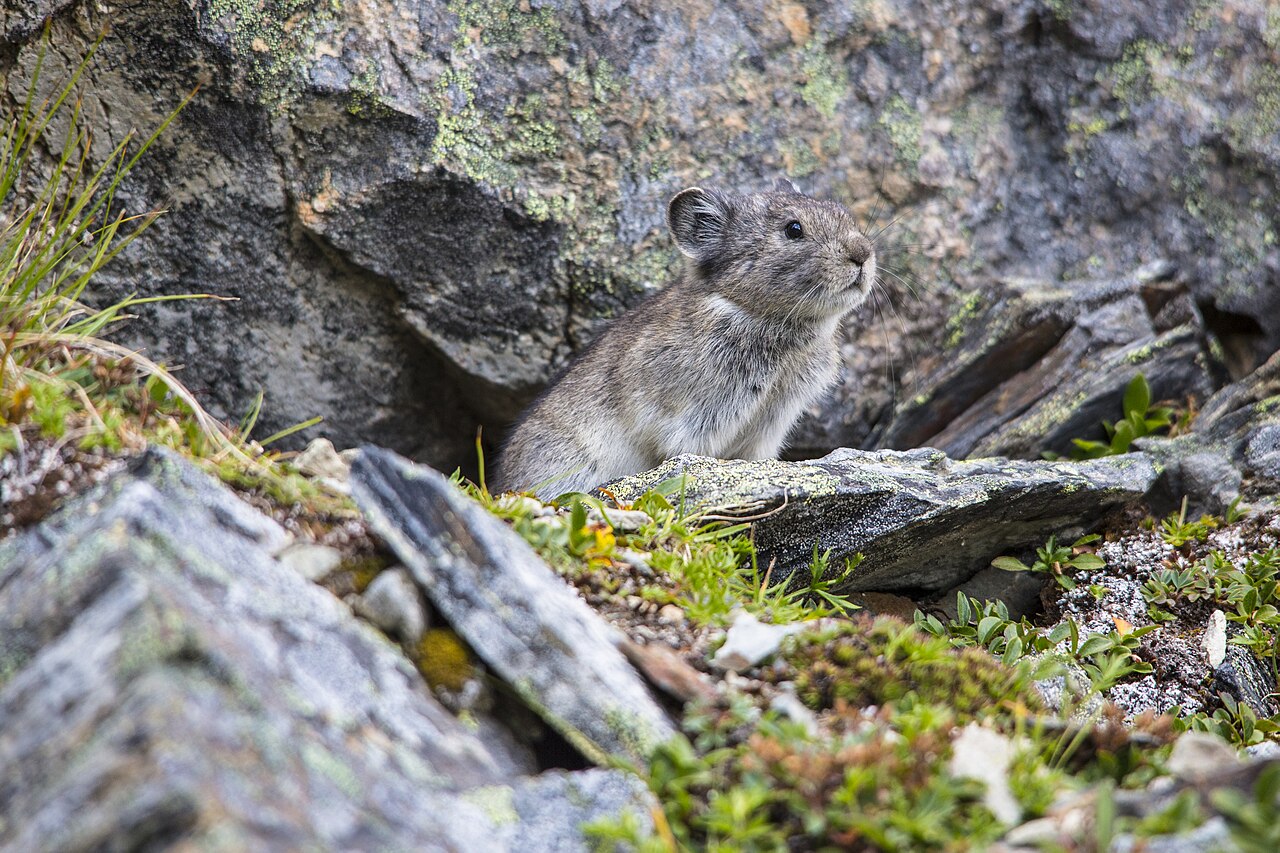
Collared pikas have compact bodies, short legs, rounded ears, and an almost invisible tail. Pale gray areas around the shoulders and neck form the partial “collar” behind the name.
The Alaska Department of Fish and Game describes them as the only pika species in Alaska. Their range also extends into northwestern Canada.
A summer job with winter consequences
During the growing season, a pika collects stems and leaves and carries them in its mouth. Plants are stored in sheltered places among rocks.
These haypiles help it survive when fresh food becomes difficult to reach. Making enough hay is therefore part of a demanding seasonal schedule.
Individuals defend territories and their food stores. A short, sharp call can announce a boundary or alert nearby animals to danger.
Why a pile of rocks is a home
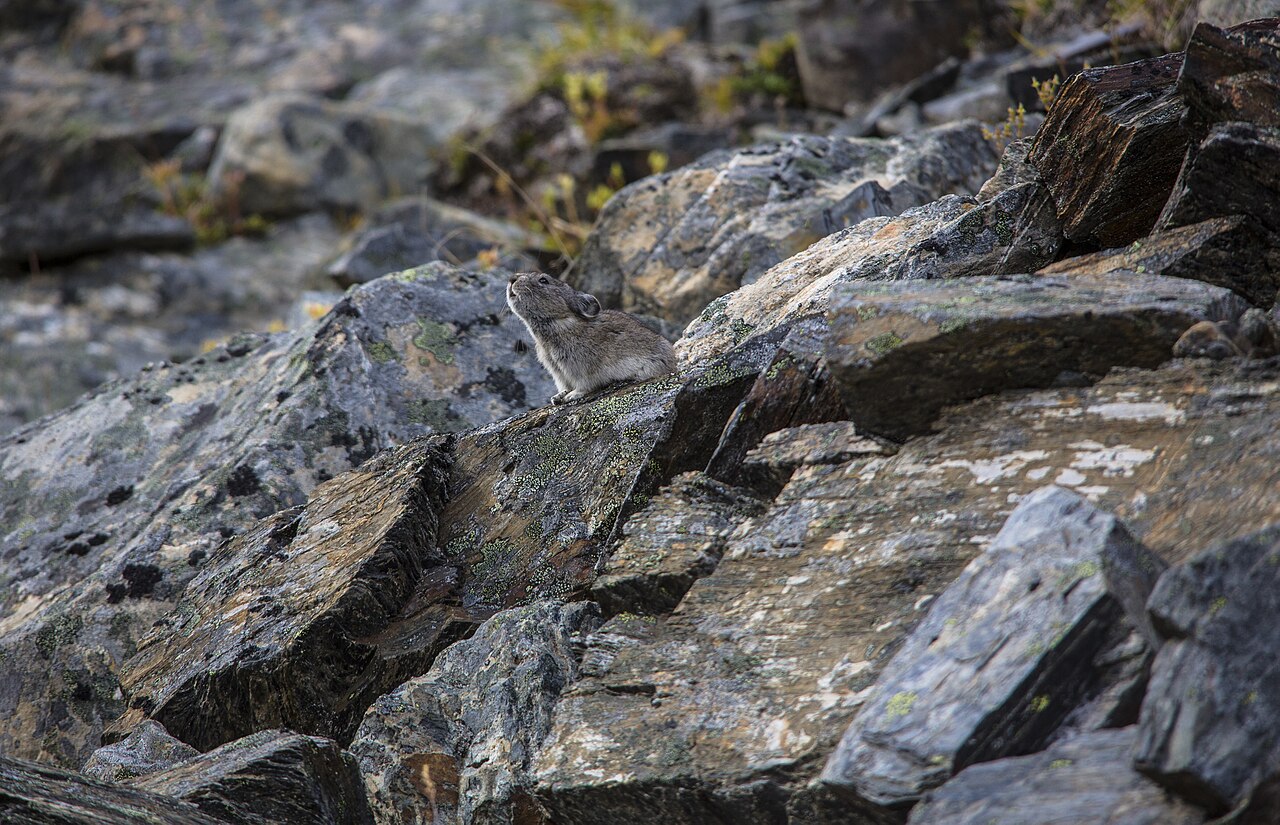
Collared pikas use talus: slopes or fields of broken rock. Crevices provide shelter, escape routes, and places to store food, while nearby meadows provide plants.
The Canadian management plan explains why the combination matters. A meadow without suitable rocks is not the same habitat, and a rock field far from food is not enough either.
A northern life in a changing climate
Canada lists the collared pika as a species of Special Concern. Climate change is a major long-term concern because changes in temperature, snow, and icing can alter food access and shelter conditions.
The effects are not identical everywhere, and researchers still need better information across the whole range.
For a collared pika, winter preparation begins long before the first deep snow. A tiny mouthful of plants is one part of that remarkable effort—a reminder that survival in the mountains depends on both summer abundance and a safe place to keep it.
Photo credits
Featured image: Collared Pika (2) - Ochotona collaris (21459326126).jpg — National Park Service, Alaska Region, Public domain.

Body image 1: Collared Pika (3) - Ochotona collaris (21494167211).jpg — National Park Service, Alaska Region, Public domain.

Body image 2: Collared Pika - Ochotona collaris (21485563165).jpg — National Park Service, Alaska Region, Public domain.

Photographs resized to up to 1,280 pixels wide for web display.