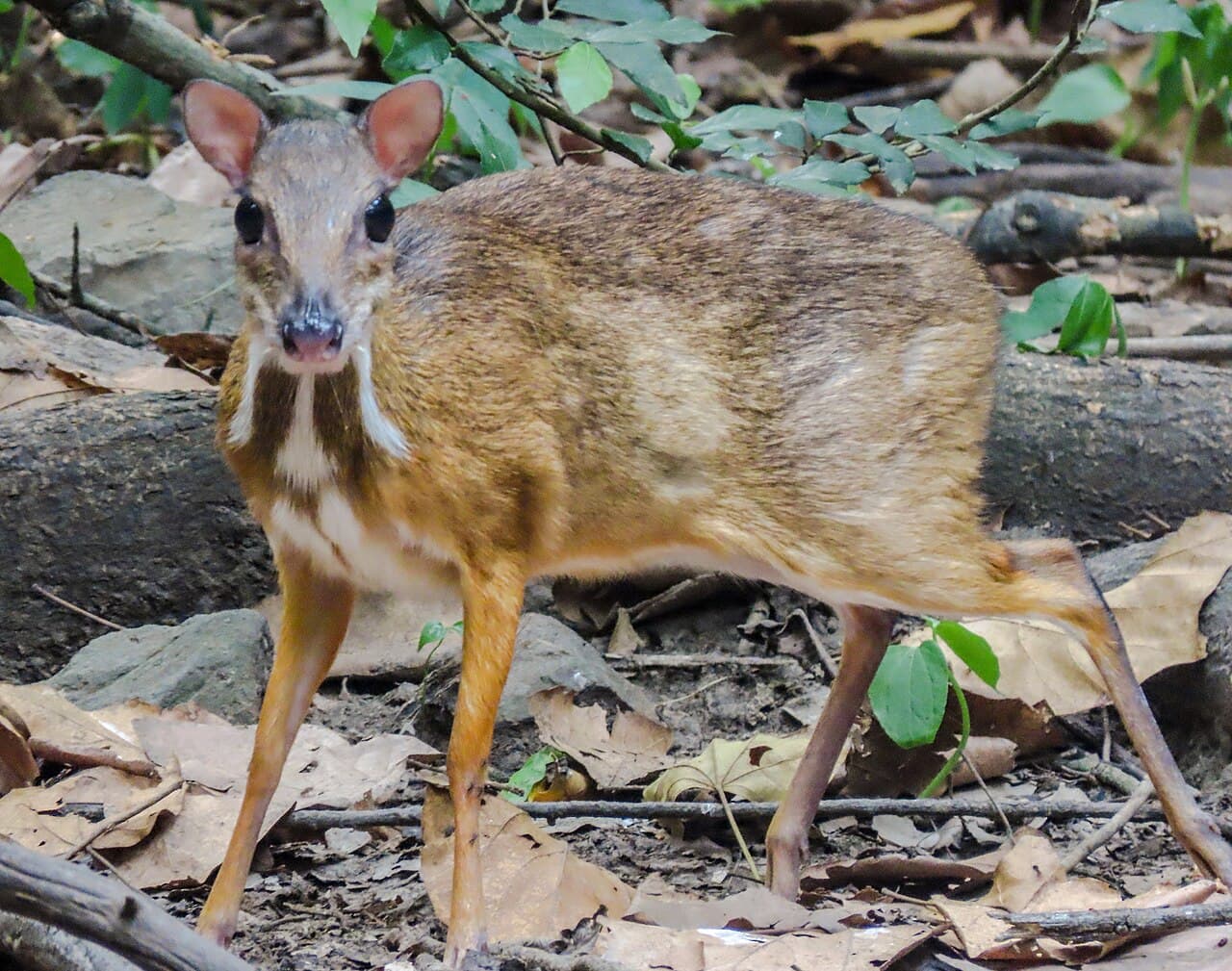
The lesser mouse-deer may look delicate, but males carry an unexpected feature: enlarged upper canine teeth. Instead of antlers, this tiny hoofed mammal has fangs that can be used in contests with rivals.
The lesser mouse-deer, Tragulus kanchil, is also called the lesser oriental chevrotain. Its name combines two familiar animals, yet it belongs to the chevrotain family, Tragulidae.
Neither a mouse nor a miniature deer
Mouse-deer have small bodies balanced on slender legs. Their cautious movements through cover make them easy to overlook.
Singapore Zoo explains that mouse-deer lack horns and antlers but possess enlarged upper canines, especially noticeable in males.
Those teeth do not turn them into carnivorous hunters. Appearance alone is a poor guide to an animal's diet.
Finding food near the forest floor
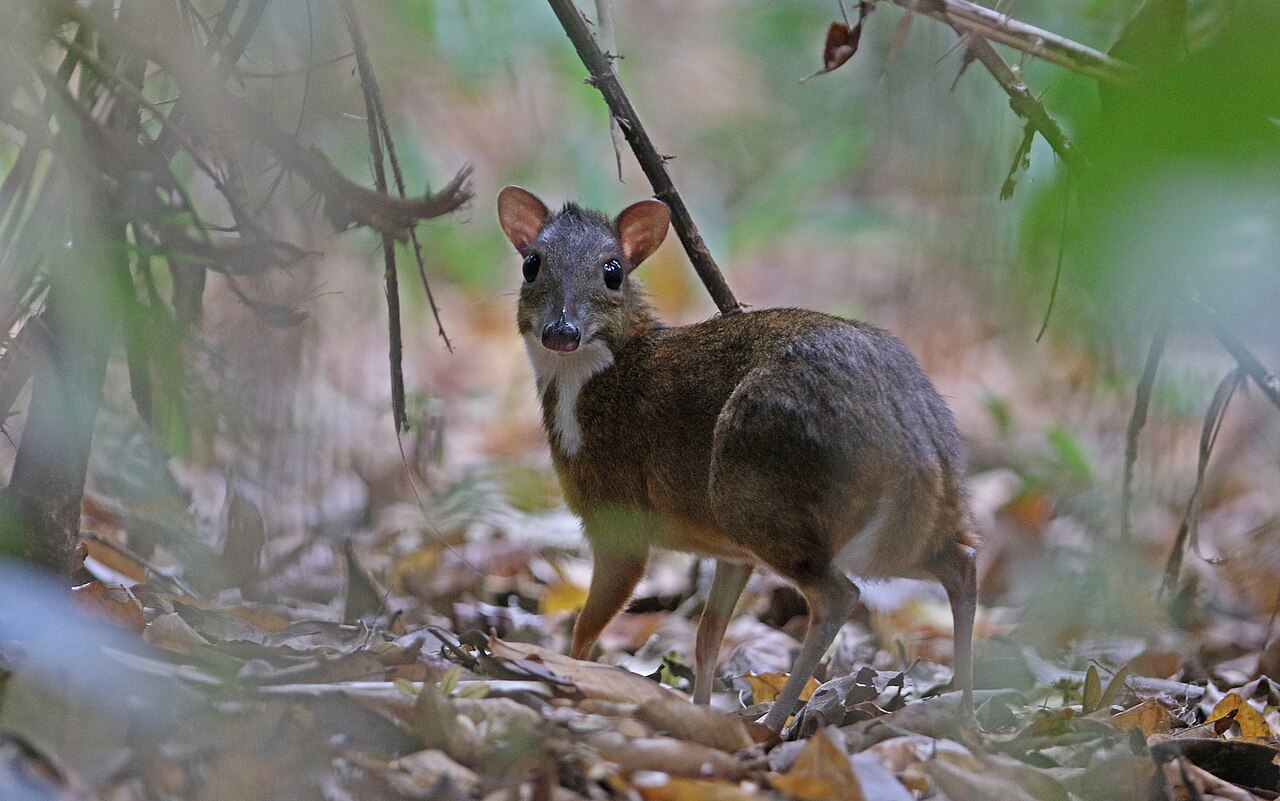
Their food includes plant material such as leaves, shoots, and fallen fruit. Low vegetation provides both feeding opportunities and concealment.
The lesser mouse-deer occurs in Southeast Asia, including Singapore. Several mouse-deer species live in the region, so “mouse-deer” does not always identify this particular animal.
The photographs here are recorded as Tragulus kanchil. The larger Tragulus napu, or greater mouse-deer, is a separate species.
A small animal with a place in folklore
In Malay and Indonesian stories, the mousedeer character Sang Kancil often uses wit to outsmart much larger animals.
The tales are a cultural tradition, not evidence that real mouse-deer plan tricks like human characters. They do show how deeply these quiet mammals have entered people's imagination.
Seeing the living animal adds another layer to the stories: a real creature finding food and cover at its own small scale.
Why local status matters
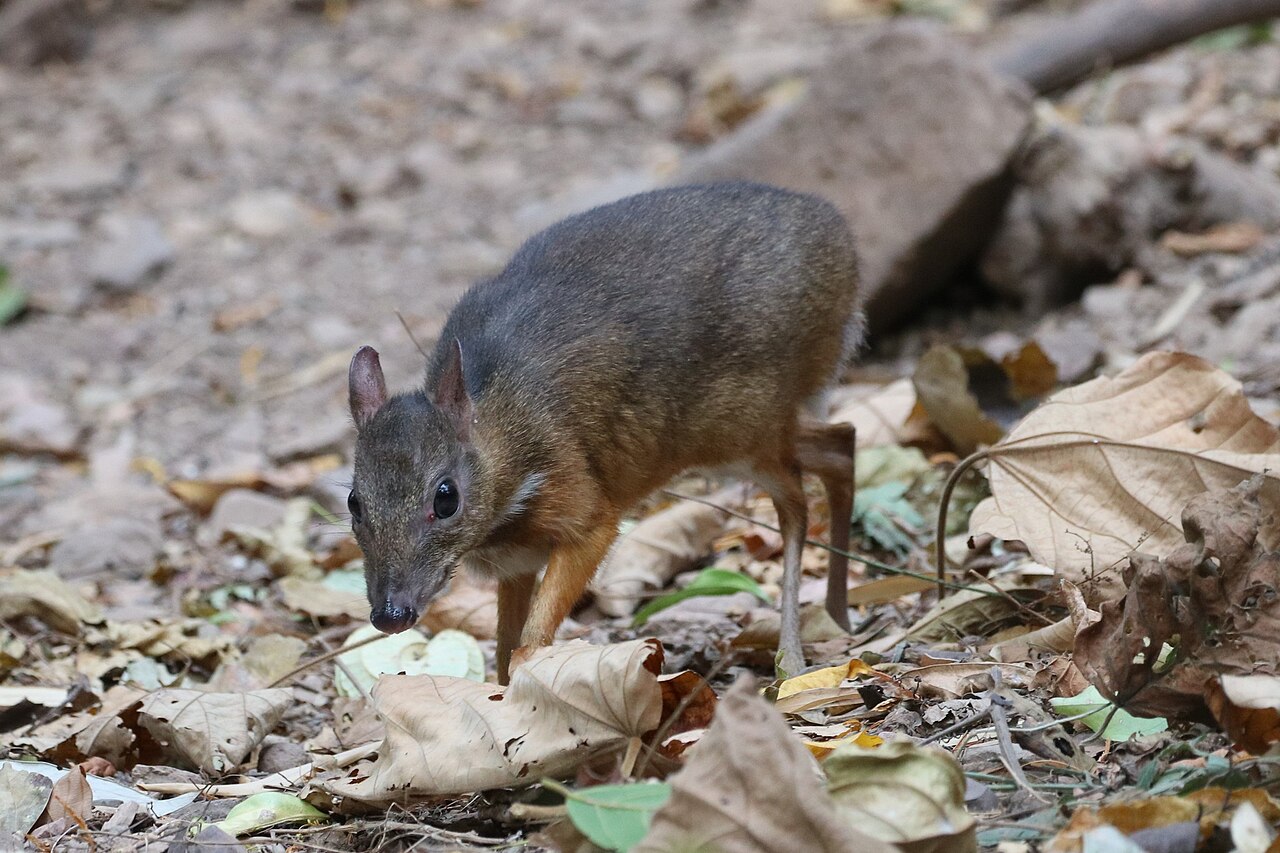
A species can be widespread across a region and still need attention in one country. Singapore's National Parks Board species list records the lesser mouse-deer as Endangered in the third edition of the Singapore Red Data Book.
That local classification should not be mistaken for a global assessment.
Protecting forest cover and reducing disturbance help preserve the habitat these shy animals use.
A lesser mouse-deer is extraordinary without being made into a fantasy creature. Tiny hooves, a quiet forest life, and surprising teeth are more than enough to make us look again.
Photo credits
Featured image: Tragulus kanchil 188466852.jpg — atheist, CC BY 4.0.

Body image 1: Tragulus kanchil 63724947.jpg — Christoph Moning, CC BY 4.0.

Body image 2: Tragulus kanchil 67712038.jpg — scaup, CC BY 4.0.

Photographs resized to up to 1,280 pixels wide for web display.