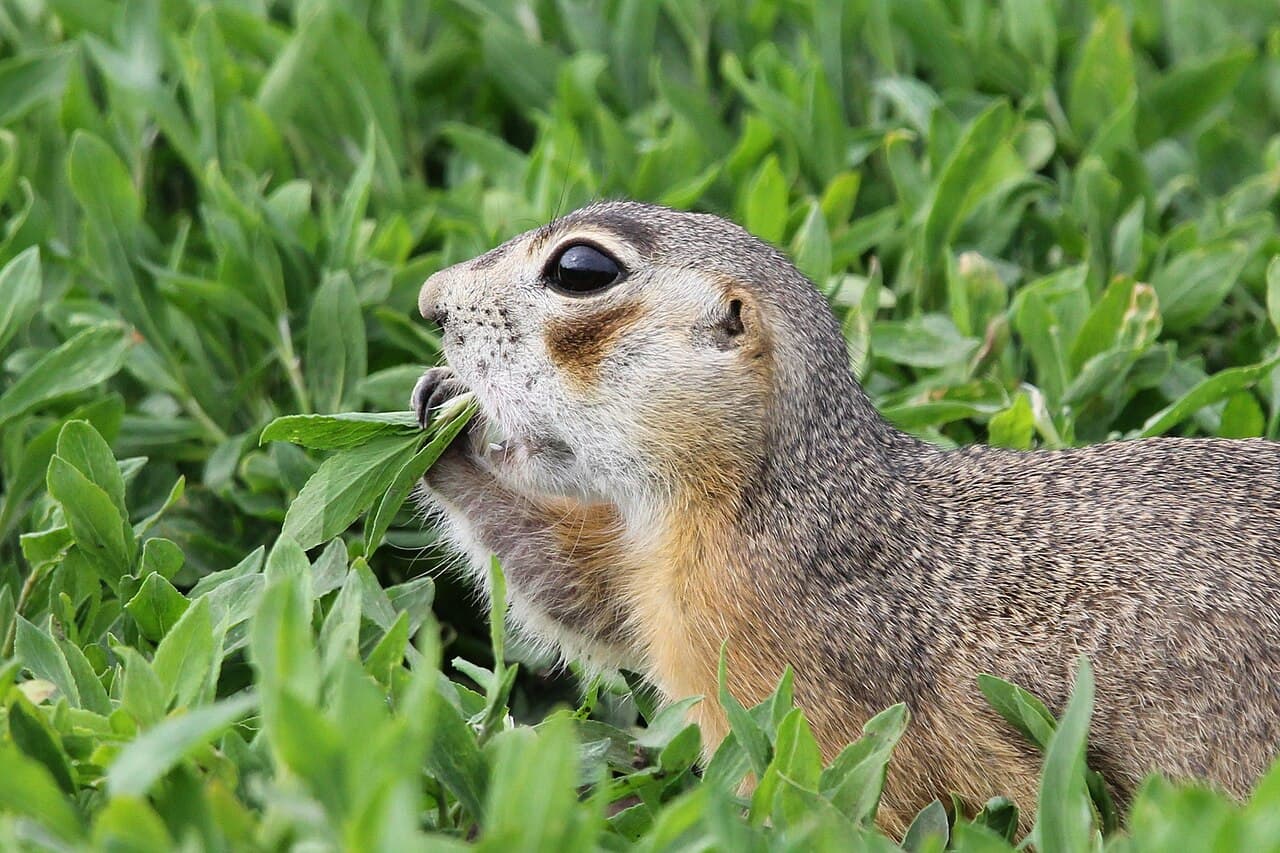
A warm reddish patch on each cheek gives the red-cheeked ground squirrel a face worth noticing. Yet identifying this little rodent takes more than spotting red fur. Recent research has changed which populations belong to the species.
The red-cheeked ground squirrel is Spermophilus erythrogenys. It belongs to the squirrel family, but its life is associated with open country rather than a route through treetops.
A squirrel close to the soil
The body is compact, the ears are small, and the tail is much less dramatic than the sweeping tail of many tree squirrels. Warm facial markings contrast with the surrounding coat.
In open habitat, the ground itself supplies feeding space and shelter opportunities. Looking low across vegetation can reveal wildlife that would be missed by watching only the trees.
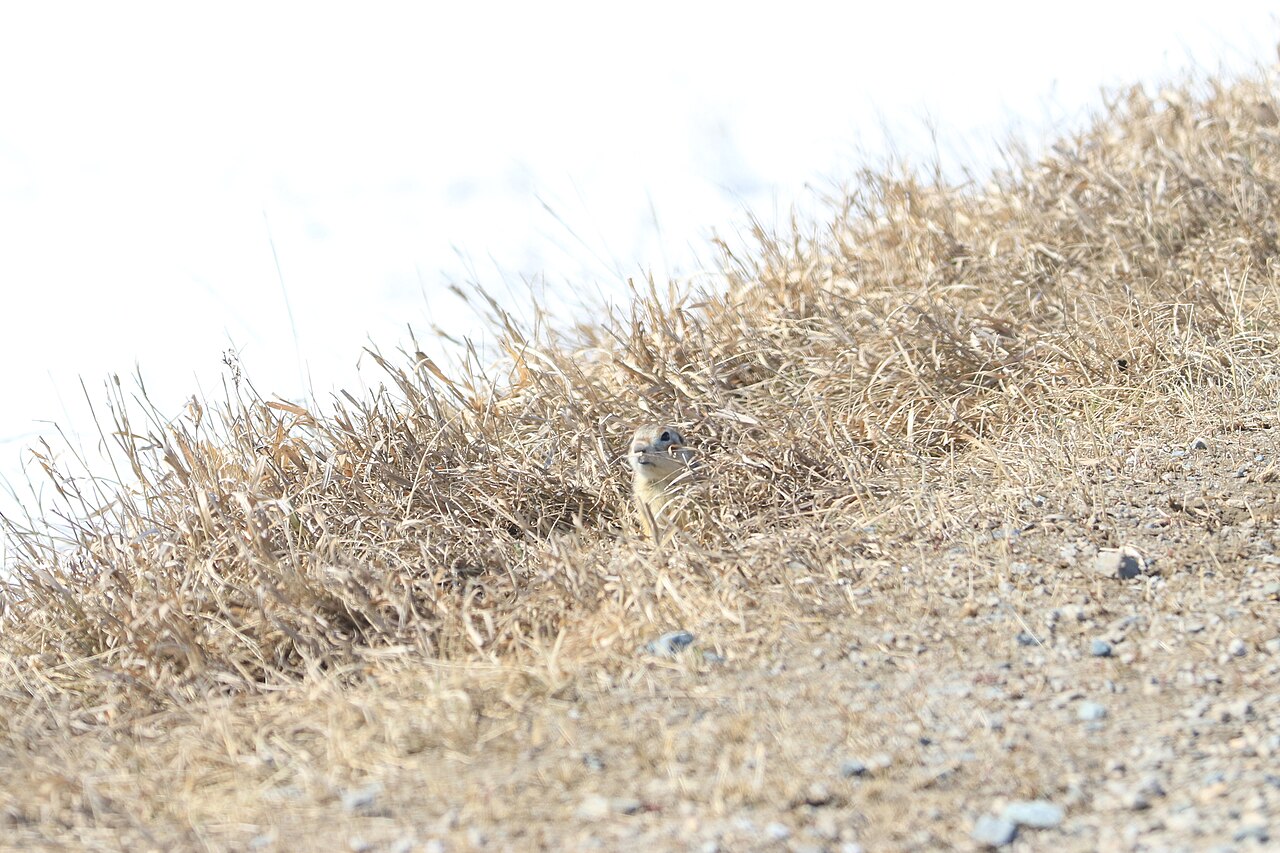
Part of a Eurasian ground-squirrel group
A Journal of Mammalogy review describes Spermophilus as a group associated mainly with open plains, steppes, and related habitats.
Members are active during daylight and use underground shelters. Those broad habits help explain the contrast with familiar woodland squirrels, though details vary between species and locations.
A general ground-squirrel fact should therefore not automatically become a precise claim about every red-cheeked population.
Why older maps can be misleading
The American Society of Mammalogists' Mammal Diversity Database currently lists S. erythrogenys in Russia and Kazakhstan.
It also notes that populations once included in this species have been assigned to Spermophilus selevini and Spermophilus vorontsovi. The latter was described through research published in 2024.
That means an older photograph label or country list may reflect a broader species definition. Current identification needs the locality as well as the appearance.
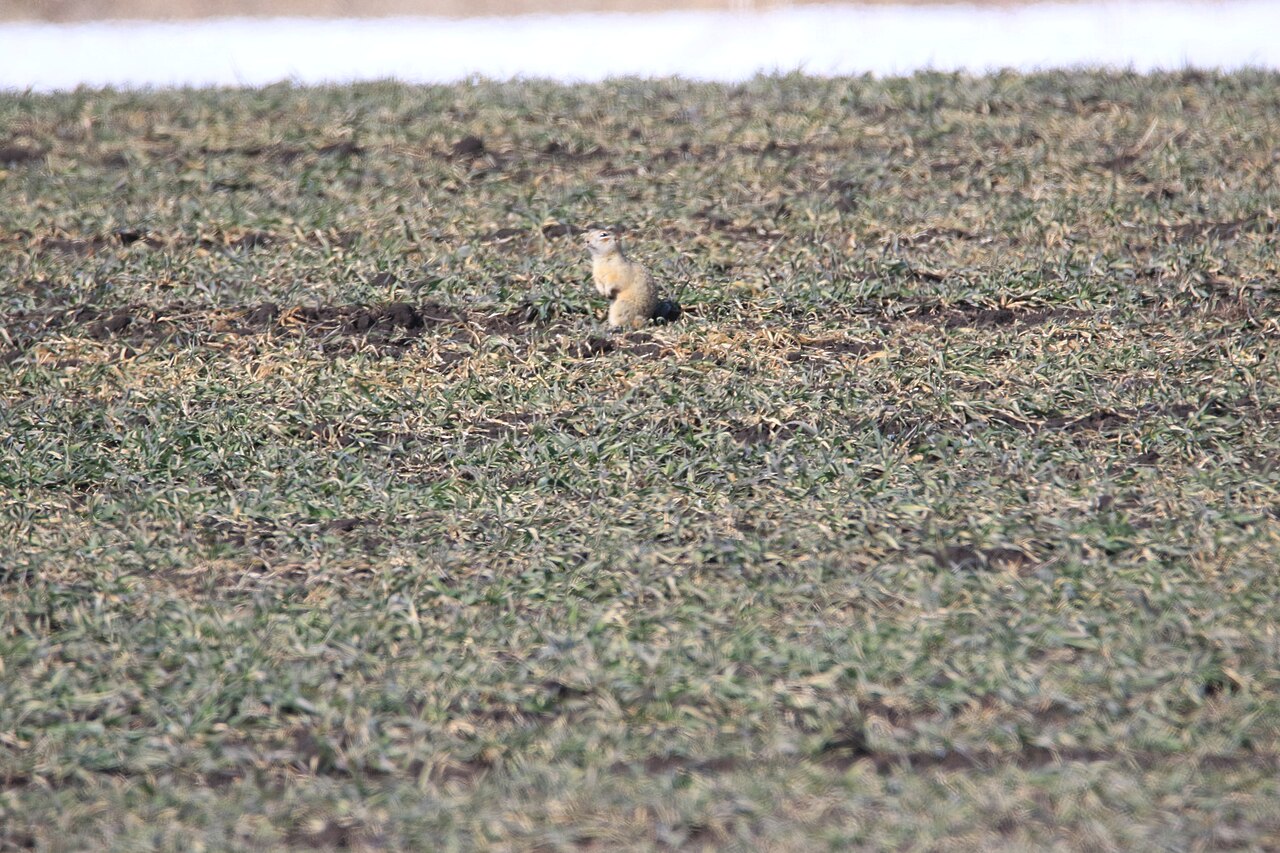
Looking carefully is part of conservation
The Mammal Diversity Database records a Least Concern assessment. That global category does not describe every local population or remove the need for good monitoring.
Clear species boundaries help researchers compare records and understand which populations they are studying. The photographs here are catalogued as S. erythrogenys; their source records are provided below.
A small patch of reddish fur can start the story. Following it leads to grassland ecology, scientific discovery, and the care needed to understand an animal's true place on the map.
Photo credits
Featured image: Spermophilus erythrogenys 392429402.jpg — Svyatoslav Knyazev, CC BY 4.0.

Body image 1: Spermophilus erythrogenys 121075429.jpg — Нурхайдарова Татьяна, CC BY 4.0.

Body image 2: Spermophilus erythrogenys 187273781.jpg — Нурхайдарова Татьяна, CC BY 4.0.

Photographs resized to up to 1,280 pixels wide for web display.