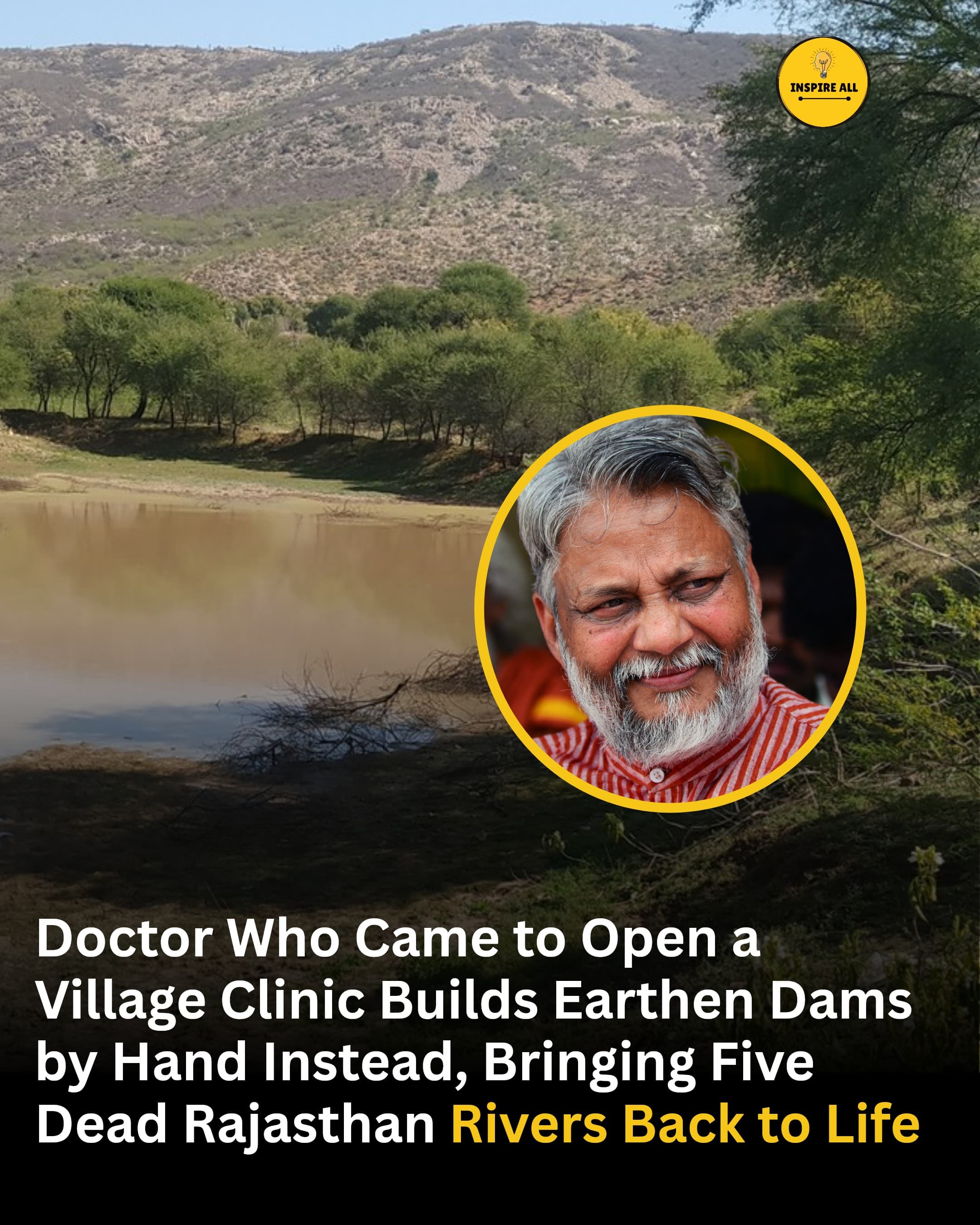
Listening to villagers changed a health worker’s plans and helped begin a collective effort to restore a damaged watershed.
Rajendra Singh arrived in rural Rajasthan in 1985 intending to help through health services. Villagers told him that their most urgent need was water.
He and his colleagues at Tarun Bharat Sangh joined communities in repairing traditional earthen water-harvesting structures called johads.
The Stockholm International Water Institute’s 2015 award announcement records that change of direction and the work that followed.
An old method put back to work
Johads capture monsoon rainfall. Water held in these structures can soak into the ground, helping recharge wells and support the wider watershed.
They were familiar to the communities, but many had fallen into disrepair as the landscape deteriorated.
The Ramon Magsaysay Award Foundation’s 2001 account describes villagers repairing and deepening the structures, contributing resources, and drawing on local skills.
Singh’s role was to help organize and sustain the effort. The result belonged to the villagers and the wider team as well.
Restoring more than a pond
As water-harvesting work expanded, the effects reached beyond the individual structures.
The 2001 award account reported that five formerly dormant rivers were flowing year-round. SIWI later described water-restoration work reaching about a thousand villages and thousands of johads and related structures.
These figures describe historical reporting periods. They should not be read as a newly completed inventory.
The important mechanism was the combination of capturing rain, restoring groundwater, and caring for the land that supplied the water.
Water brought a question of sharing
Recovery also created a governance problem: how should communities share the water?
In his 2001 award response, Singh described the Arvari River Parliament representing 72 villages. Decisions about use became part of the restoration story.
The structures alone could not settle those questions. Community rules and cooperation were needed alongside physical work.
Recognition for collective action
Singh received the Ramon Magsaysay Award in 2001 and the Stockholm Water Prize in 2015.
His story began with being willing to change a plan after listening. It continued because communities committed labor, knowledge, and institutions to the water they depended on.
Related: Chewang Norphel’s seasonal ice storage and Jadav Payeng’s Molai forest.