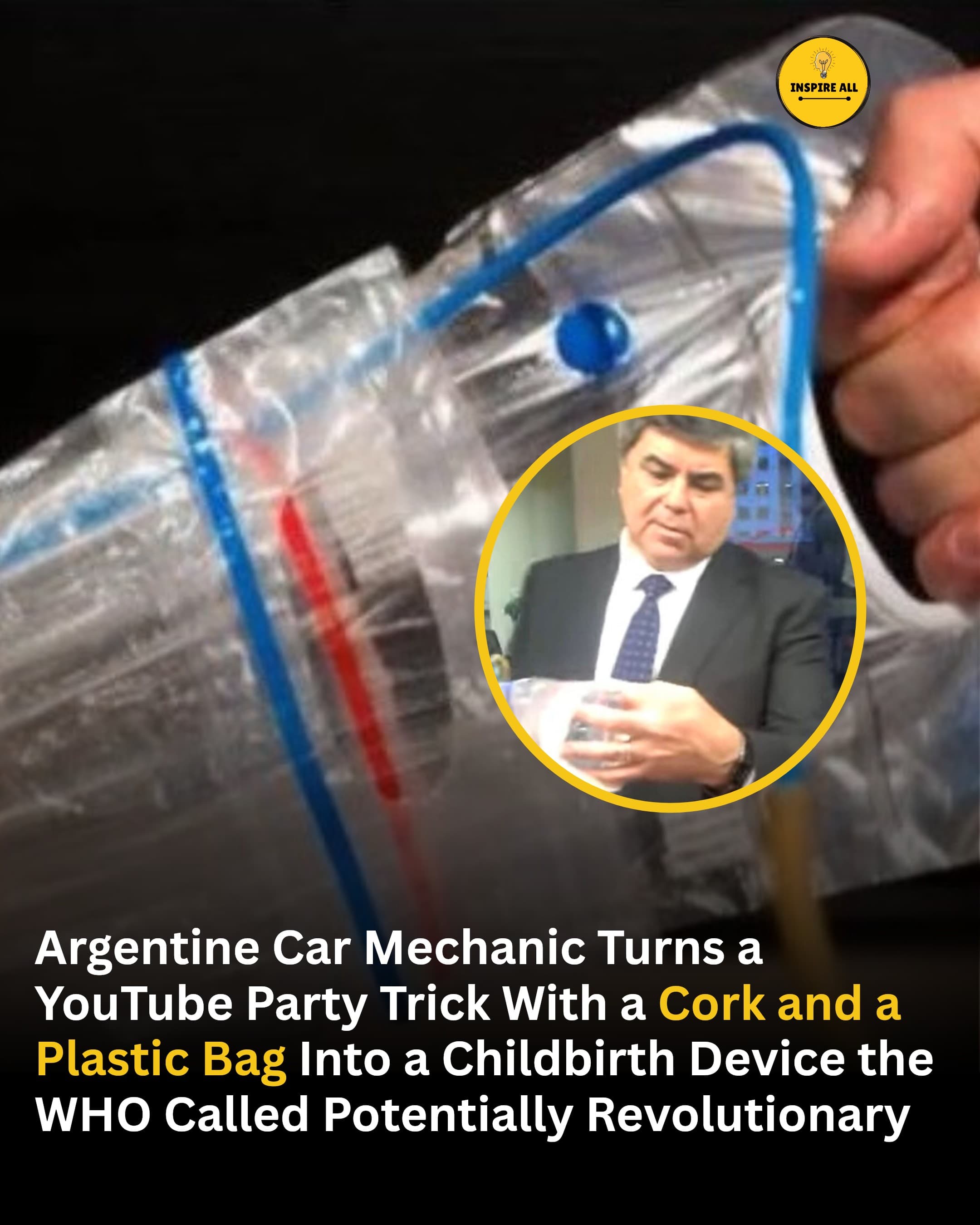
Jorge Odón supplied an unexpected starting idea. Clinicians and researchers then spent years developing and testing it.
Argentine car mechanic Jorge Odón saw a possible connection between a trick for retrieving a cork from a bottle and helping during a difficult birth.
That observation led to a device developed with medical specialists, eventually known as OdonAssist. Its story includes both an unusual invention and a long period of clinical work.
A 2013 editorial in Reproductive Health records early collaboration with Argentina’s CEMIC in 2006, simulator testing in 2008, and a World Health Organization study protocol in 2009.
From an analogy to a medical design
Odón had no medical training. Early models explored whether a sleeve could surround an object and help move it through an opening.
That analogy was a starting point for researchers, rather than proof that an improvised device could safely assist a birth. The eventual product required specialized design, controlled testing, and clinical training.
OdonAssist uses a soft sleeve with an inflatable cuff around the baby’s head to assist vaginal birth. The manufacturer’s current product information describes an applicator, a pressure-limited cuff, and handles used by the clinician.
What the published study found
The UK ASSIST II study involved 104 participants receiving the device during clinically indicated assisted vaginal birth. It reported successful use in 69 cases, or 66%.
The researchers reported no serious device-related maternal or neonatal adverse reactions. They also called for a randomized trial comparing it with established practice. These findings appear in the study published in the American Journal of Obstetrics and Gynecology.
The study was open-label and nonrandomized. Its encouraging findings therefore should not be presented as proof that the device is superior to forceps or vacuum extraction in every setting.
A later stage in a long development
Maternal Newborn Health Innovations now states that OdonAssist is CE marked and can be sold in countries recognizing that mark, subject to applicable local requirements.
That is more specific than saying it has universal approval. It also avoids treating early projected prices or production plans as present-day facts.
The enduring human story is the collaboration: a mechanic contributed an unfamiliar possibility, and people with medical expertise did the work needed to investigate it.
Related: Jane Chen and the Embrace warmer and Richard van As and Ivan Owen’s mechanical hands.