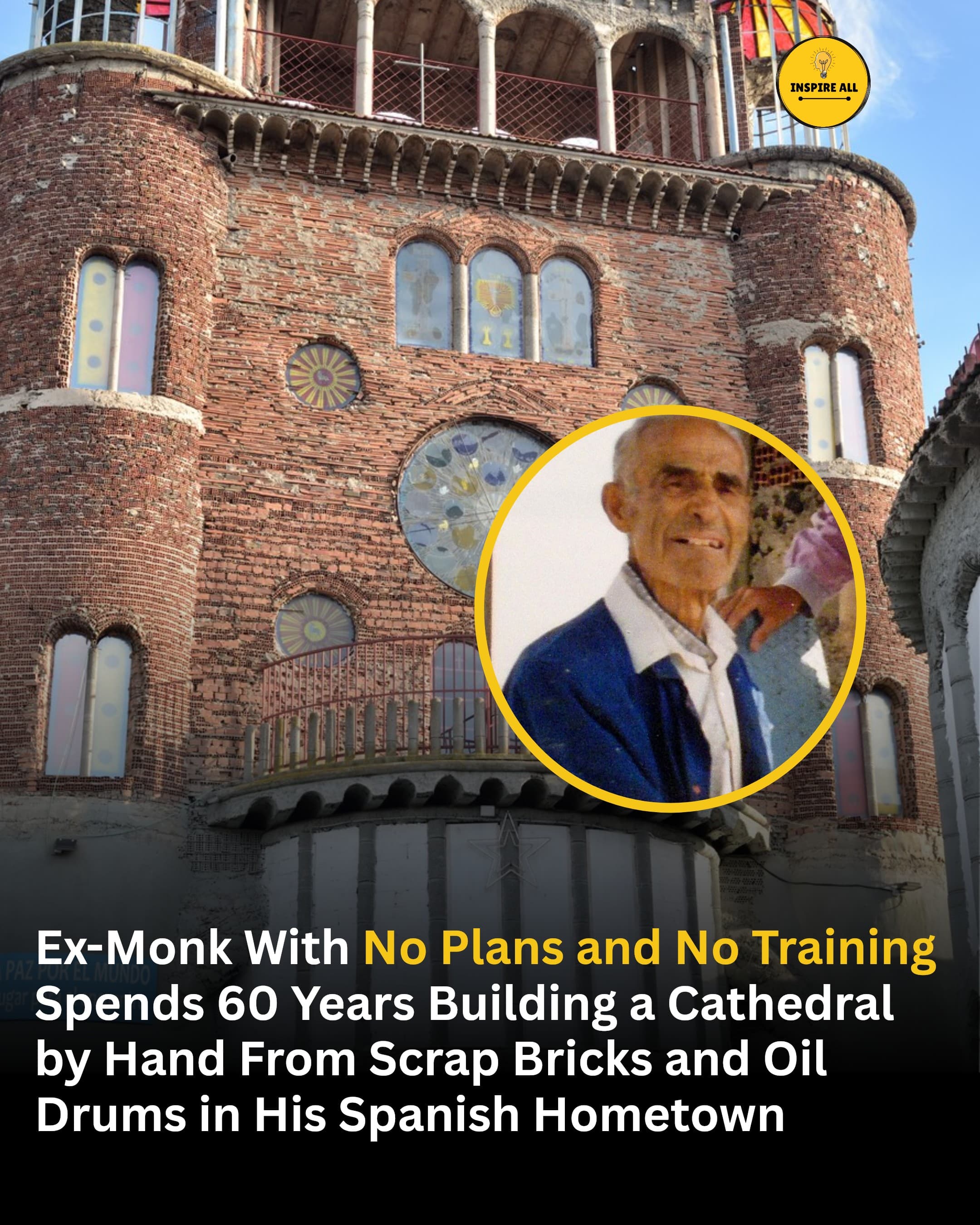
The former monk’s enormous project in Mejorada del Campo, Spain, continued for six decades and remained unfinished at his death.
On October 12, 1961, Justo Gallego began a religious building in his hometown near Madrid. He was thirty-six and had no architectural training.
By the time he died at ninety-six in November 2021, he had devoted sixty years to the project popularly known as Justo’s Cathedral. A contemporaneous report carrying EFE’s confirmation from Mensajeros de la Paz records the anniversary and his death.
A promise after illness
Gallego had left monastic life after contracting tuberculosis. The building was connected to a promise to honor Our Lady of the Pillar if he recovered.
That religious commitment shaped decades of physical work. What began on family land became a vast structure with a central dome, towers, and a crypt.
The familiar name “cathedral” describes the scale and popular identity of his creation. The account is about Gallego’s personal building project.
Reclaimed materials, accumulated over years
The project’s official website describes construction using scrap and recycled materials.
It also records the limits of his formal preparation: he had neither architectural credentials nor prior building experience. His education had been interrupted by the Spanish Civil War, while books about castles and cathedrals fed his interest.
The result was far removed from a project delivered to a fixed schedule. Its form emerged through a long sequence of additions and decisions.
Describing it as the work of a solitary builder captures his unusual personal commitment, but should not erase assistance from others or the later work needed to assess and continue it.
A project inherited by others
Gallego did not see the building completed. Mensajeros de la Paz took on the effort to continue it.
The organization’s official account describes structural study and plans for a meeting place with spiritual and social purposes. Those are continuing responsibilities, rather than evidence that every aspect of the project has been finished.
Gallego’s legacy therefore includes both what he built and what he left for others to care for: a visible record of decades of faith, labor, and resourcefulness.
Related: Ferdinand Cheval’s Ideal Palace and Nek Chand’s Rock Garden.