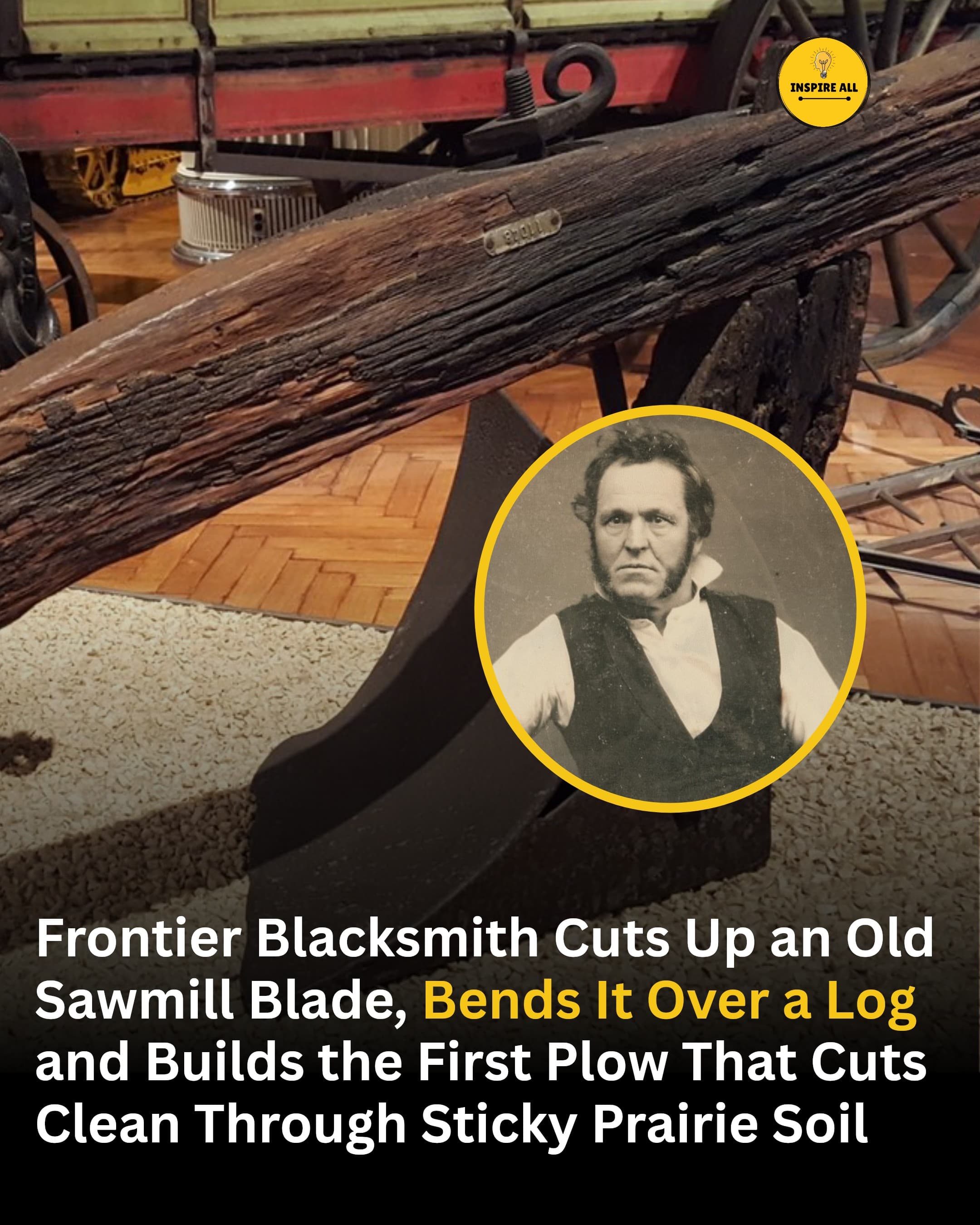
A blacksmith listened to farmers’ complaints and changed the material and shape of a familiar tool.
In 1837, John Deere developed a plow in Grand Detour, Illinois, that addressed an exhausting problem: damp prairie soil stuck to the cast-iron tools farmers had brought west.
He shaped steel from an old sawmill blade into a cutting share and combined it with a curved, polished moldboard.
The Lemelson-MIT biography describes the design and credits assistance from fellow Vermont native Leonard Andrus.
A problem brought into the workshop
Deere had worked as a blacksmith in Vermont before moving to Illinois during economic difficulties in the 1830s.
His new customers described having to stop frequently to scrape earth from their plows. A tool that required constant cleaning made an already demanding job slower.
The problem gave Deere a clear test: could the surface and shape allow soil to pass over it more easily?
The company’s historical account identifies a broken steel saw blade as the material he chose.
What made the plow useful
The share cut the ground, while the moldboard lifted and turned the soil. Smooth, carefully shaped surfaces helped the damp earth slide away.
The term “self-scouring” describes that useful behavior. It did not mean a powered machine cleaned itself; the soil’s movement over the surface helped prevent buildup.
This was an improvement to a long-established agricultural tool. Broad claims that Deere invented every kind of steel plow obscure the more specific design problem he addressed.
A prototype became a manufacturing business
Deere continued refining his designs rather than treating the first successful trial as the end.
The company’s history reports production of 2,000 plows a year by 1849. Lemelson-MIT describes later growth and a shift toward producing tools in advance rather than waiting for individual orders.
That change brought manufacturing and selling into the story alongside invention.
Listening was part of the craft
Deere’s workshop experience helped him work with metal. His customers supplied evidence of what the tool needed to do.
The resulting design joined both kinds of knowledge: the farmer’s repeated frustration and the blacksmith’s ability to alter material, polish, and curvature.
A discarded blade became useful because someone matched it to a problem that was already well understood by the people doing the work.
Related: Mallesham’s Asu machine and Edward Leedskalnin’s homemade tools.