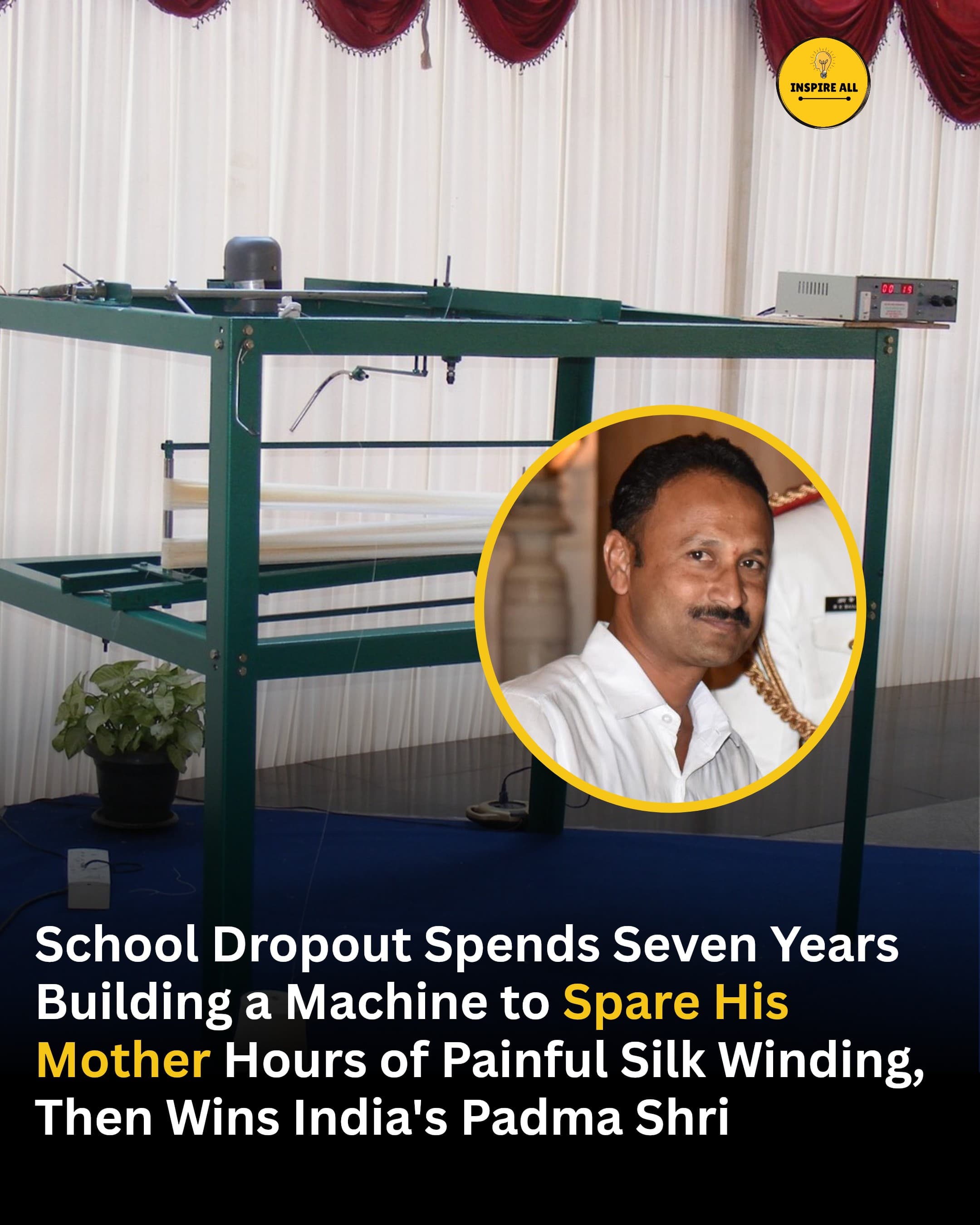
The Laxmi Asu machine mechanized a demanding preparation stage in Pochampalli sari making while preserving the craft it served.
Chintakindi Mallesham’s invention began with the work his mother performed before a sari reached the loom.
In his weaving community in what is now Telangana, India, preparing yarn by hand involved hours of repetitive arm movements. His mother, Laxmi, experienced pain in her shoulders and elbows. In 1992, when he was twenty, Mallesham began trying to mechanize the process.
The National Innovation Foundation’s account documents that starting point and the years of development that followed.
What the Asu machine actually does
Asu is a yarn-winding stage used in preparing Pochampalli ikat saris. It is part of the work that makes the eventual pattern possible.
The machine does not take a finished design and weave an entire sari in ninety minutes. It reduces a particular preparation task that previously required repeated hand movements over several hours.
That distinction helps explain its value. Relieving a demanding stage can improve working conditions without removing the knowledge and skill involved in the wider craft.
Seven years of experiments
Mallesham divided the task into separate mechanical movements, funding parts as he could.
The foundation’s account describes setbacks, depleted savings, and his move to Hyderabad for paid electrical work while continuing the project. His wife, Swarna, also contributed financial support.
The first machine was completed in 1999. Its name, Laxmi Asu, honored his mother.
The story is often framed simply as one man persevering. The fuller version includes family support, existing weaving knowledge, and the practical difficulty of finding the right mechanism with limited money.
Recognition for easing difficult work
Mallesham received the Padma Shri in 2017. The Government of India’s discussion of that year’s awards identified him with the labor-saving Asu machine.
A 2019 government account described the reduction to about an hour and a half and noted a film about his life.
The machine’s lasting significance is easy to locate: it addressed work that was essential, physically demanding, and often performed out of public view.
Related: Mansukhbhai Prajapati’s clay refrigerator and Arunachalam Muruganantham’s pad-making machine.