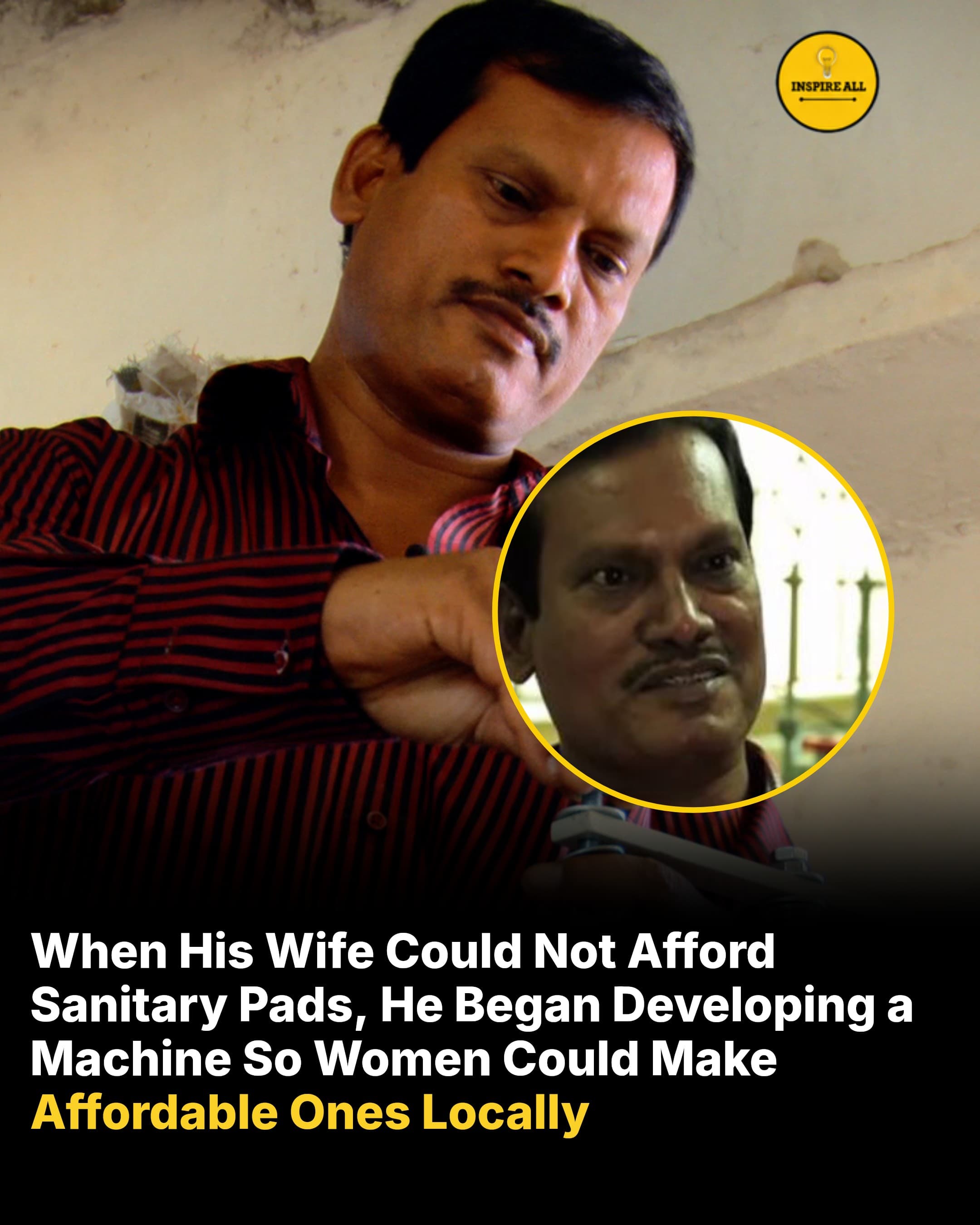
A household expense became the starting point for an invention intended to support affordable menstrual products and local livelihoods.
Arunachalam Muruganantham began investigating sanitary pads after learning that buying them would put pressure on his family’s budget.
In a December 25, 2017 Indian Express interview, he traced the idea to his wife’s experience. She told him that purchasing pads would mean reducing spending on milk.
His response eventually became a low-cost machine for making sanitary pads.
A problem people found difficult to discuss
Muruganantham described difficulty finding volunteers to test his early work because menstruation was surrounded by taboo.
That made product development more complicated. Understanding whether an item works requires feedback from the people who use it, and stigma can interfere with those conversations.
The interview presents his experience as a lengthy effort to investigate a practical problem, rather than an immediate solution.
Why build a machine?
TED’s account of his work also links the invention to the choice between household essentials and menstrual supplies.
The production-machine approach goes beyond providing a single packet of pads. It makes local manufacturing part of the proposed response to affordability.
A UNFPA social-innovation toolkit describes how Muruganantham reverse-engineered a pad and developed simple machinery that women in a community could operate.
That model connects product access with an opportunity to earn income. Its practical success still depends on reliable production, appropriate quality control and customers.
The personal question behind a wider idea
The invention began with listening to someone close to him about an expense he had not fully understood.
It then became a different question: could the means of production be made more accessible too?
This account does not establish current machine prices or distribution totals, and it makes no medical claim about a particular product. It follows the documented origins and purpose of the work.
The human-interest value rests in that progression. A private household difficulty became a reason to investigate manufacturing and the barriers surrounding a necessary product.
Sources include Muruganantham’s published interview, TED and UNFPA. Featured graphic supplied by Inspire All.
Related reading: Himaja’s voice-controlled Braille printer and Gargi Agrawalla’s portable alert prototype.