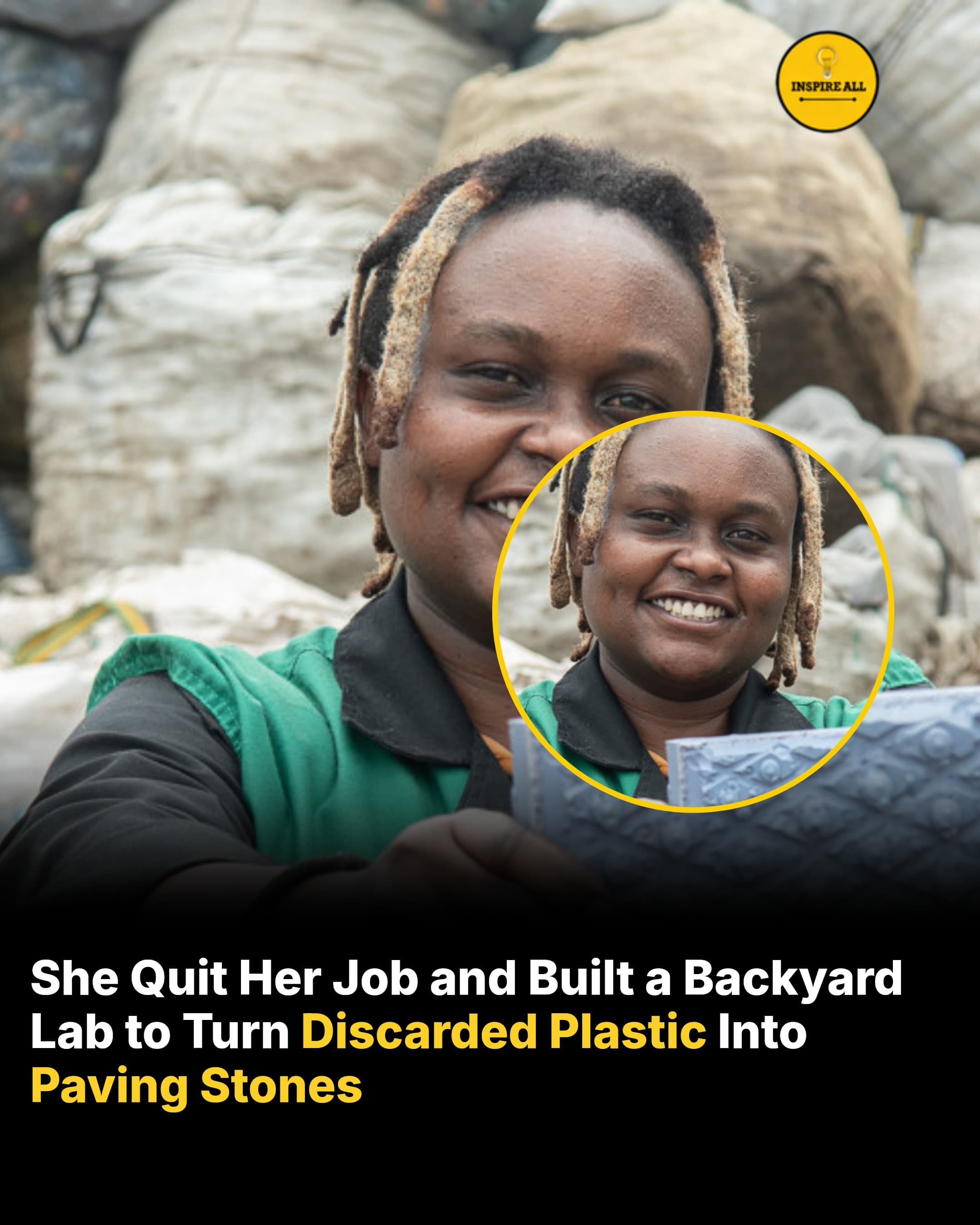
A Nairobi inventor tested discarded plastic and sand until she could make paving stones, then tackled the machinery needed to produce them repeatedly.
Nzambi Matee’s paving-stone project began with plastic waste she saw around Nairobi. In 2017, she left her job and established a small laboratory in her mother’s backyard.
A UN Environment Programme profile published in December 2020 describes the experiments behind Gjenge Makers, her construction-materials business.
Finding a mixture that worked
Matee combined plastic with sand and tested different ratios. The machinery prompted complaints from neighbours, and she invested her savings while developing the process.
A training opportunity in the United States gave her access to laboratory resources at the University of Colorado Boulder. She used them to refine the material and machinery.
The next challenge was scale: producing one successful paver was different from making a repeatable batch.
Recognition, with dates attached
UNEP named Matee a 2020 Young Champion of the Earth. Its award record identifies her as the winner for Africa.
The 2020 profile documented customers including schools and homeowners. Those details describe the business at the time of that report; they are not a statement of its present production or sales.
The story supports a specific achievement: developing and producing plastic-and-sand paving stones. It does not establish that every discarded plastic is suitable or that the material is appropriate for every construction use.
The work between waste and a product
Reusing material involves more than finding an appealing second purpose. A manufacturer must also determine which inputs work together and whether the result can be made consistently.
That is the useful distinction in Matee’s account. Her experiments concerned both the paver and the equipment behind it.
Her story follows a practical progression: notice a waste stream, test a material, refine the process and find customers for the result.
The backyard laboratory was a starting place. The larger achievement was turning repeated experiments into a product people could use.
This is a historical profile based on UNEP’s reporting and award record. No current output, pricing or universal performance claim is made. Featured graphic supplied by Inspire All.
Related reading: Himaja’s voice-controlled Braille printer and Gargi Agrawalla’s portable alert prototype.