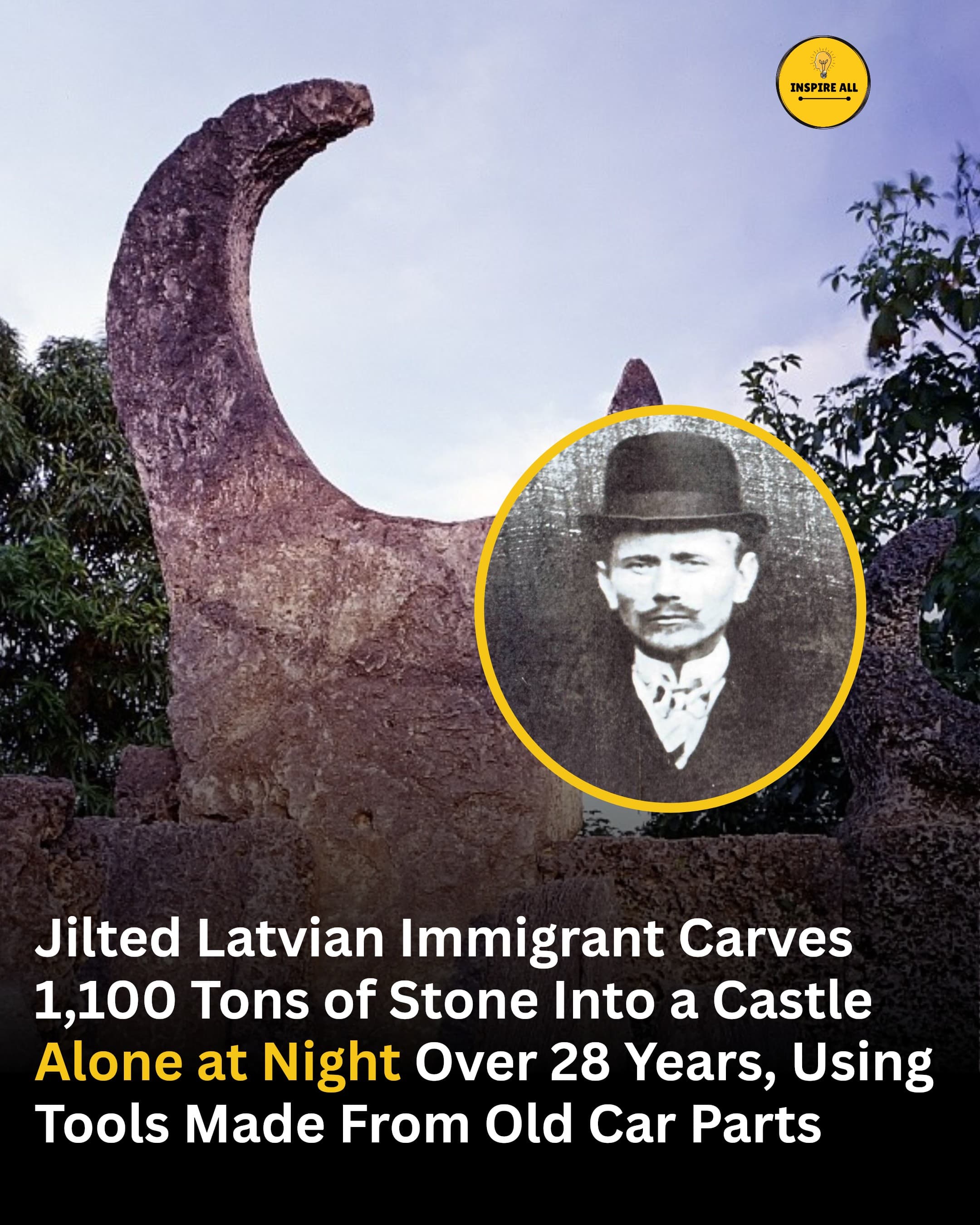
Edward Leedskalnin spent 28 years quarrying and carving the Florida sculpture garden known as Coral Castle, using homemade tools and practical lifting equipment.
In 1923, Latvian immigrant Edward Leedskalnin began the stone-building project that would occupy the rest of his life. Working in South Florida, he created a house and sculpture garden from massive pieces of local limestone.
By his death in 1951, the work had become a remarkable landscape of stone furniture, walls, and astronomical carvings. The Coral Castle museum describes the total material as more than 1,100 tons.
Its scale invites wonder. The surviving history also offers something concrete to admire: craftsmanship, resourcefulness, and decades spent solving difficult physical problems.
The man behind the stone
The museum’s biography of Leedskalnin says he came from modest circumstances and learned stonemasonry through his family in Latvia.
It connects his emigration with a broken engagement and describes the project as a monument to a lost love. That is the museum’s account of his motivation, rather than something the size of the sculptures can independently establish.
He settled in Florida City and began shaping the local oolitic limestone, commonly called coral rock.
Homemade tools and a knowledge of balance
Leedskalnin often worked alone at night. His equipment included tripod-mounted chain hoists, pulleys, and tools fashioned from old car and truck parts.
The National Register nomination preserved by the National Park Service describes rollers, jacks, wedges, cables, and chisels, alongside the importance of leverage and balance.
Those are mechanical aids. Describing his achievement as work done with “no machinery” obscures the very ingenuity that made it possible.
The museum’s tool collection includes a rock hammer for finishing stone surfaces and a homemade lever associated with pulling heavy objects.
A nine-ton gate that moved easily
One of his best-known creations was a revolving stone gate reported to weigh nine tons.
The historic nomination describes a central pivot and an automobile axle. The museum explains that the carefully balanced assembly also used an old truck bearing.
That arrangement helps explain how a stone of such mass could respond to a gentle push. Moving a balanced object around a pivot is a different task from lifting its full weight off the ground.
The gate’s effect on visitors came from the precision of the work behind it.
Moving sculptures rather than an entire castle
During the late 1930s and the years of relocation that followed, Leedskalnin transferred his sculptures to a site north of Homestead.
The museum documents transport help from farmer Bob Biggers, who drove the loaded trailer. Leedskalnin handled loading and unloading. Permanent walls and living quarters were rebuilt at the new location rather than moved intact.
The exact relocation dates vary between historical accounts, but the central point is clear: his later garden combined transported sculptures with new construction.
A lasting record of patient work
Leedskalnin died in December 1951, aged 64. Coral Castle entered the National Register of Historic Places in 1984.
His work remains compelling because of the time, skill, and attention it represents. The extraordinary result stands beside evidence of ordinary tools used with unusual persistence.
Related stories: Ferdinand Cheval’s stone-built Ideal Palace and Justo Gallego’s decades of building with reclaimed materials.