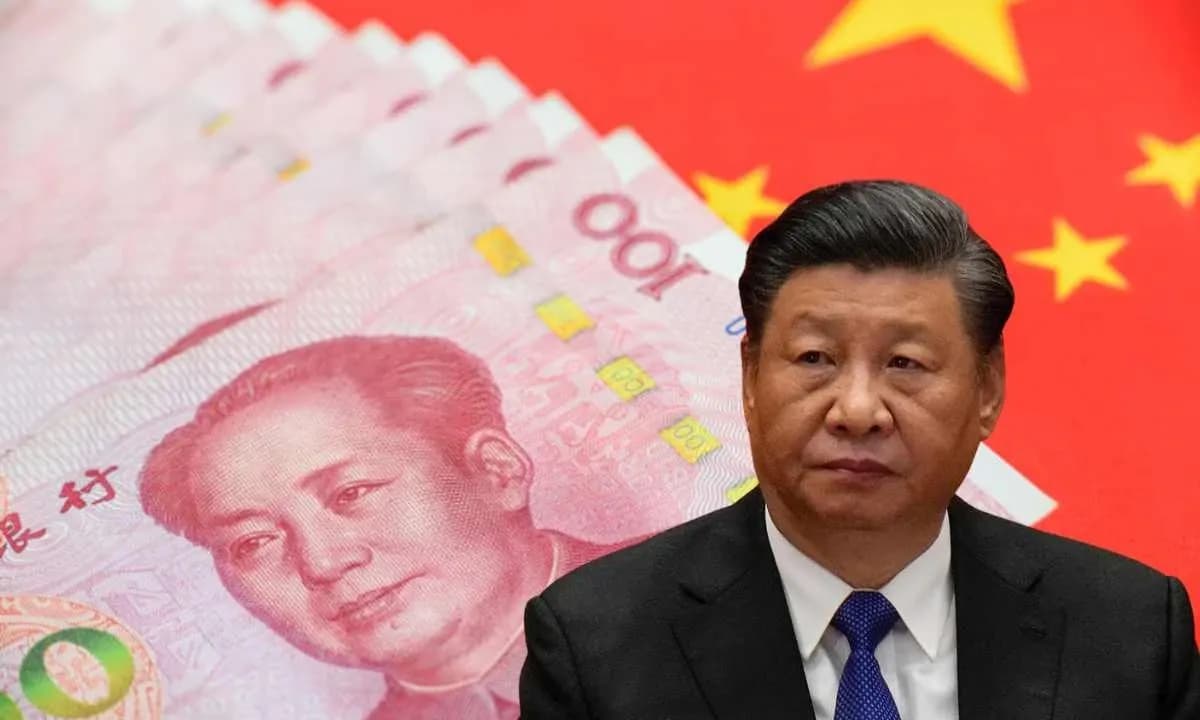
Something big just happened in the global economy. China’s currency, the yuan, has dropped to its lowest level since 2007. This sudden fall comes right after the U.S. announced new tariffs targeting Chinese products, including key green energy items like electric vehicles and solar panels.
The yuan’s drop hit 7.23 against the U.S. dollar, showing that the currency has lost major value. At the same time, China’s central bank, the People’s Bank of China (PBOC), seems to be letting it slide instead of stepping in to stop it. Traders and financial experts are calling this a clear sign that China is trying to quietly ease economic pressure without making any bold moves that might stir panic.
This currency shift has huge implications. A weaker yuan means China’s exports become cheaper, which could help boost sales abroad. However, for Chinese citizens, it could make imported goods more expensive, putting more pressure on consumers already dealing with a slowing economy. Meanwhile, U.S. officials worry that this is part of a strategy to fight back against the new tariffs.
In response to the U.S. trade measures, the PBOC set the daily midpoint rate at 7.0957 yuan per dollar—a clear sign it is loosening its grip on the currency. Experts noticed that this rate was the weakest since November 2023, and traders reacted quickly.
“The PBOC appears to be stepping back from tight control… maybe to allow the yuan to act as a cushion for tariffs.”
According to FX strategist Ken Cheung from Mizuho Bank
This development ties into a larger economic standoff. Just last week, the U.S. revived tariffs on $18 billion worth of Chinese goods, saying China had flooded the market with green tech products. China denies the claims but hasn’t officially responded to the tariffs yet. Instead, the weakening yuan could be its first quiet move in this economic chess match.
What makes this even more interesting is how the market is watching every signal from the PBOC. The daily “fix” of the currency used to be a firm anchor, but now traders are seeing it as more flexible. Goldman Sachs pointed out that recent fixings were finally in line with market forecasts, suggesting China is becoming more “market-driven.”
This shift comes at a sensitive time. China’s economy has been under pressure from falling property sales, weak consumer confidence, and high youth unemployment. A weaker yuan might help exports in the short term, but it also raises fears of capital outflow, where investors move money out of China to safer currencies.
The ripple effect won’t stop in China. Other Asian currencies are feeling the heat too. The Japanese yen, South Korean won, and Singapore dollar all saw changes in reaction to the yuan’s move. Economists fear that this could lead to a currency war, where countries keep weakening their money to stay competitive.
So, what’s next? Will the U.S. respond again, possibly tightening controls or pushing for stronger global trade rules? Or will China continue this silent strategy, adjusting its currency slowly to gain an edge?
The most important question is: How far will China let the yuan fall—and at what cost? That’s the story economists, investors, and world leaders are now watching closely.