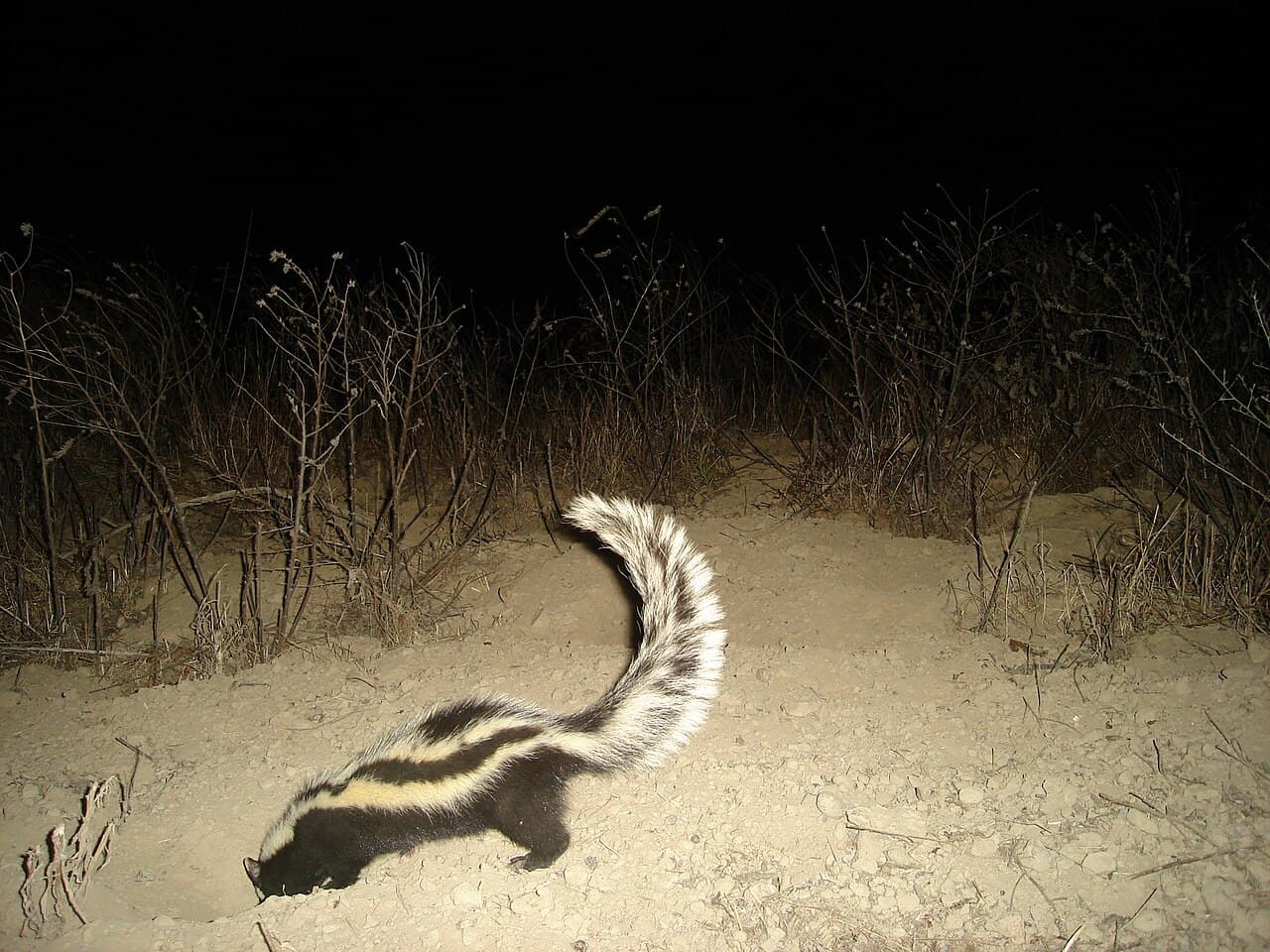
A zorilla can turn its rear toward a persistent threat and release a strong-smelling defensive secretion. The black-and-white coat makes the warning look familiar, but this is not a true skunk.
Ictonyx striatus is also called the striped polecat. It belongs to the mustelid family.
A pattern with a purpose in a larger story
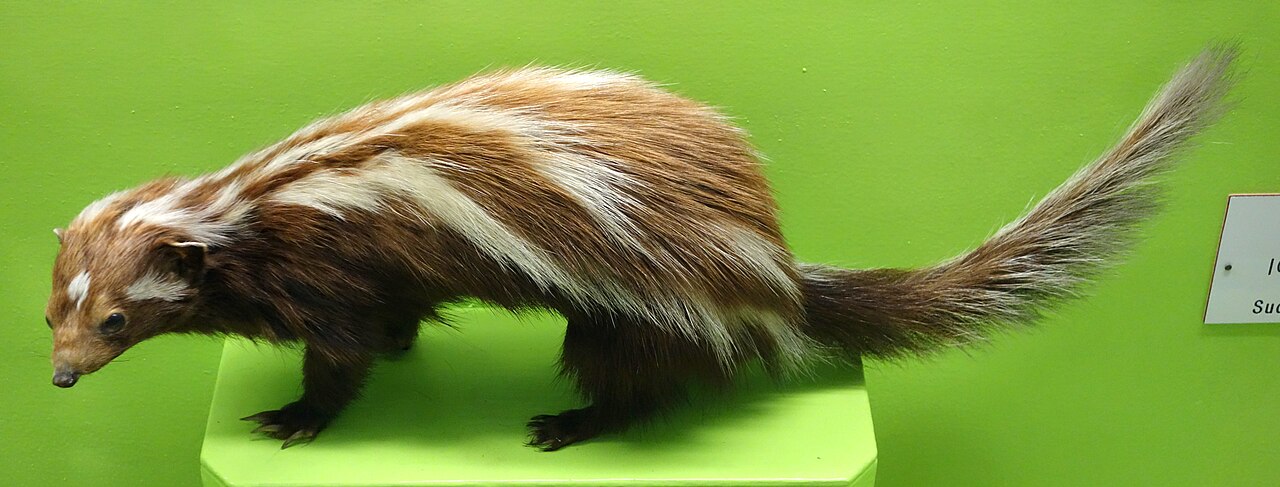
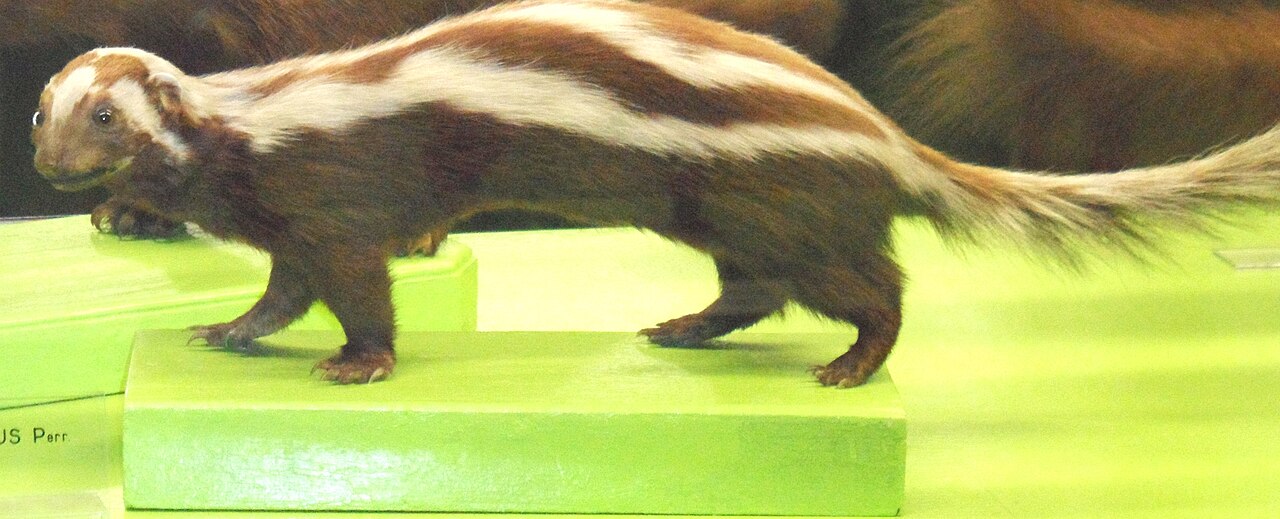
The Animal Diversity Web striped-polecat profile describes an African mammal with a dark underside, pale stripes, and a bushy tail.
It can growl, raise its tail, and escalate its response if a disturbance continues. Defensive secretion is part of that sequence.
The sensible encounter is an undisturbed one, with the animal free to move away.
A small hunter after dark
Zorillas are mainly nocturnal. Rodents, insects, and other small animals provide food.
Their short legs place them close to the ground, where prey hides among vegetation or soil.
A bold coat does not tell us everything about a hunter. Feeding habits and activity times fill out the picture.
A photograph needs context
Museum specimens reveal markings, while the nighttime photograph shows a living animal. These are different views of the same species.
The zorilla deserves attention beyond a comparison with skunks. It is part of Africa's small-carnivore diversity, working a night shift most people never see.
A raised tail is a memorable detail. Behind it is an animal whose first need is a safe way to continue its life.
Photo credits
Featured image: Ictonyx striatus 10897825.jpg — Henry de Lange; CC BY 4.0.

Body image 1: Ictonyx striatus - Museo Civico di Storia Naturale Giacomo Doria - Genoa, Italy - DSC02633.JPG — Daderot; CC0.

Body image 2: Striped polecat.jpg — Mariomassone; CC BY-SA 3.0.

Photographs resized for web display where available.