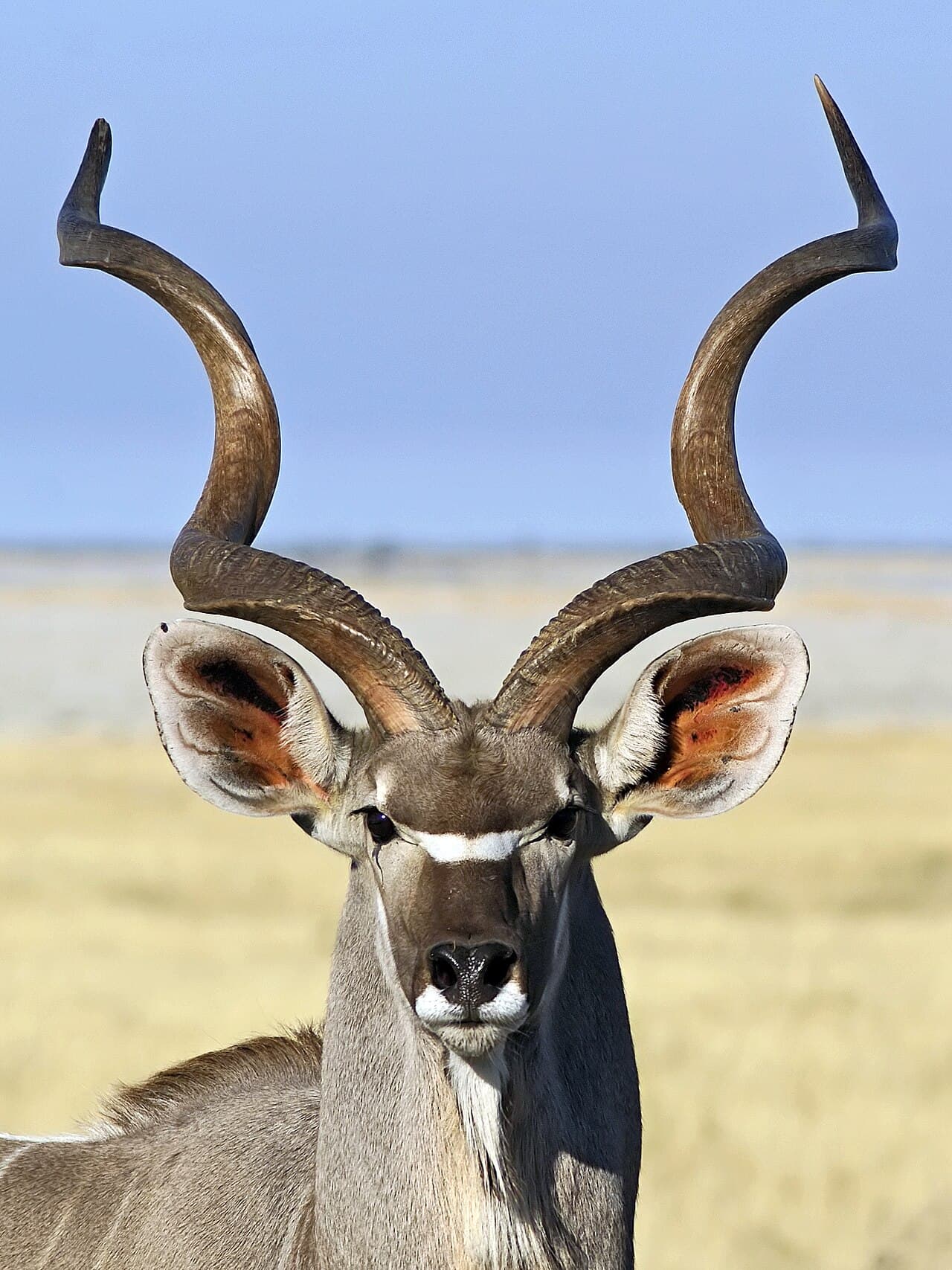
A mature male greater kudu carries horns that rise in long spirals. Yet the animal beneath them can be surprisingly difficult to notice among branches.
Tragelaphus strepsiceros is a large African antelope. Pale body stripes, a facial marking, and large ears help create its distinctive appearance.
Horns do not tell the whole species story
The African Wildlife Foundation kudu guide distinguishes greater and lesser kudus.
Adult males bear the impressive spiral horns. Females are smaller and normally hornless, while young males develop their horns gradually.
A portrait of one bull should therefore not become the expected outline of every kudu.
Life among leaves
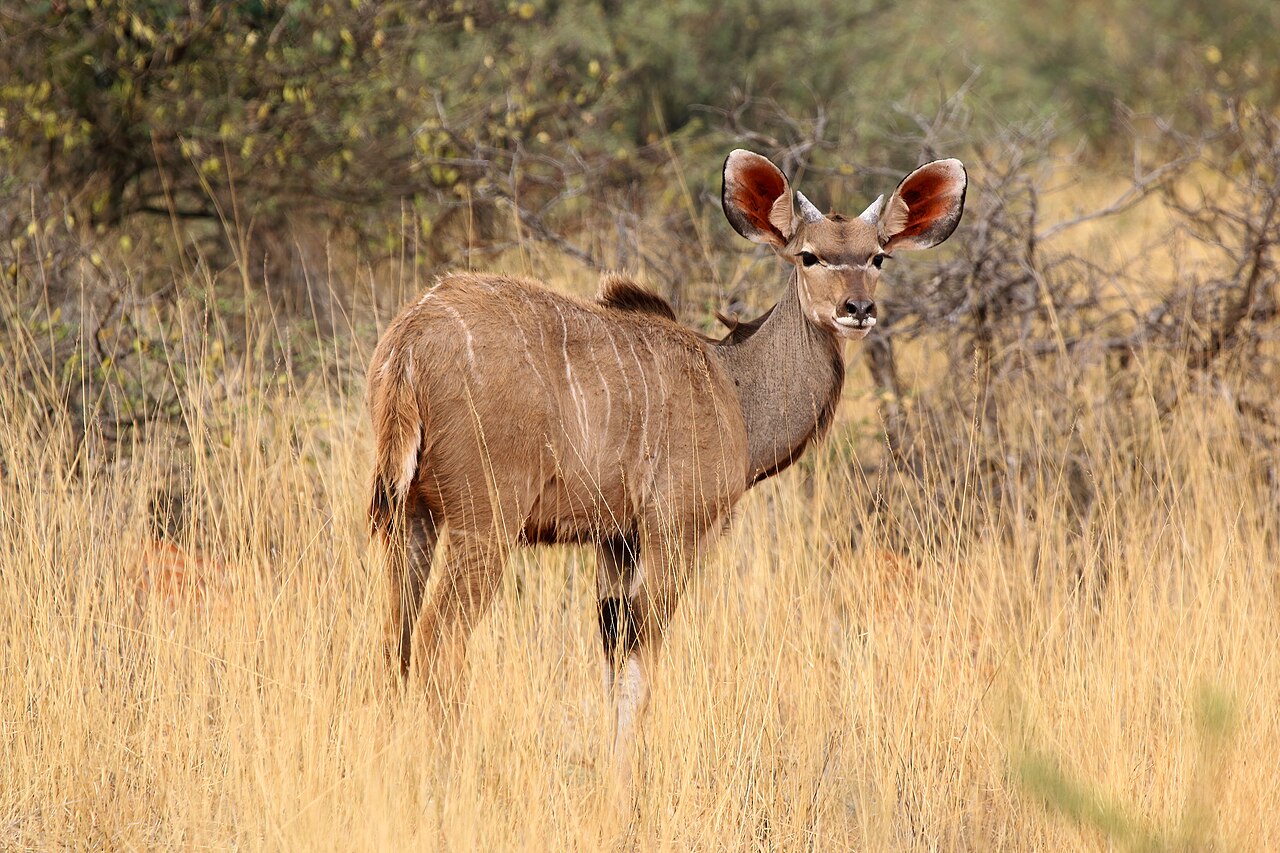
Greater kudus browse on vegetation in wooded and bushy habitats. They do not need an empty plain to make a striking African scene.
The vertical stripes and grey-brown coat create a different effect against a broken background of branches and light.
Look beyond the horns and notice the ears, narrow face, and position of the legs.
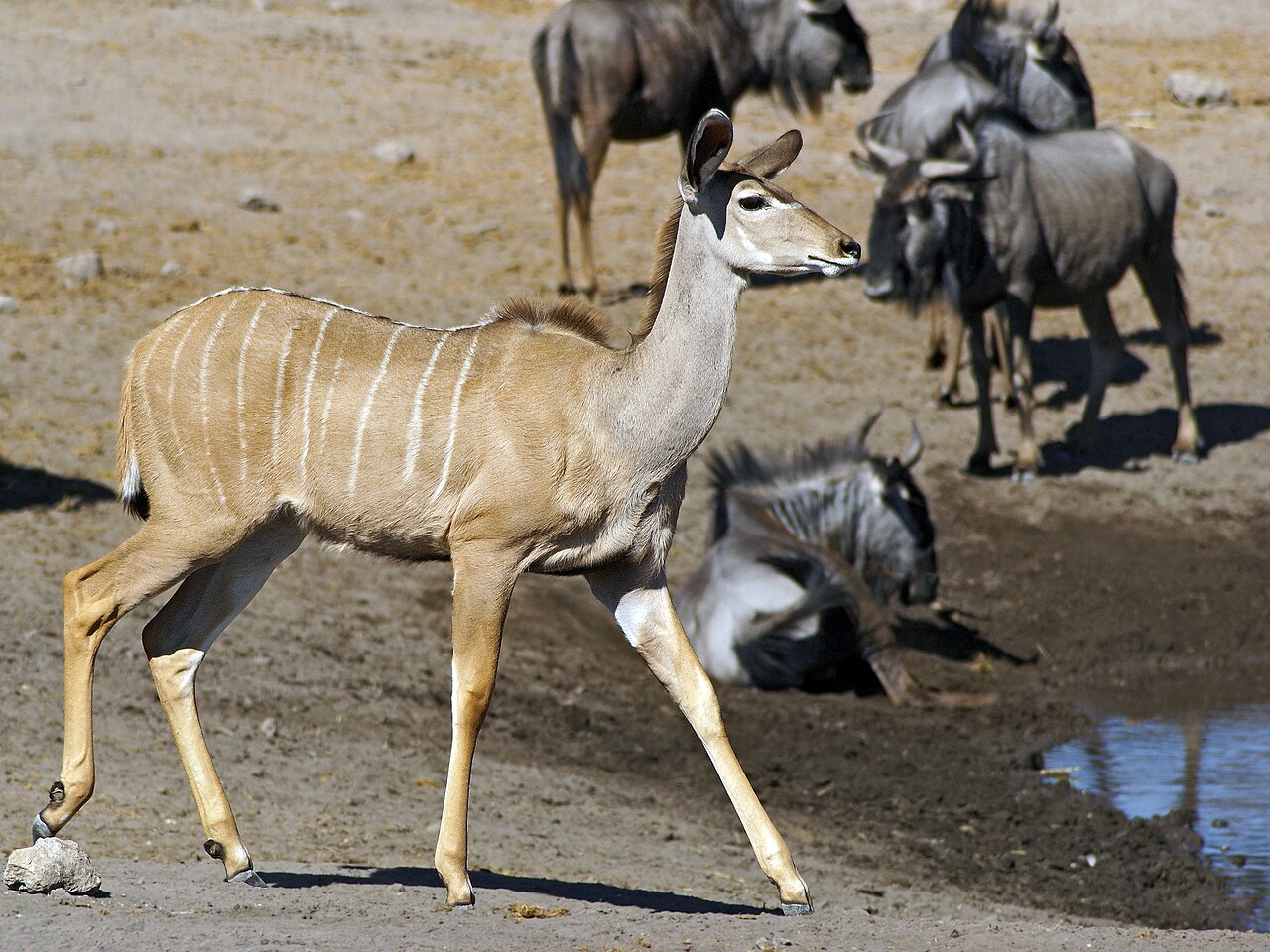
An antelope belongs to its surroundings
Hunting and changes to habitat can affect kudu populations. Their future depends on both suitable vegetation and safe access to it.
A horn is a remarkable structure, but preserving living animals means protecting more than a trophy-shaped feature.
The greater kudu offers two kinds of wonder: the obvious drama of a mature bull and the quieter surprise of a large animal becoming part of the bush around it.
Photo credits
Featured image: Tragelaphus strepsiceros ♂ (head).jpg — Hans Hillewaert; CC BY-SA 4.0.

Body image 1: Greater kudu (Tragelaphus strepsiceros) calf male.jpg — Charles J. Sharp; CC BY-SA 4.0.

Body image 2: Tragelaphus strepsiceros (female).jpg — Hans Hillewaert; CC BY-SA 4.0.

Photographs resized for web display where available.