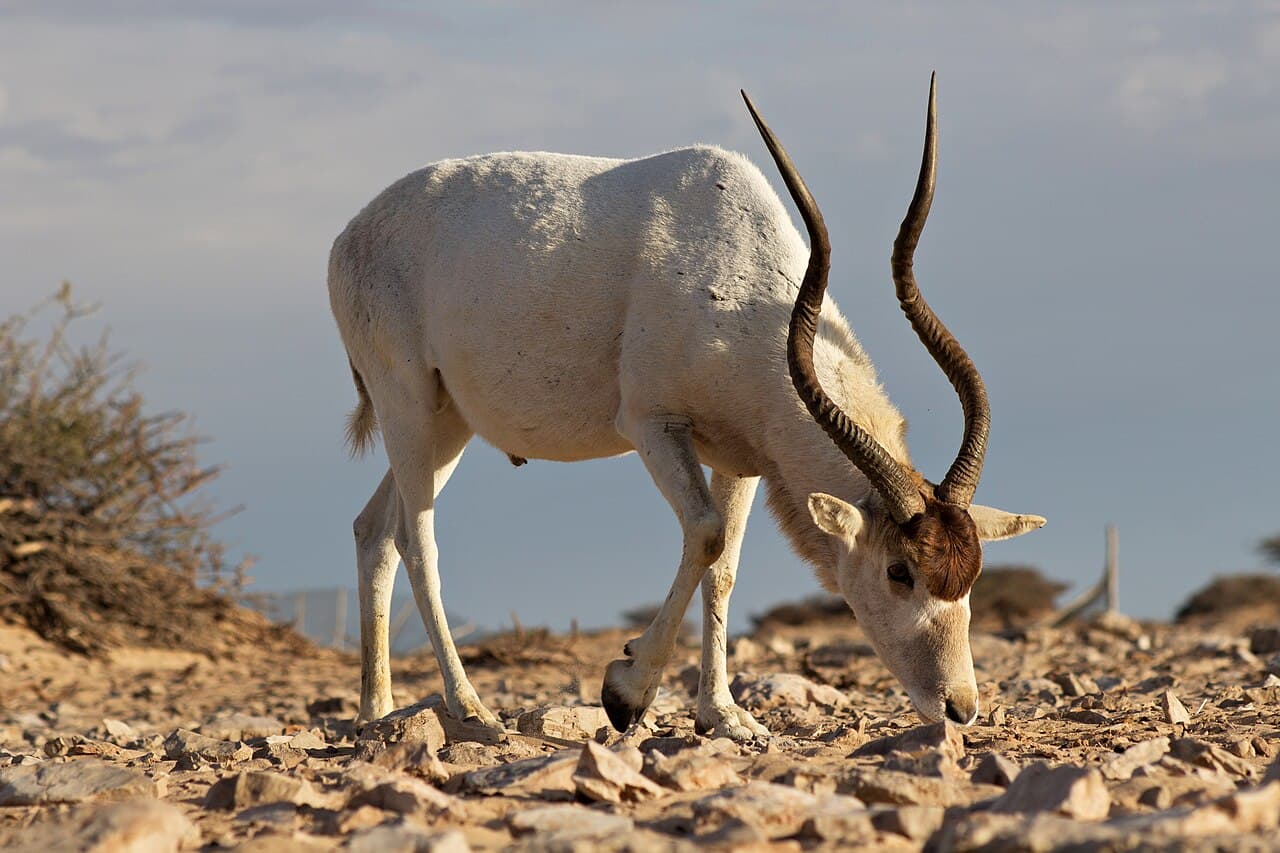
An addax can live in intensely dry desert conditions, yet specialization has not protected it from human pressure. The pale antelope with twisted horns faces a far greater challenge than heat alone.
Addax nasomaculatus is native to the Sahara. Its light coat and long horns give it a striking desert outline.
A desert animal with a shrinking range
Sahara Conservation's species profile lists the addax as critically endangered.
Once spread across much of North Africa, surviving populations have become severely restricted. Hunting and insecurity have played major roles in that loss.
A harsh environment can be survivable when an animal is adapted to it. New pressures can still exceed what those adaptations can handle.
Recovery takes more than breeding
Sahara Conservation describes work to restore addax to the wild, including protection, monitoring, and reintroduction.
Animals under managed care can support recovery, but suitable release areas and continued security are essential too.
A successful return is a beginning rather than a reason to stop caring.
Read photographs in their setting
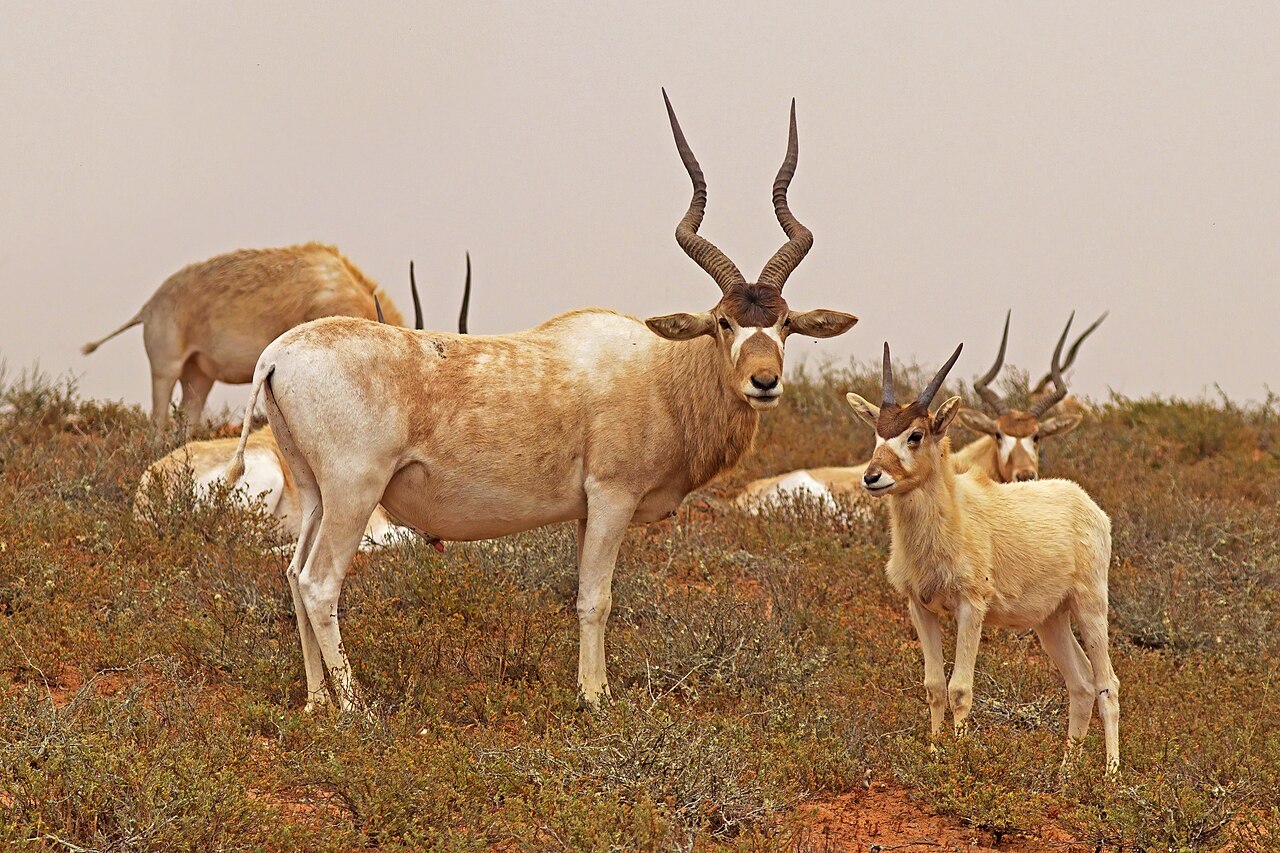
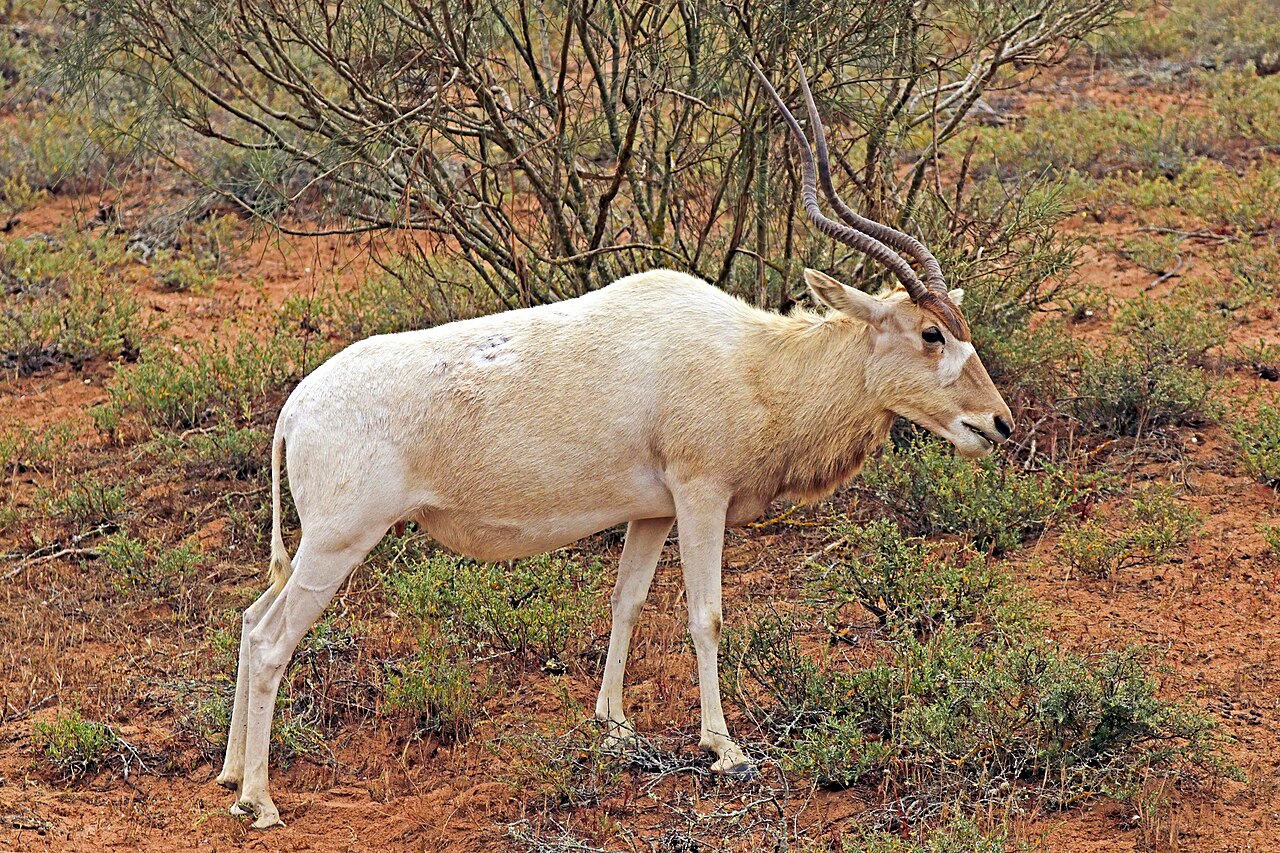
The images here include addax in managed reserves and conservation settings in Morocco. They show living animals, not evidence that the species is secure across the Sahara.
The addax's pale coat may suggest strength against the desert sun. Its conservation story reminds us that survival also depends on choices made far beyond an individual animal's body.
Photo credits
Featured image: A big male Addax showing as the power of his horns.jpg — HaytemBouchri93; CC BY-SA 4.0.

Body image 1: Addax (Addax nasomaculatus) adult male and juvenile.jpg — Charles J. Sharp; CC BY-SA 4.0.

Body image 2: Addax (Addax nasomaculatus) female.jpg — Charles J. Sharp; CC BY-SA 4.0.

Photographs resized for web display where available.