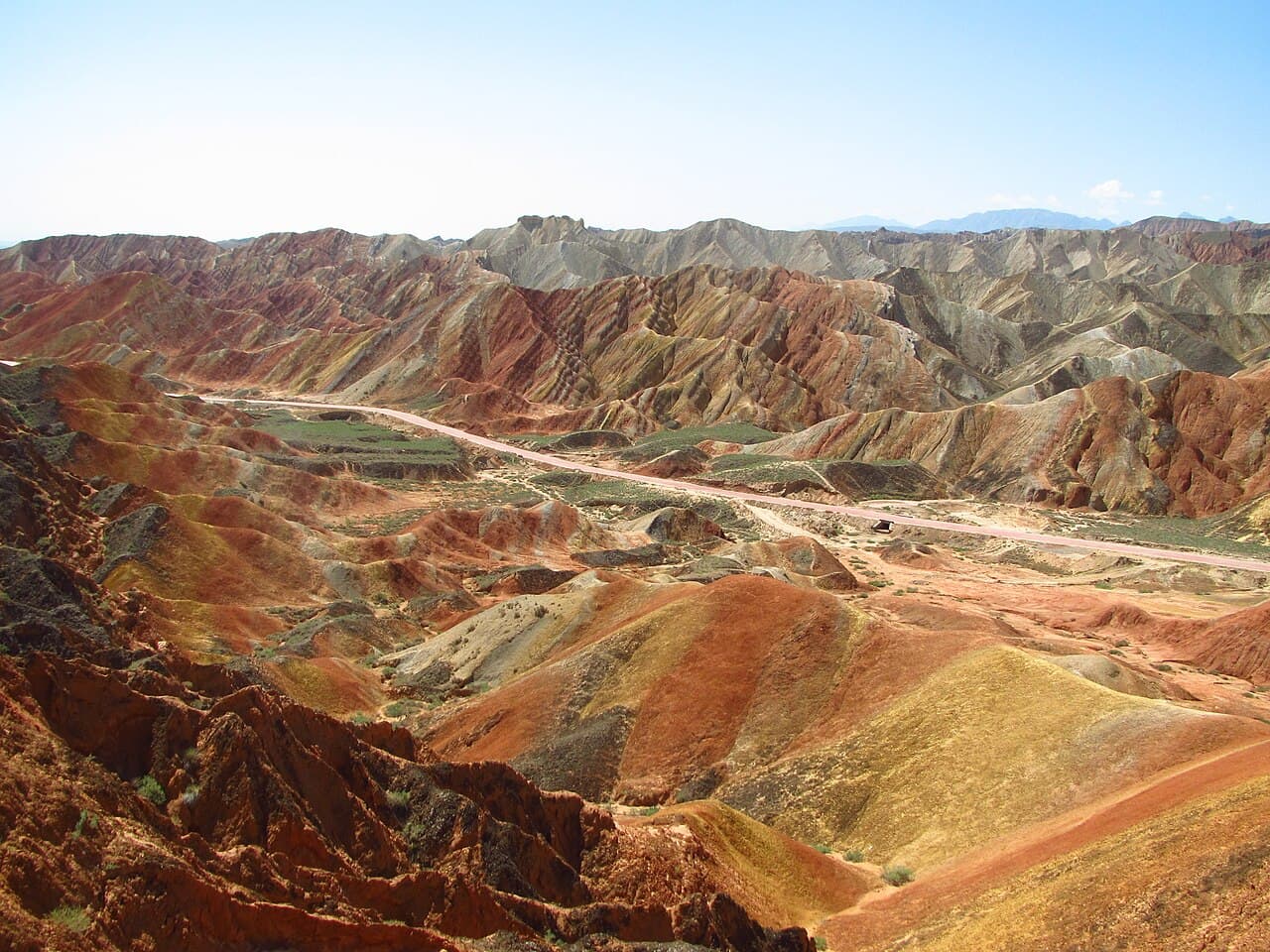
At Zhangye in northwestern China, bands of red, yellow, and gray sweep across bare hills. From a distance, the slopes can look like enormous ribbons folded into the landscape.
The colors belong to rock layers. Their story begins with sediment and continues through uplift, weathering, and erosion.
Color inside the stone
The Zhangye Colorful Hills are in Gansu Province. Their layered sedimentary rocks preserve differences in the materials and conditions under which the deposits formed.
China's UNESCO tentative-list submission identifies iron-bearing minerals as important sources of coloration. The dominant color systems include reddish brown, bluish gray, and pale yellow.
That is a richer explanation than saying every stripe is simply a different mineral painted onto the hill.
Erosion reveals the pattern
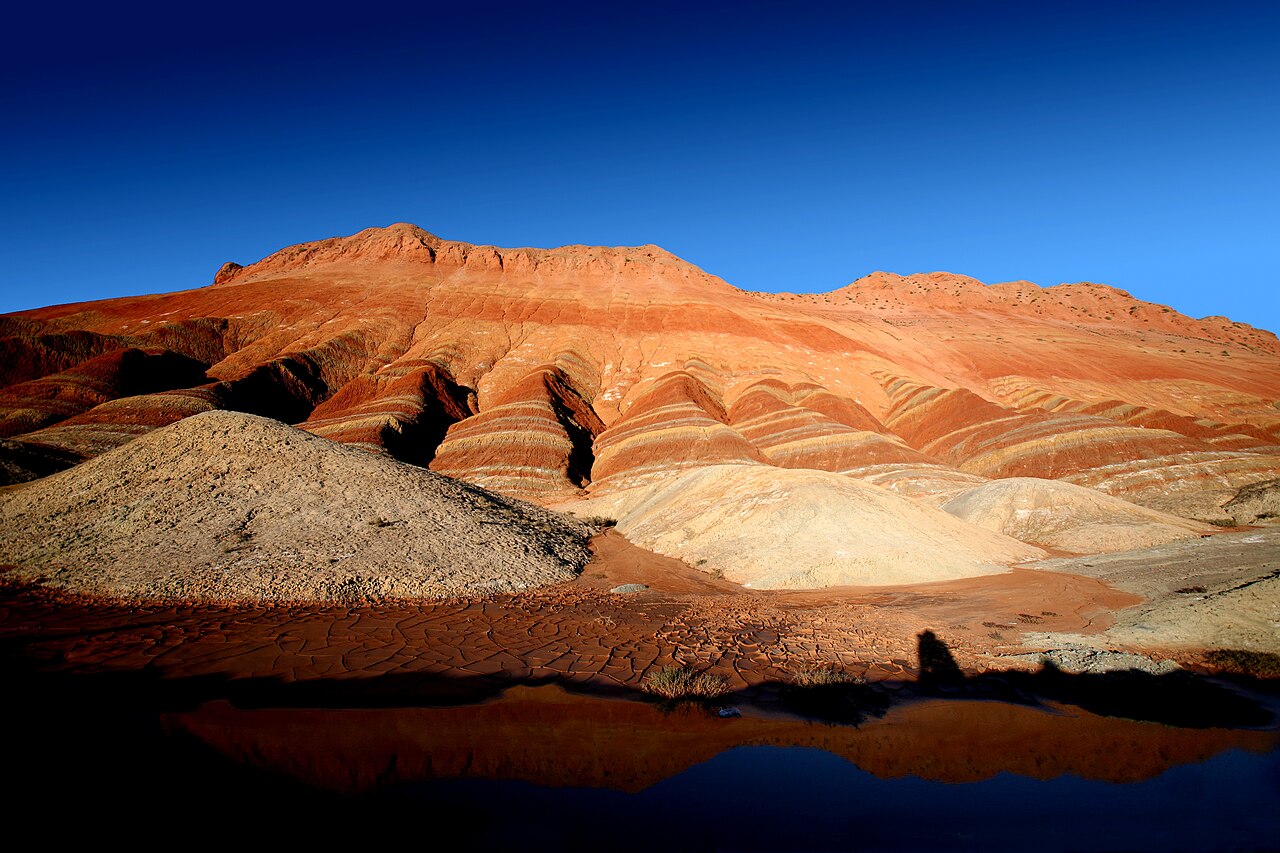
Once buried sediments became rock and the landscape was uplifted, weathering and erosion helped expose the layers.
Different surfaces and viewing angles reveal different parts of the pattern. Sunlight, cloud, and moisture also affect how strong the colors appear.
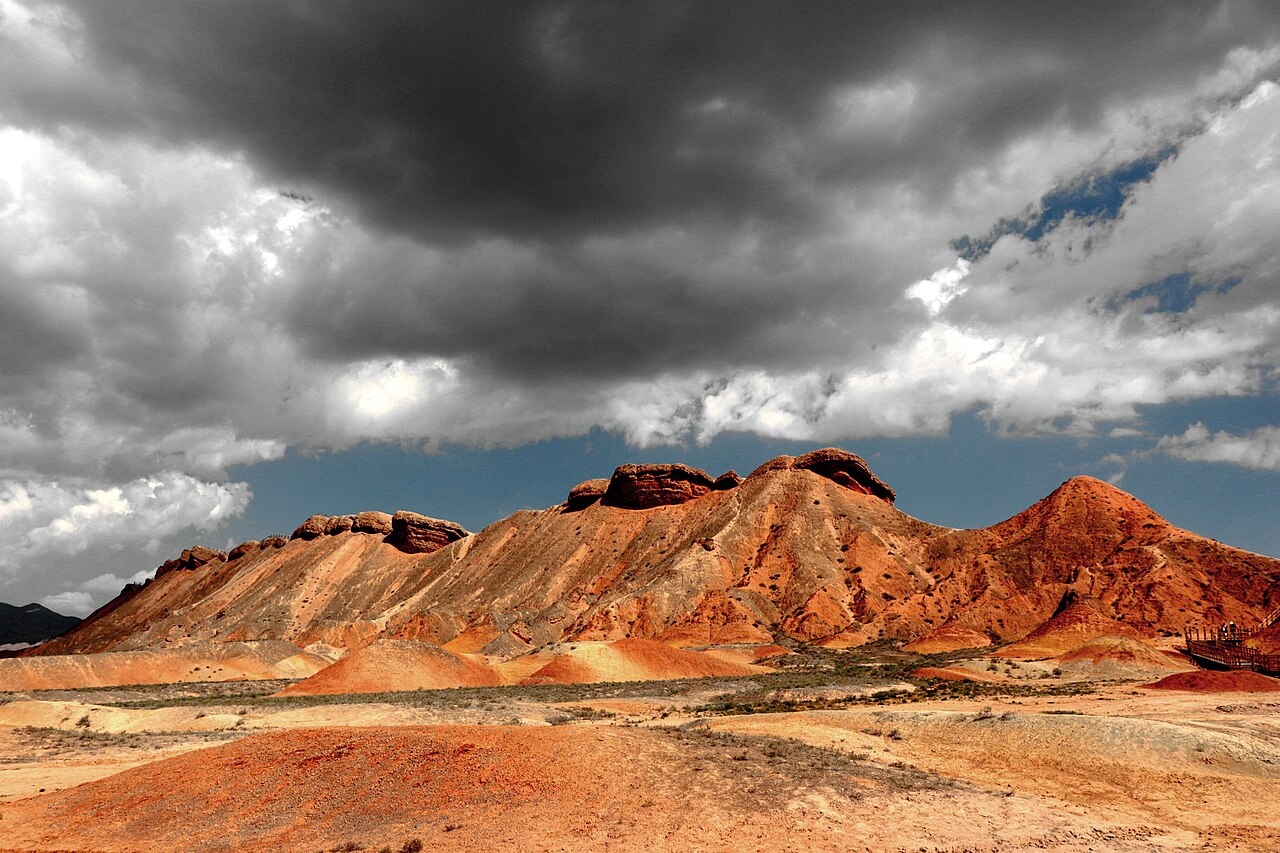
Photographs can be edited to make the hills unusually bright. The real geological value does not depend on turning every slope into a perfectly saturated rainbow.
A name worth getting right
The area is often called Zhangye Danxia in travel writing. The broader geopark contains several landforms, and the colorful hills are a particular part of that setting.
The Zhangye UNESCO Global Geopark explains their heritage application. A UNESCO Global Geopark designation and a place on the World Heritage Tentative List are different things.
Tentative listing does not mean that a proposed property has already become a World Heritage Site.
Let the hills keep their layers
Marked routes and viewing areas help people appreciate fragile surfaces without trampling them. The best souvenir is an understanding of the landscape, not a fragment of rock.
Zhangye's beauty is both immediate and ancient. What looks like a burst of color is a record of Earth building, changing, and uncovering its own past.
Photo credits
Featured image: YubYub41; Wikimedia Commons source; CC BY-SA 4.0. Resized for web display.

Body image 1: iamangela9; Wikimedia Commons source; CC0. Resized for web display.

Body image 2: Marcus Hsu; Wikimedia Commons source; CC BY-SA 4.0. Resized for web display.
