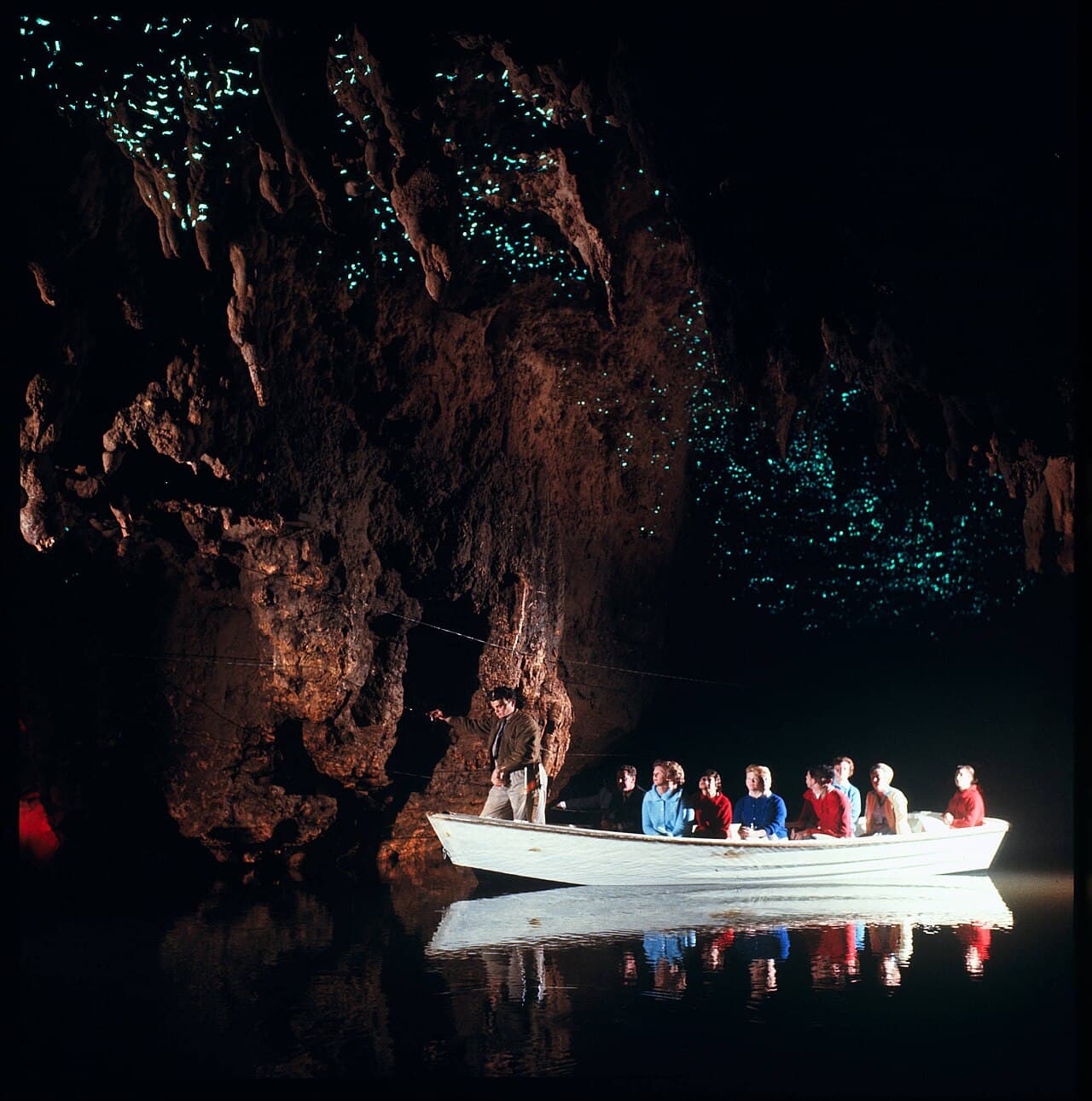
The blue-green points above a boat in Waitomo can look like stars, but they are living insects. Each light belongs to a glowworm using chemistry to attract its next meal.
Beneath New Zealand's North Island, a dark cave becomes a hunting ground that happens to look wonderfully beautiful.
These glowworms are larvae
New Zealand glowworms, Arachnocampa luminosa, are the larval stage of a small fly. They are not worms in the earthworm sense.
They produce light through bioluminescence. Te Ara, the Encyclopedia of New Zealand, explains how that light helps attract small flying insects.
A cave ceiling dotted with lights is therefore a gathering of hunters, rather than a glowing mineral roof.
Fishing without water
Glowworm larvae suspend silky lines carrying sticky droplets. An insect attracted toward the light can become caught in those threads.
The larva senses the struggle and draws its catch upward. The fine hanging lines are as important as the famous glow, even though they can be harder to notice.
Understanding this changes the view: the apparent underground sky is also a delicate network of traps.
A world made by water
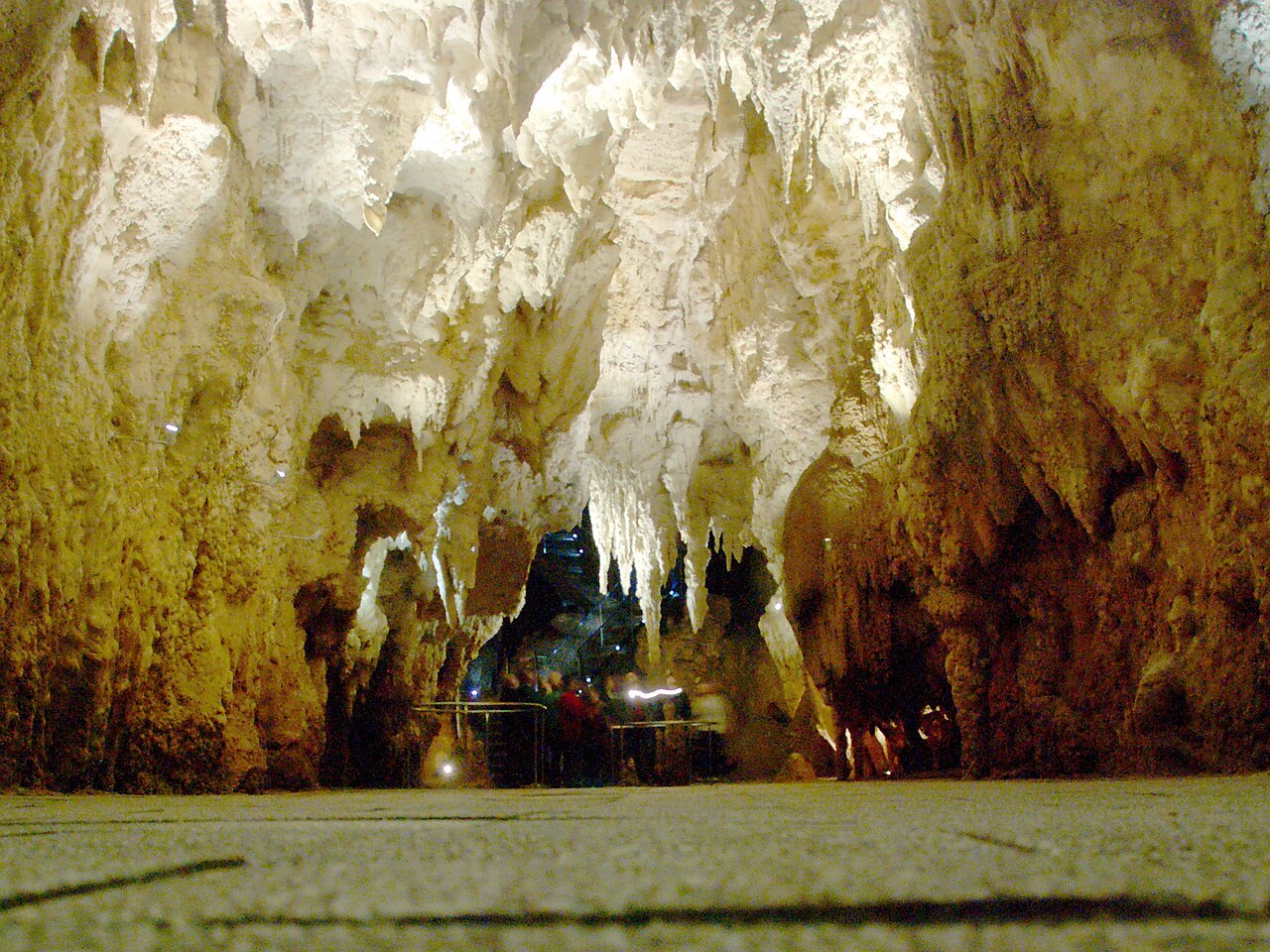
Waitomo is limestone country. The Department of Conservation describes its caves, gorges, waterfalls, and natural bridges.
Water moving through soluble rock helped create the spaces where the insects now live. Cave ecology depends on conditions such as moisture, airflow, and food arriving from the surrounding environment.
People are part of the story
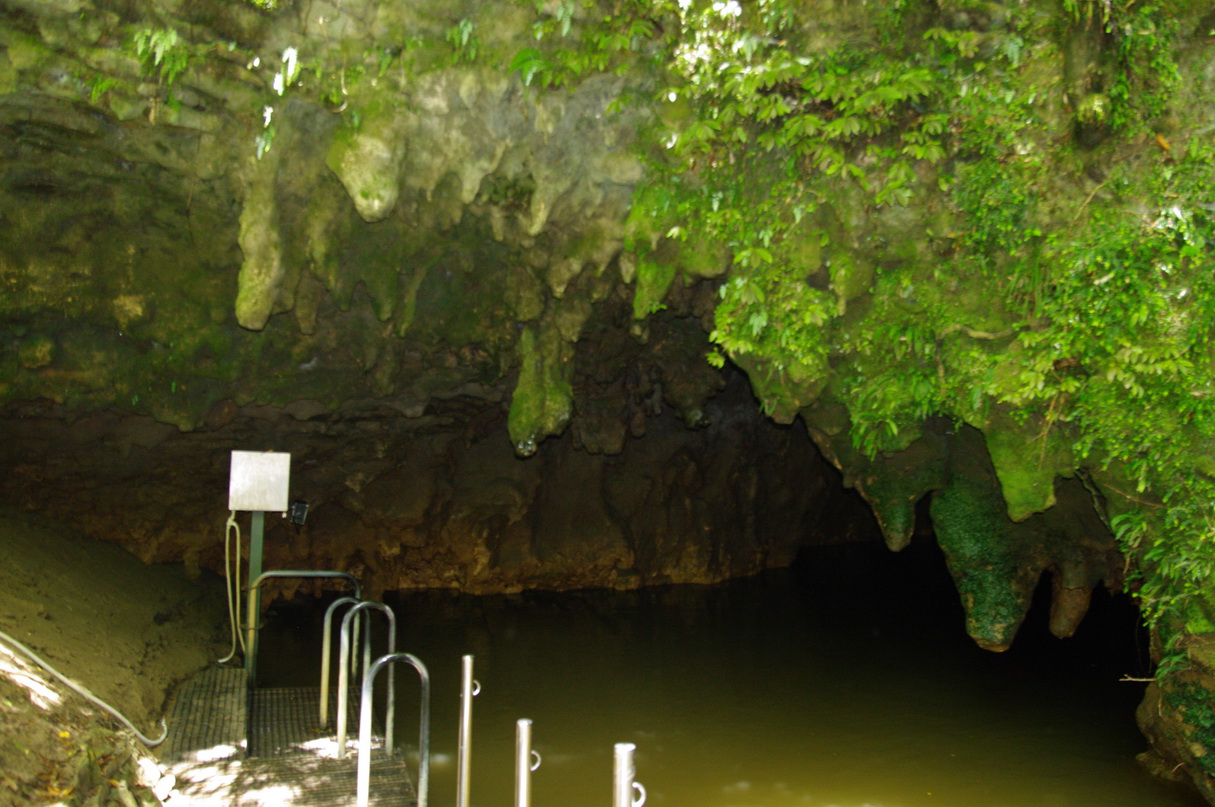
Te Ara's history of cave tourism records Tāne Tinorau and Fred Mace exploring the glowworm cave by raft in 1887. Māori knowledge and local connections belong in the story alongside the natural science.
Respecting cave rules helps protect both the setting and its inhabitants. Waitomo's lights are extraordinary because they are alive—and each tiny point is busy surviving.
Photo credits
Featured image: Michael Willison; Wikimedia Commons source; CC BY 2.5. Resized for web display.

Body image 1: Karora; Wikimedia Commons source; Public domain. Resized for web display.

Body image 2: Bgabel; Wikimedia Commons source; CC BY-SA 3.0. Resized for web display.
