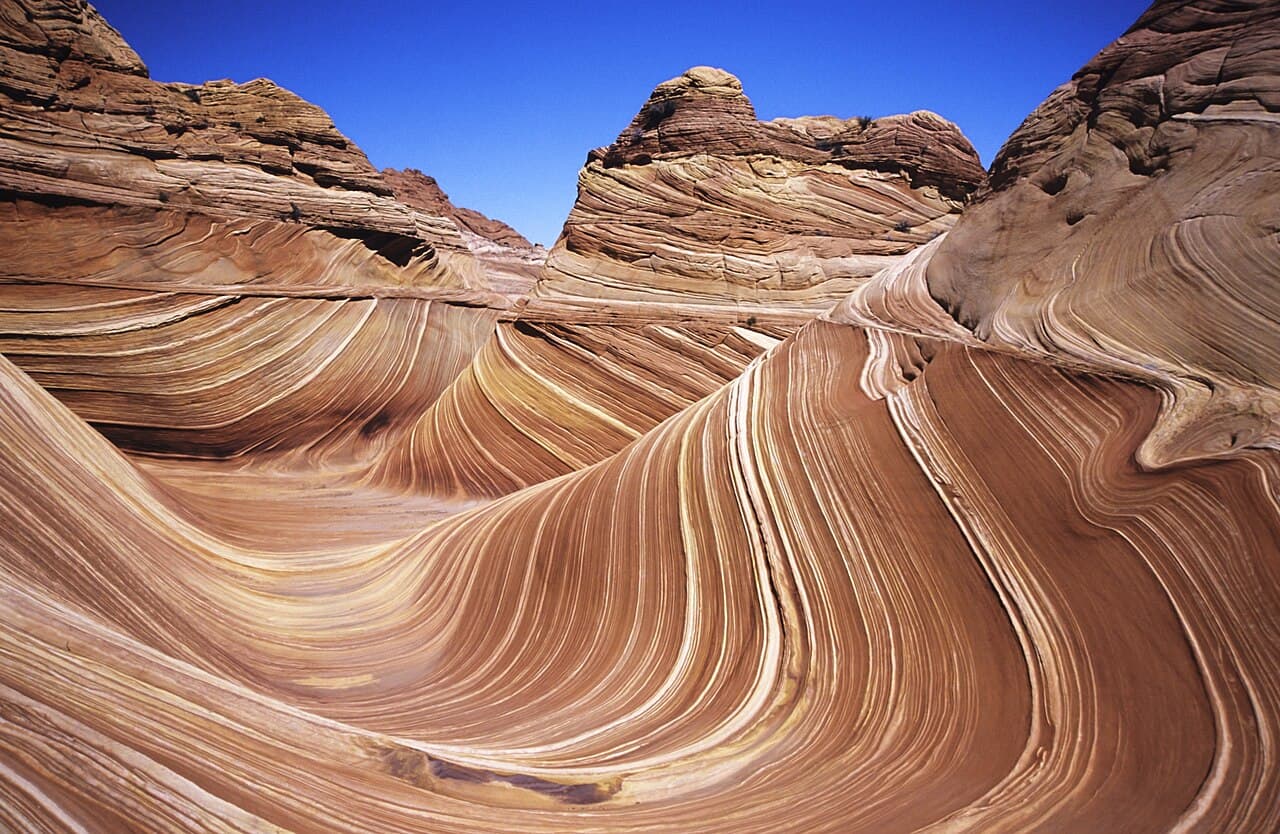
The Wave looks like an ocean swell that has stopped moving. Its smooth sandstone walls bend around a trough, with fine lines tracing the curves.
Yet this Arizona formation began with sand dunes, not a breaking sea. The rock preserves an ancient desert beneath a modern one.
Sand that became stone
The Wave lies in Coyote Buttes North, within the Paria Canyon–Vermilion Cliffs Wilderness.
Its Navajo Sandstone formed from windblown sand. As dunes shifted, layers accumulated at different angles. Burial and mineral cement later turned those deposits into rock.
The International Union of Geological Sciences identifies the area as an important record of dune deposition and later geological change.
A pattern uncovered
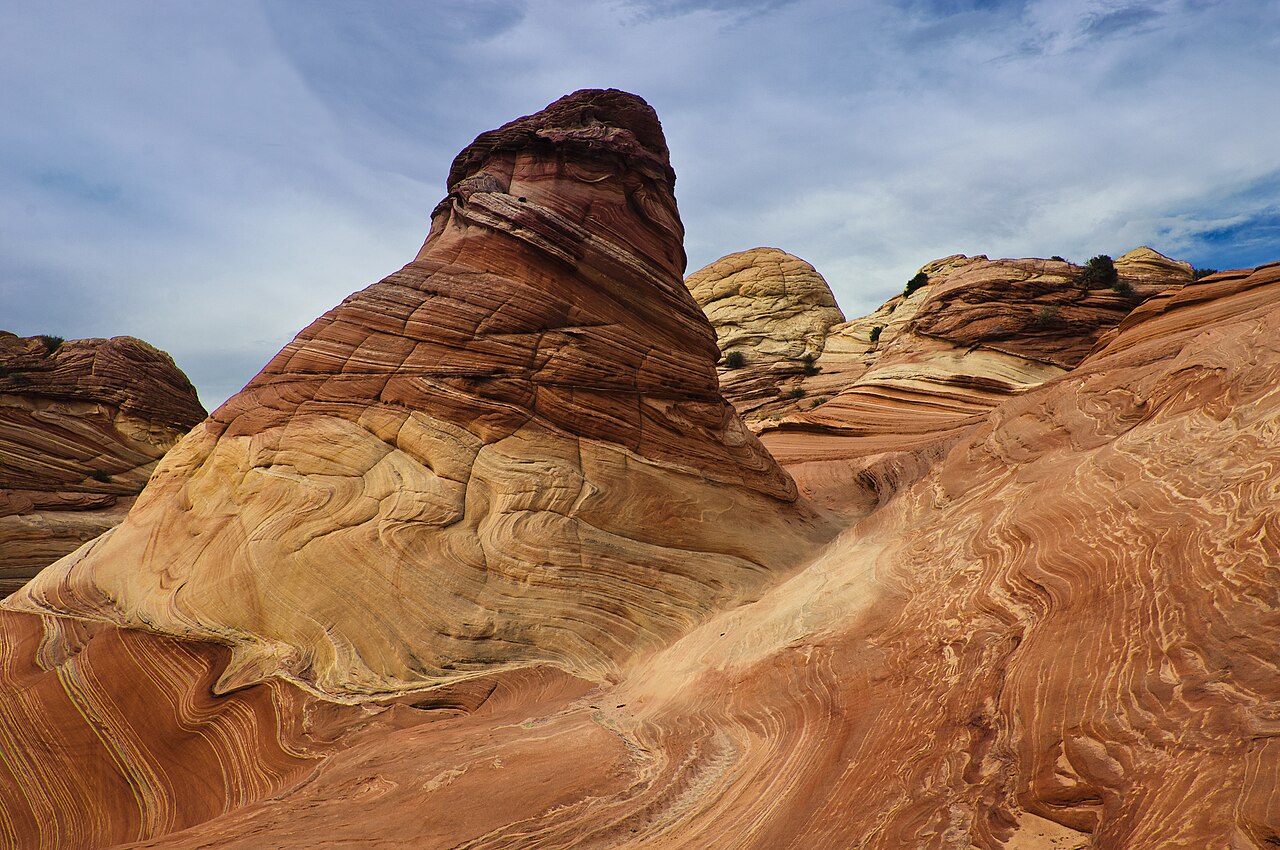
Erosion exposed the sandstone, while weathering shaped the surfaces visible today. Wind scour has played an important role in the smooth finish.
The fine bands help reveal the rock's internal structure. The illusion of flowing water comes from the combination of those lines and the curved surface.
It is a useful example of how a landscape can resemble one process while recording another.
A protected desert setting
The Bureau of Land Management manages access to Coyote Buttes North through permits. The formation is part of a wider wilderness, rather than a roadside attraction.
Access information can change, so the official BLM page is the place to check current arrangements. Fragile surfaces and a remote desert setting make careful management important.
Look closely at the lines
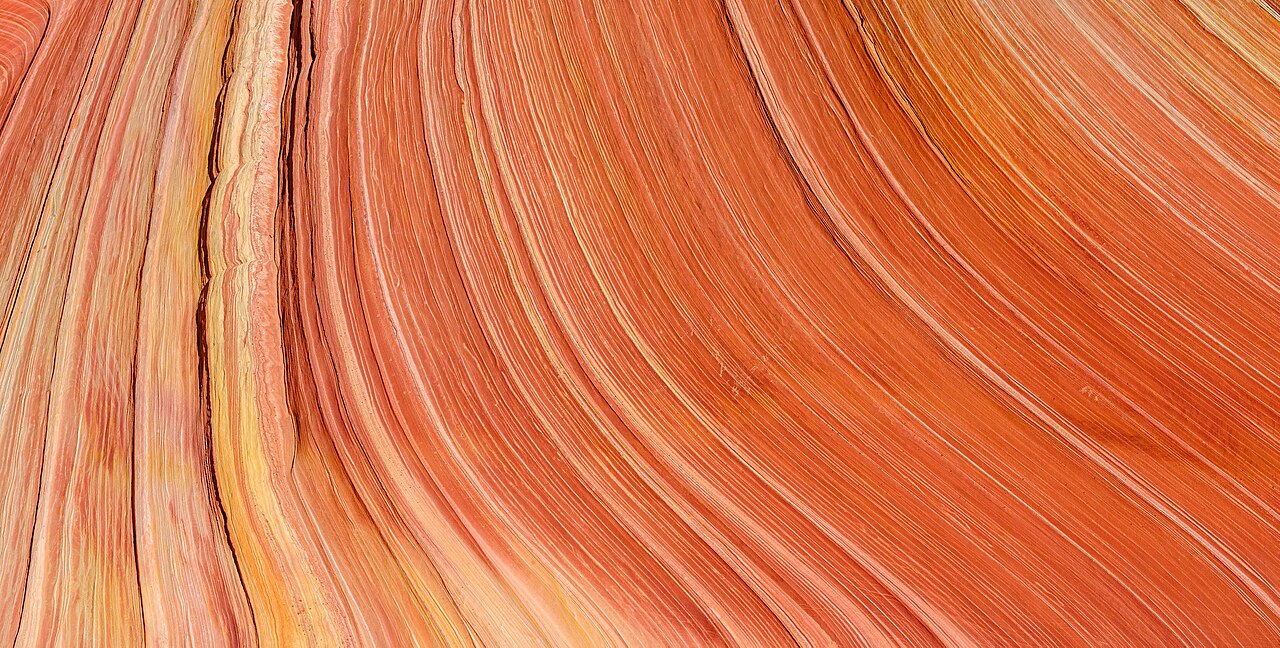
A wide photograph shows the sweeping shape. A close view reveals the thin layers that give it texture and help scientists reconstruct its past.
The Wave's beauty comes from several stages working together: dunes deposited the sand, minerals made the rock, and erosion revealed the curves. What looks like motion frozen in stone is really deep time brought to the surface.
Photo credits
Featured image: Gb11111; Wikimedia Commons source; CC0. Resized for web display.

Body image 1: BLMUtah; Wikimedia Commons source; Public domain. Resized for web display.

Body image 2: Romain Guy; Wikimedia Commons source; CC0. Resized for web display.
