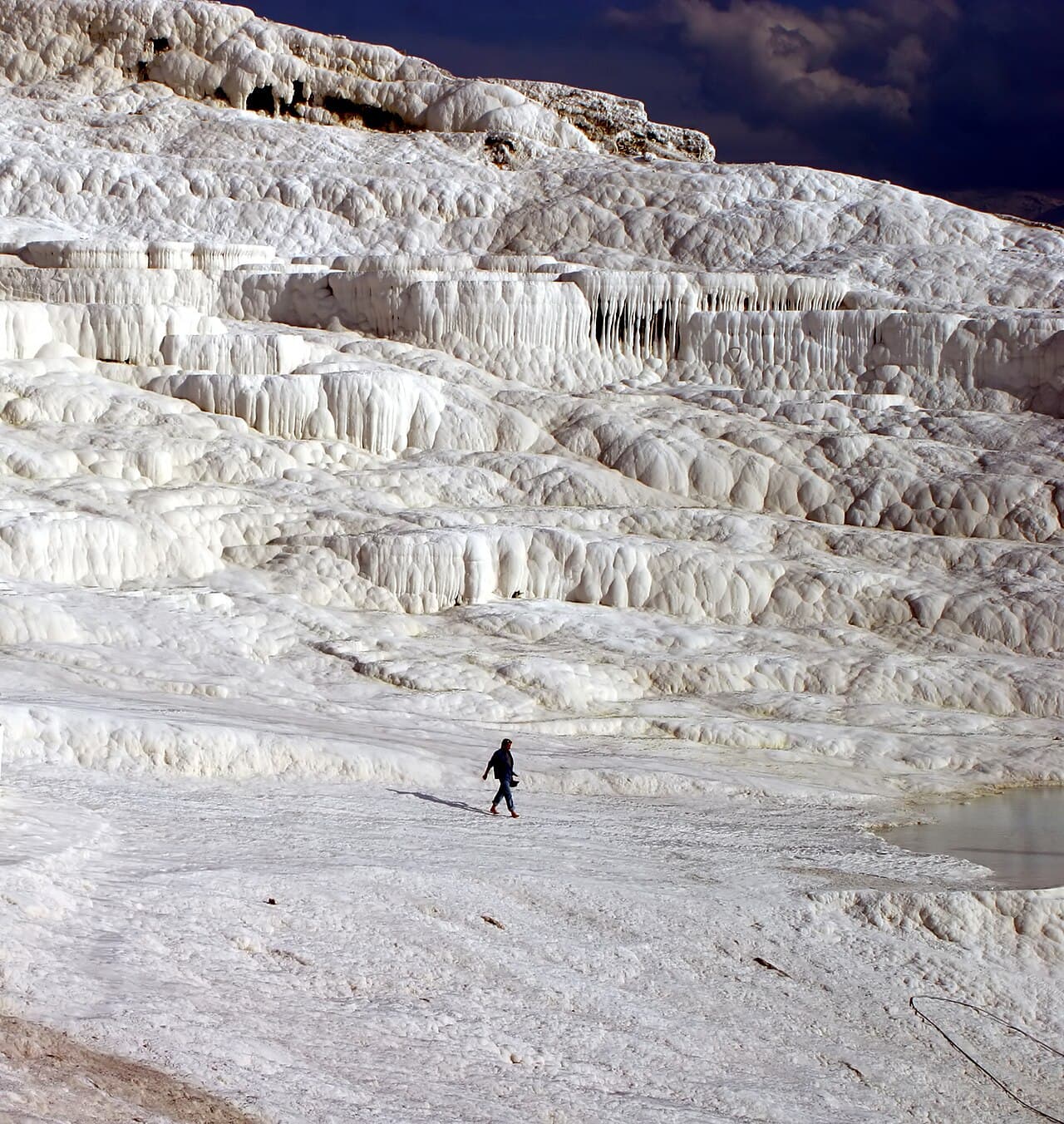
Pamukkale can look like a snowy hillside, but its brilliant white terraces are mineral deposits. Warm spring water has helped build the steps and rims that give the Turkish landscape its famous shape.
The water is both sculptor and builder, turning dissolved material into stone.
How a spring makes a terrace
Mineral-rich thermal water reaches the surface and flows across the slope. As conditions change, calcium carbonate comes out of solution and forms travertine.
Over time, deposits can create raised rims, shelves, and shallow basins. The process links the water's chemistry to the shape of the hillside.
UNESCO's Hierapolis-Pamukkale description explains the importance of the springs and white travertine terraces.
The pools are a changing system
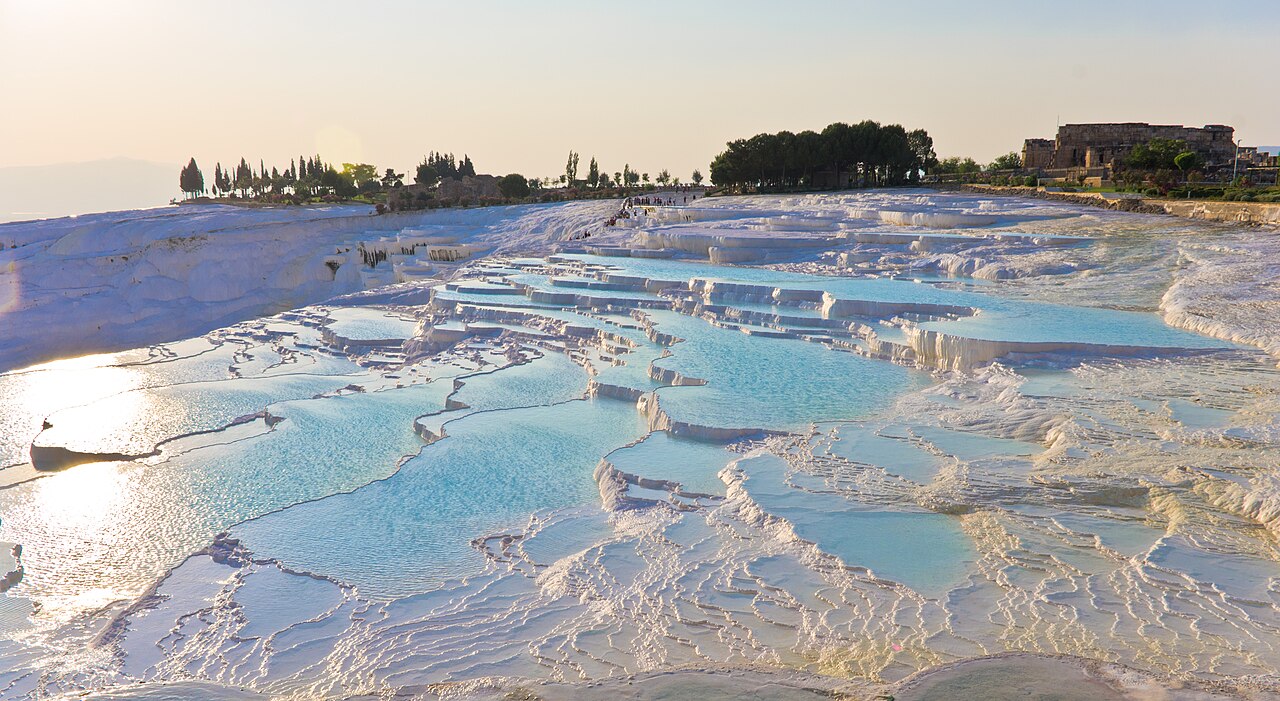
Not every terrace is filled at the same time. Water distribution and site management affect which surfaces are wet.
Light also changes the view. A damp white rim beside blue water can look different from the same deposit when dry.
Photographs of the most water-filled sections should not be read as a promise that every part of the hillside always looks that way.
An ancient city above the slope
Hierapolis developed beside the thermal waters. Its ruins connect the natural landscape to centuries of settlement, worship, and bathing culture.
Türkiye's Ministry of Culture and Tourism describes the archaeological site and its connection to Pamukkale. The World Heritage property combines natural and cultural values.
That makes this more than a beautiful set of pools. People have been responding to the springs for a very long time.
Keep the white landscape alive
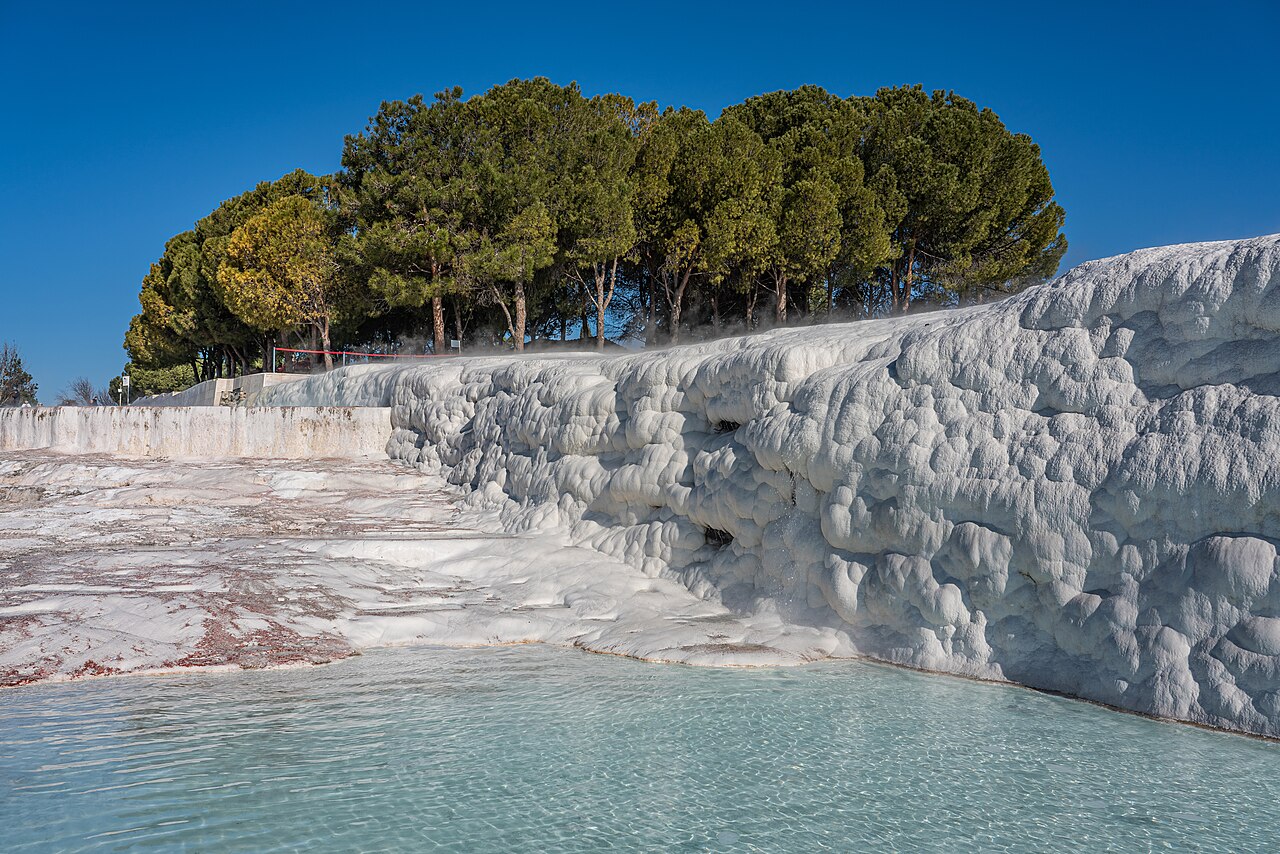
Water management and visitor routes help protect the terraces. Staying within designated areas supports the fragile surfaces that make the site special.
Pamukkale offers an unusual way to think about stone: it can be a visible record of flowing water. Each pale rim is part of a continuing relationship between heat, chemistry, and time.
Photo credits
Featured image: Brocken Inaglory; Wikimedia Commons source; CC BY-SA 3.0. Resized for web display.

Body image 1: Antoine Taveneaux; Wikimedia Commons source; CC BY-SA 3.0. Resized for web display.

Body image 2: A.Savin; Wikimedia Commons source; FAL. Resized for web display.
