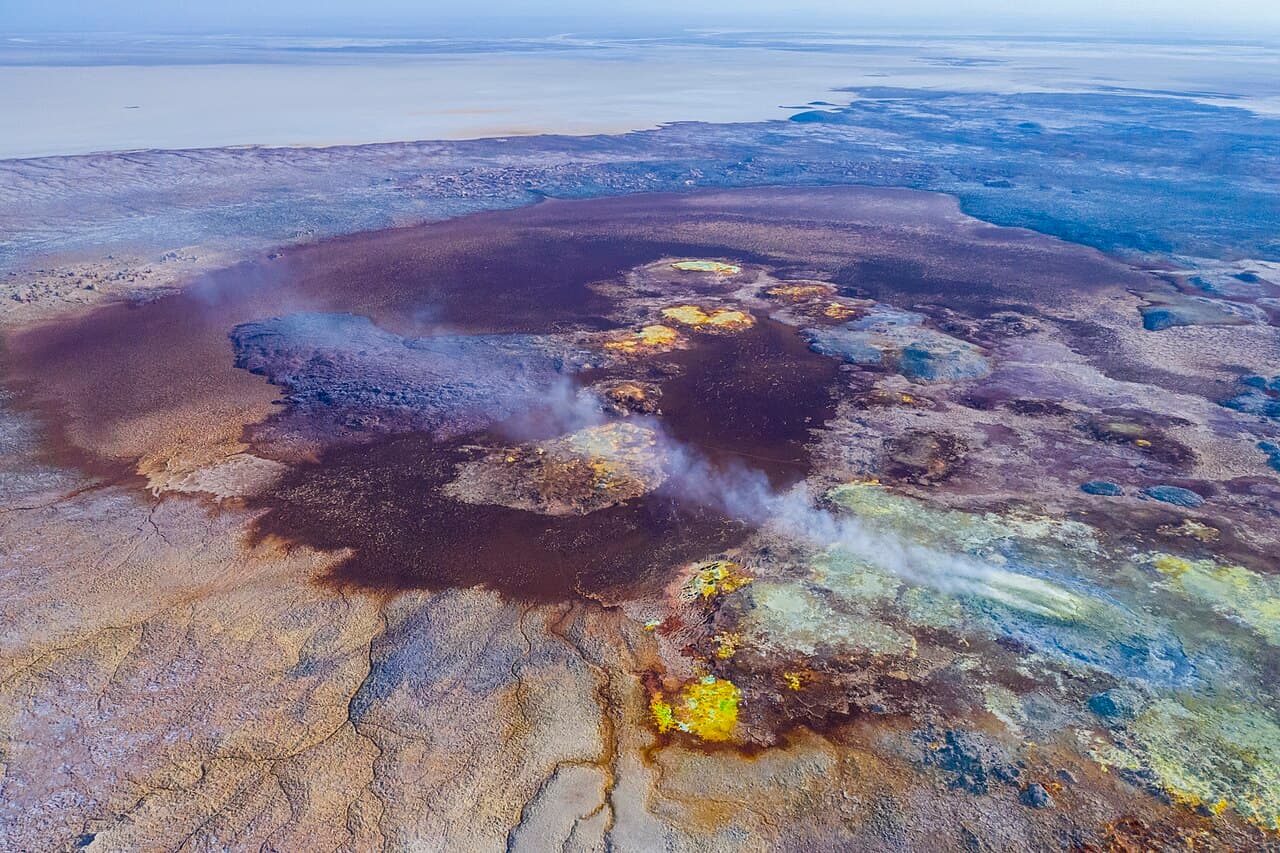
At Dallol, yellow crusts and greenish pools can make the ground look painted. The colors come from a changing hydrothermal system, where hot fluids, salts, and minerals interact.
This is one striking part of Ethiopia's Danakil Depression—a larger landscape that should not be reduced to a single pool or photograph.
Heat meets salt
Dallol sits within the Afar region. Its hot, mineral-rich fluids rise through salt-bearing ground and produce unusual surface deposits.
A geochemical study of Dallol describes iron's important role in the system. Changes in oxidation and mineral precipitation help explain why nearby pools and crusts can have different colors.
The surface is active. A photograph records a particular arrangement of water and deposits, not a fixed design that will remain unchanged.
A beautiful pool is not an ordinary pond
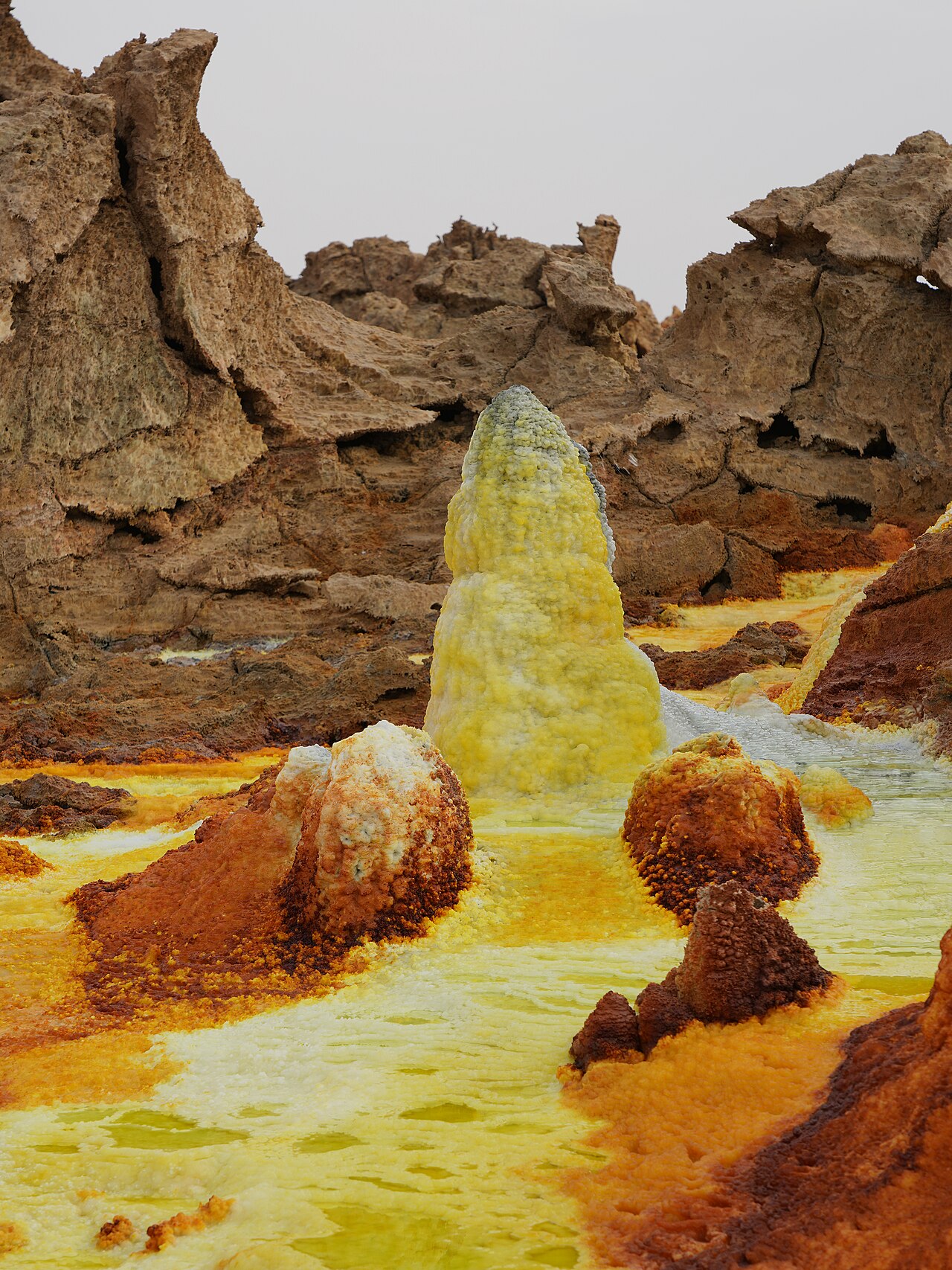
Some waters here combine extreme acidity, high salt levels, and heat. These conditions make the setting very different from a freshwater spring.
The colors do not automatically mean that algae or other organisms are responsible. Chemistry alone can produce spectacular effects.
That distinction matters when photographs are used to tell stories about life in extreme places.
Scientists test the limits
A 2019 study in Nature Ecology & Evolution investigated microbial life across the Dallol area.
Researchers found diverse microorganisms in some surrounding settings, while reporting no evidence of life in certain highly extreme ponds. The result should not be stretched into a claim that the entire Danakil Depression is lifeless.
Nearby environments can differ sharply, even when they look similar from above.
Read the colors carefully
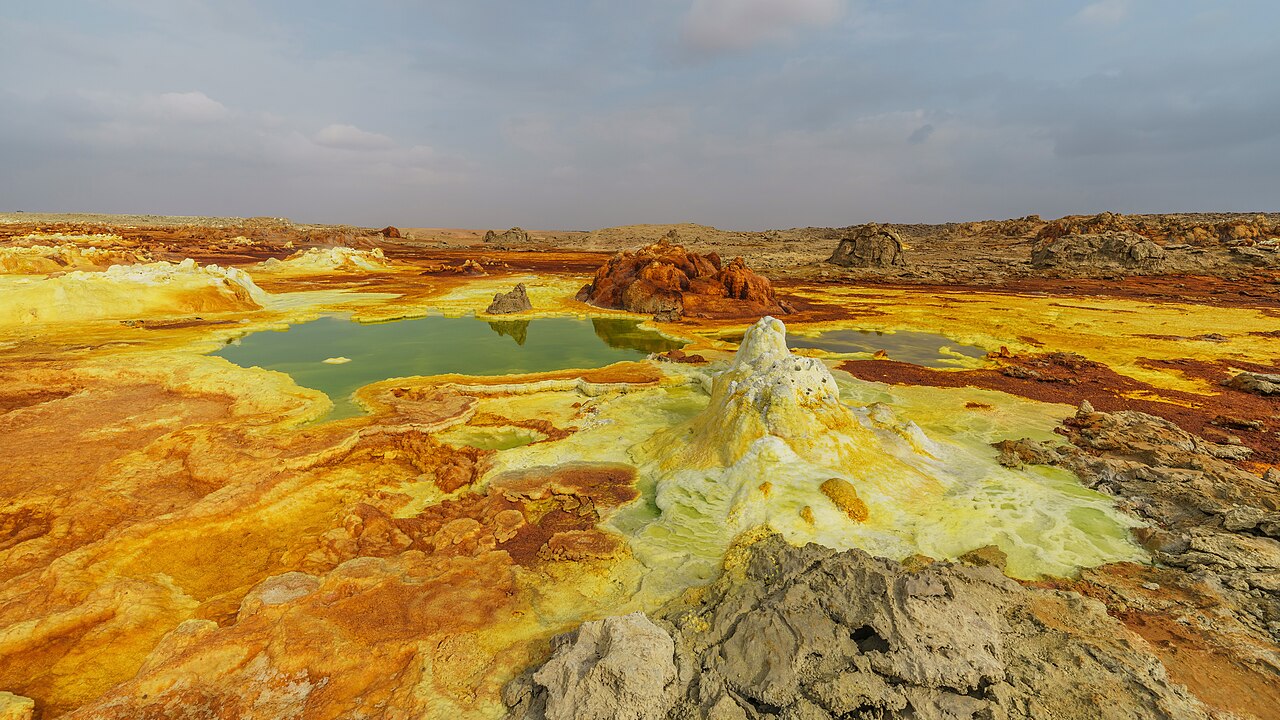
Dallol is a place for scientific curiosity, not a collection of inviting bathing pools. Its heat and chemistry are central to its identity.
Its greatest surprise may be that such vivid colors can tell a story about minerals rather than living pigments. Nature's palette includes both biology and geology—and here the chemistry is extraordinary.
Photo credits
Featured image: Thomas Fuhrmann; Wikimedia Commons source; CC BY-SA 4.0. Resized for web display.

Body image 1: A.Savin; Wikimedia Commons source; FAL. Resized for web display.

Body image 2: A.Savin; Wikimedia Commons source; FAL. Resized for web display.
