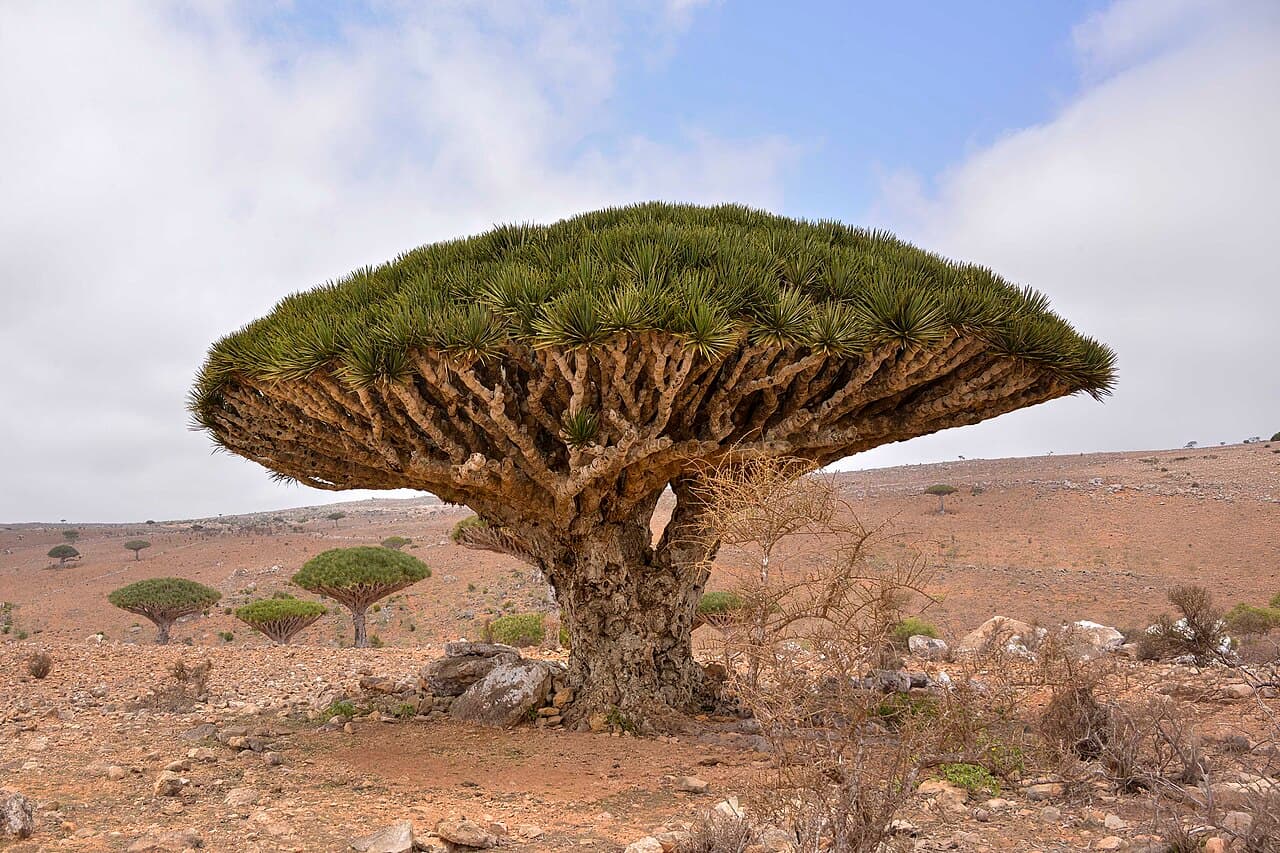
On Socotra, dragon blood trees spread dense crowns above bare trunks, creating silhouettes like giant umbrellas. Their shapes look imagined, yet they belong to a real island ecosystem.
These trees are remarkable for more than their outlines. They are part of an island world with many species found nowhere else.
Why the name sounds mythical
The Socotra dragon blood tree is Dracaena cinnabari. Its name refers to its red resin, which people have used as a coloring material and in traditional practices.
The color is a plant product, not evidence of a wounded creature. UNESCO's Socotra material describes the tree and its long connection to island life.
Its branching crown helps make it recognizable even from a distance.
Isolation makes a difference
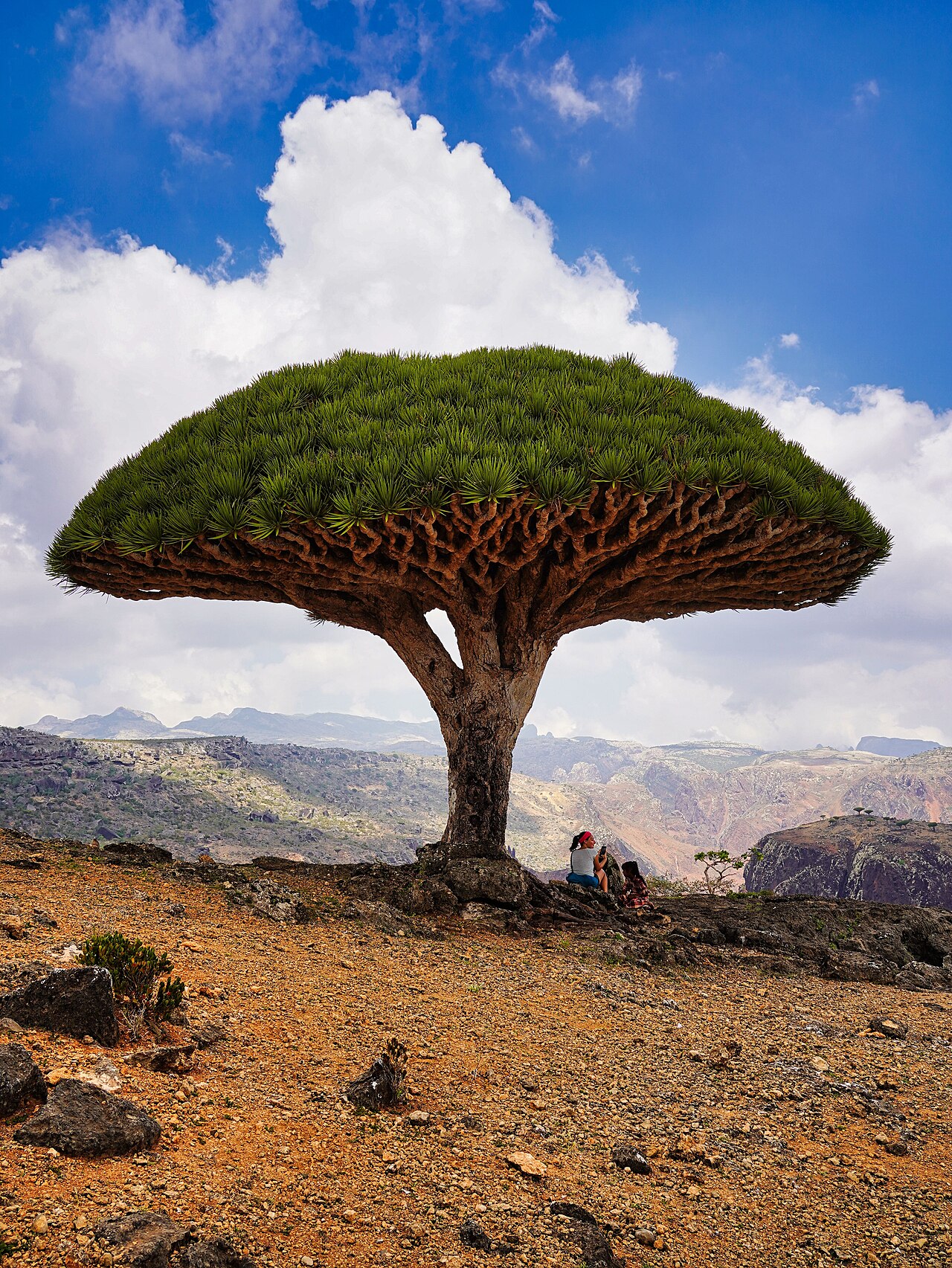
Socotra is part of a Yemeni archipelago in the western Indian Ocean. Geographic isolation has helped shape its unusual communities of plants and animals.
UNESCO explains why these ecosystems have exceptional conservation value. The archipelago received World Heritage recognition in 2008.
The island is also home to people, language, knowledge, and livelihoods. Describing it as an “alien planet” can hide the human relationships that have shaped its landscape.
A forest needs young trees
Keeping mature dragon blood trees alive is only part of conservation. Seedlings must also survive to replace them.
Research on the tree's historical distribution draws on local ecological knowledge. It shows why understanding past and present landscapes can support decisions about the future.
Grazing pressure, climate stresses, and habitat change make regeneration an important concern.
Protect the whole island story
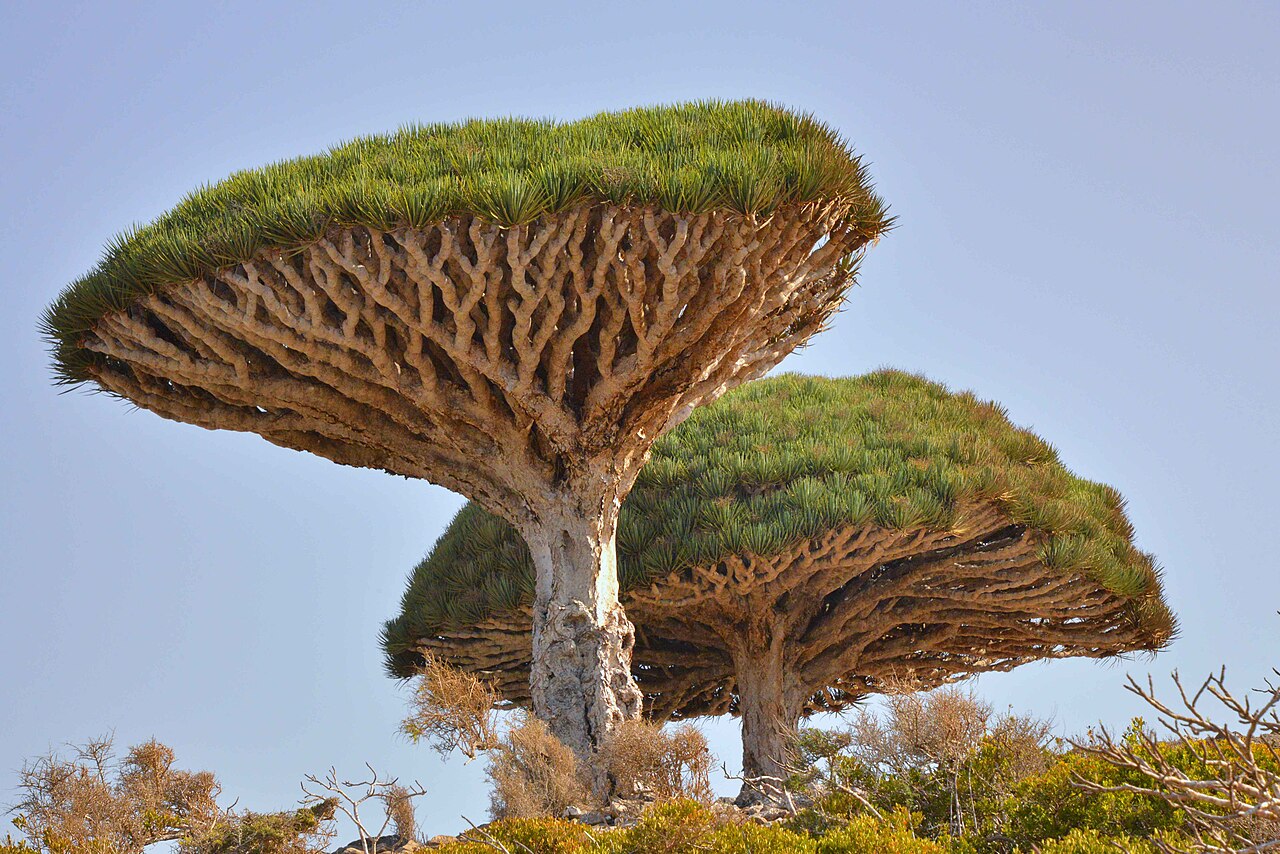
A striking tree cannot be separated from the ground, weather, and community around it. Conservation works best when local people are part of the effort.
Socotra's dragon blood trees inspire wonder at first sight. Their future asks for something deeper: care for an island heritage that has no substitute elsewhere.
Photo credits
Featured image: Rod Waddington; Wikimedia Commons source; CC BY-SA 4.0. Resized for web display.

Body image 1: Alex38; Wikimedia Commons source; CC BY 4.0. Resized for web display.

Body image 2: Rod Waddington from Kergunyah, Australia; Wikimedia Commons source; CC BY-SA 2.0. Resized for web display.
