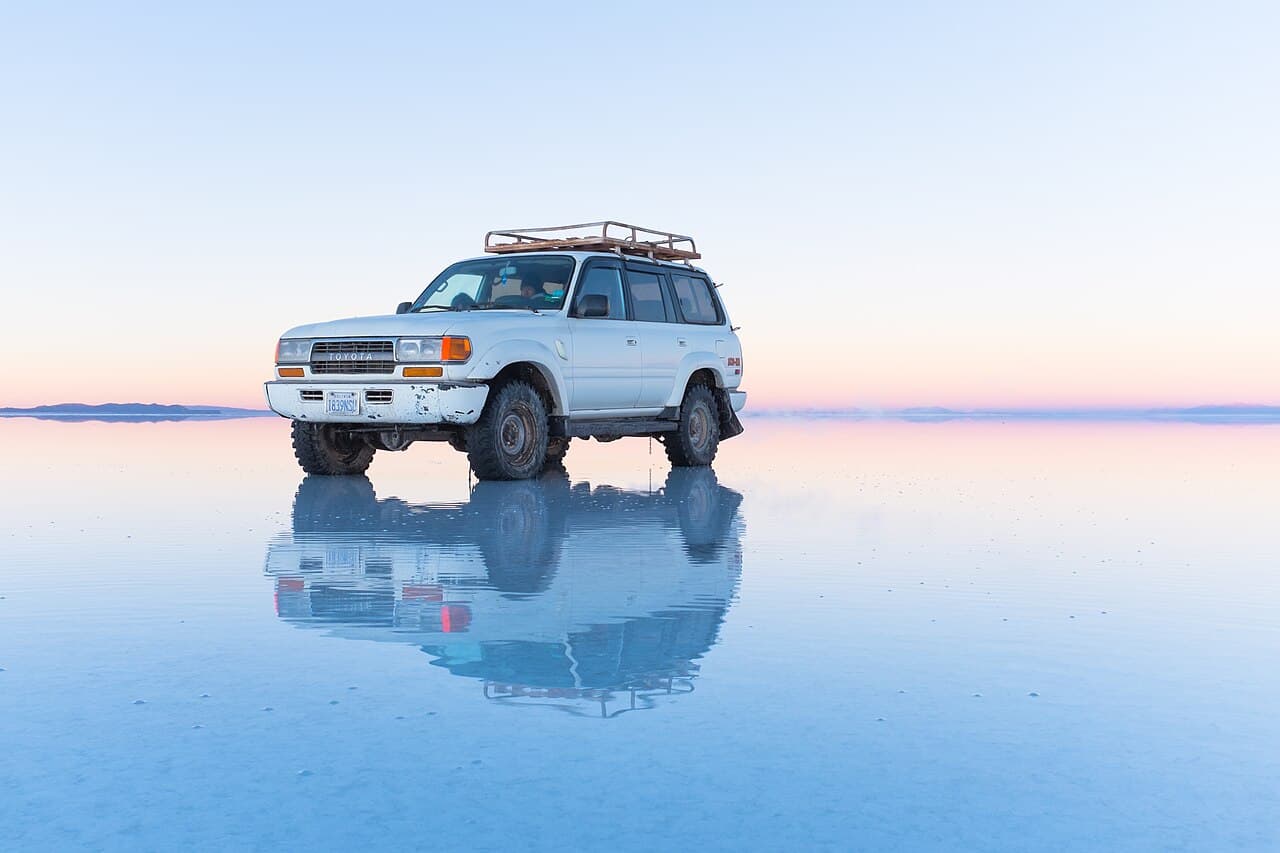
After rain, a thin layer of water can turn Bolivia's Salar de Uyuni into an enormous reflection of the sky. Clouds appear above and below the horizon, making solid ground look almost endless.
The effect is real, but it depends on water and weather. The world's largest salt flat does not wear its mirror finish every day.
A landscape left by lakes
Salar de Uyuni lies high in the Bolivian Andes. Its salt crust formed through the drying of prehistoric lakes, as water disappeared and dissolved minerals remained.
NASA Earth Observatory describes this ancient lake history. The white surface is the latest chapter in a much longer story of water moving through a mountain basin.
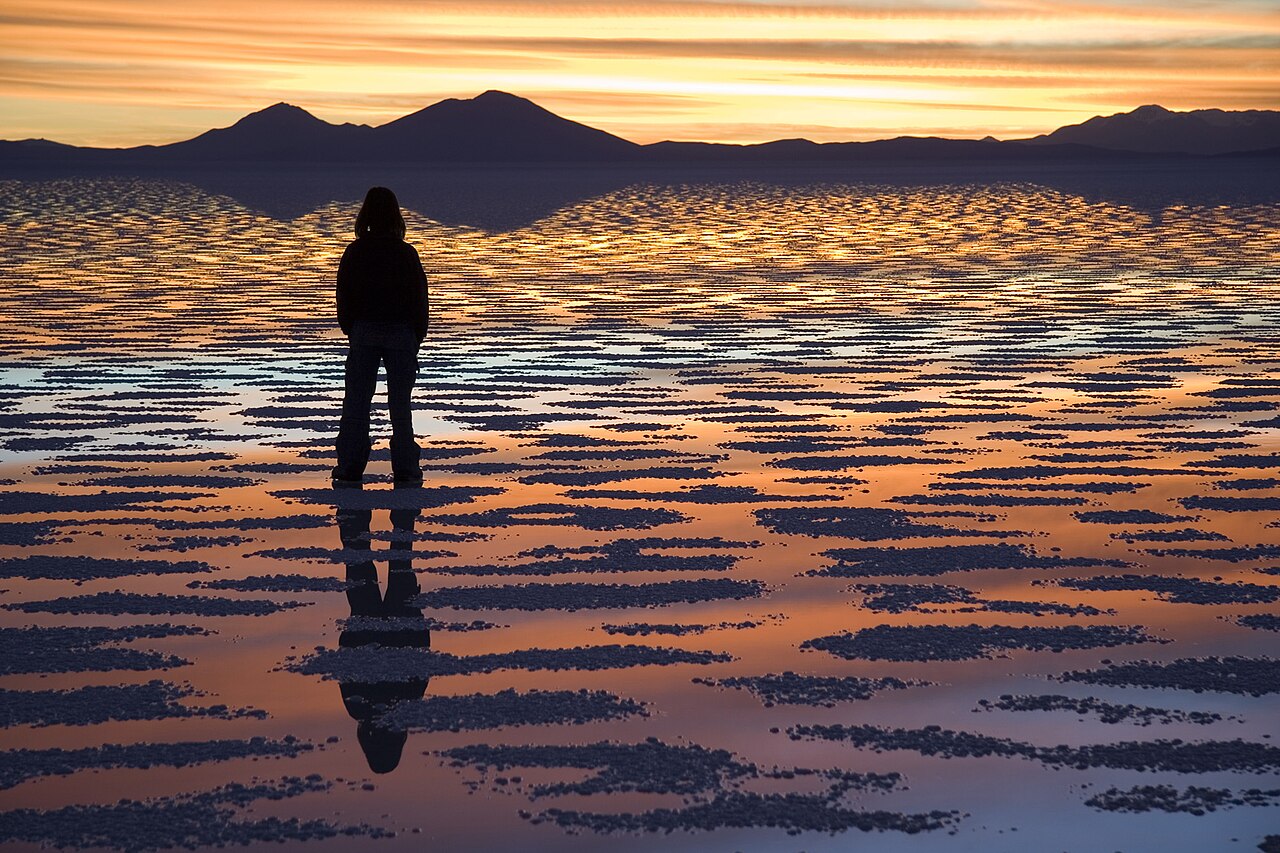
In dry conditions, the crust can display patterned surfaces and a bright, hard-looking expanse rather than a reflection.
Why the mirror appears
The key ingredients are an exceptionally flat surface and shallow water. When the water is calm, it reflects the sky like a broad sheet of glass.
The Japan Aerospace Exploration Agency explains the salt flat's seasonal transformation. Rainfall changes where water gathers and how much of the surface is covered.
Wind can disturb the reflection. Too little water leaves dry salt exposed. The famous view is a moment created by the right conditions, rather than a permanent feature.
More than a photographic backdrop
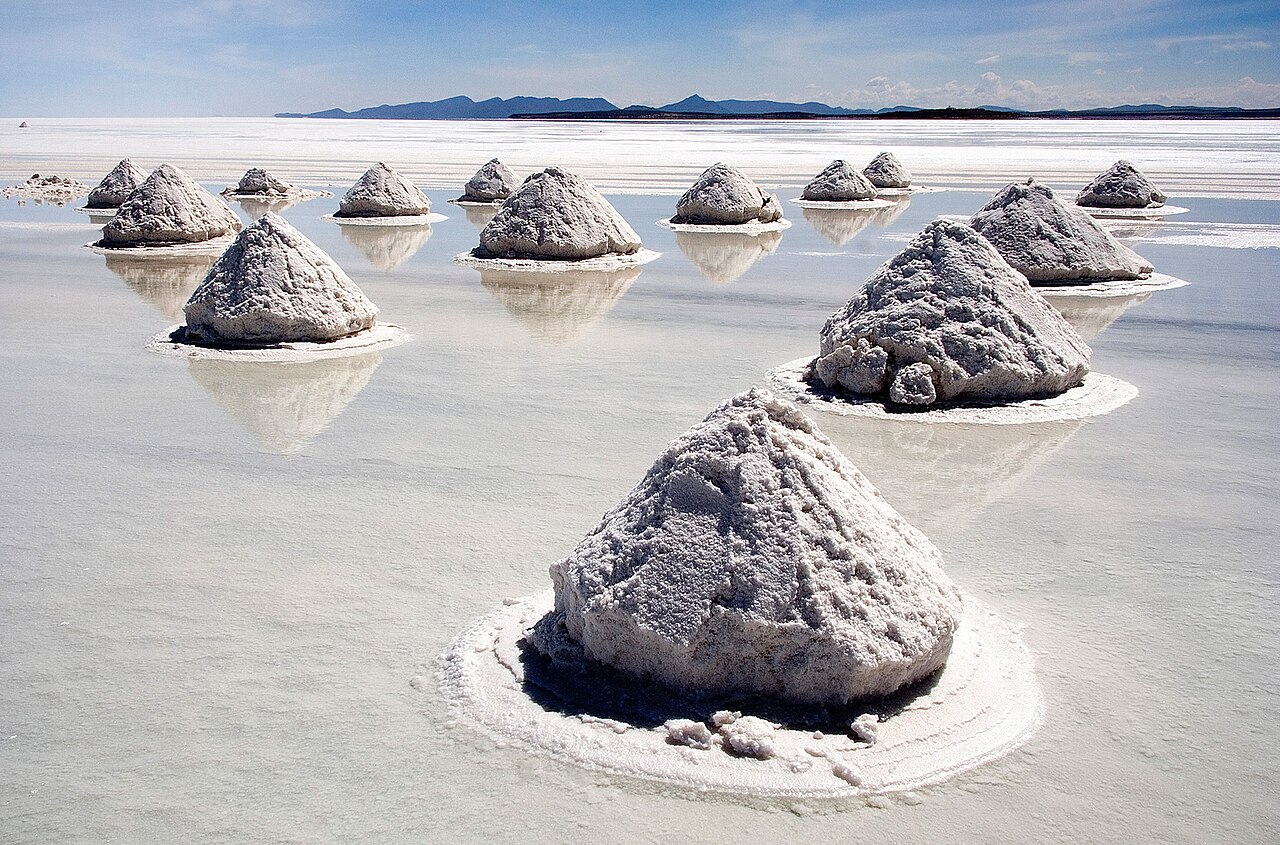
Salt has long been collected here, and mineral-rich brines beneath the surface have attracted attention for lithium.
These uses connect the landscape to local livelihoods and wider demand for resources. Understanding a salt flat means considering water and mineral systems as well as its appearance.
Wonder that changes with the weather
A dry white plain and a sky-filled mirror are two views of the same place. Neither tells the whole story alone.
Salar de Uyuni is extraordinary because water can transform it so completely. A shallow flood reveals the surprising beauty of a surface shaped by ancient lakes.
Photo credits
Featured image: Christopher Crouzet; Wikimedia Commons source; CC BY-SA 4.0. Resized for web display.

Body image 1: Luca Galuzzi (Lucag), edit by Trialsanderrors; Wikimedia Commons source; CC BY-SA 2.5. Resized for web display.

Body image 2: Luca Galuzzi (Lucag); Wikimedia Commons source; CC BY-SA 2.5. Resized for web display.
