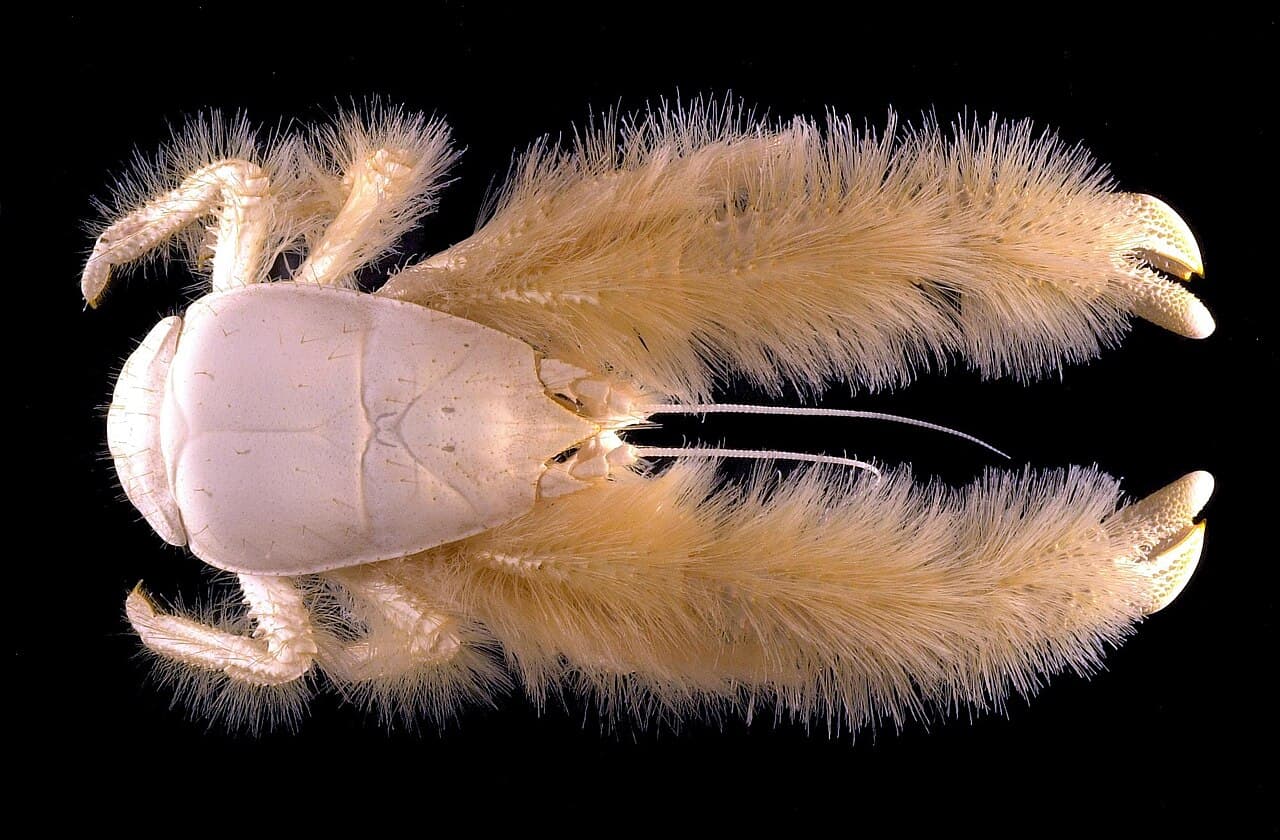
A yeti crab's pale claws look as though they are covered in fur. The covering is actually a dense field of bristles—and bacteria live among them.
The animal turned an unexpected deep-sea encounter into a new set of questions about life around hydrothermal vents.
Meet Kiwa hirsuta
The name “yeti crab” is used for several related animals. Here, the focus is Kiwa hirsuta, described after exploration of the South Pacific seafloor.
Woods Hole Oceanographic Institution recounts its discovery and the long, bristled arms that inspired the nickname.
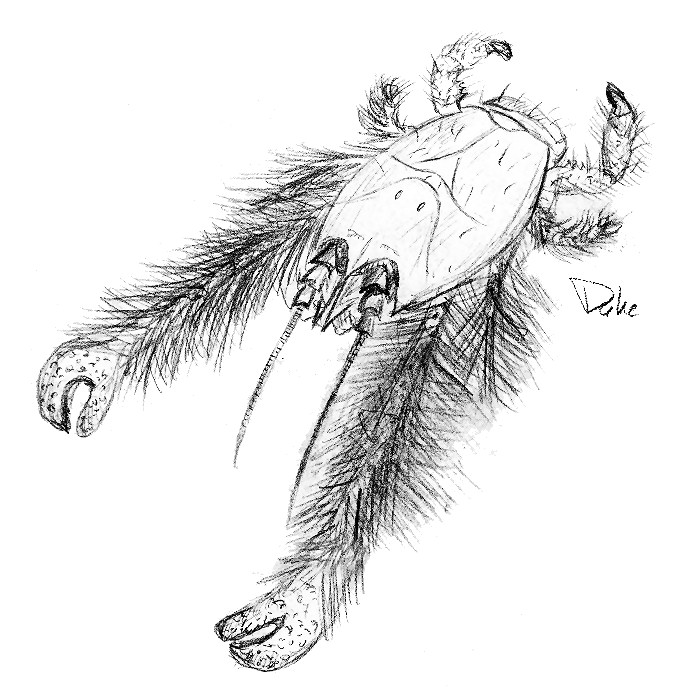
The bristles are called setae. They are not mammal hairs, even though the visual comparison is irresistible.
A meeting place for microbes
Hydrothermal vents release mineral-rich fluids into cold seawater. Microorganisms can use chemical energy in these environments, supporting food webs far from sunlight.
Researchers found bacterial communities associated with the crab's bristles and observed how the animal positioned its arms near vent fluids.
Exactly how those relationships function should be described with care. Findings about one Kiwa species should not automatically be assigned to every yeti crab.
A body from an unfamiliar world
Smithsonian Ocean describes the pale animal and its unusual sensory appearance.
Deep-sea adaptations can make a creature look strange to us because our expectations come mainly from shallow, sunlit habitats.
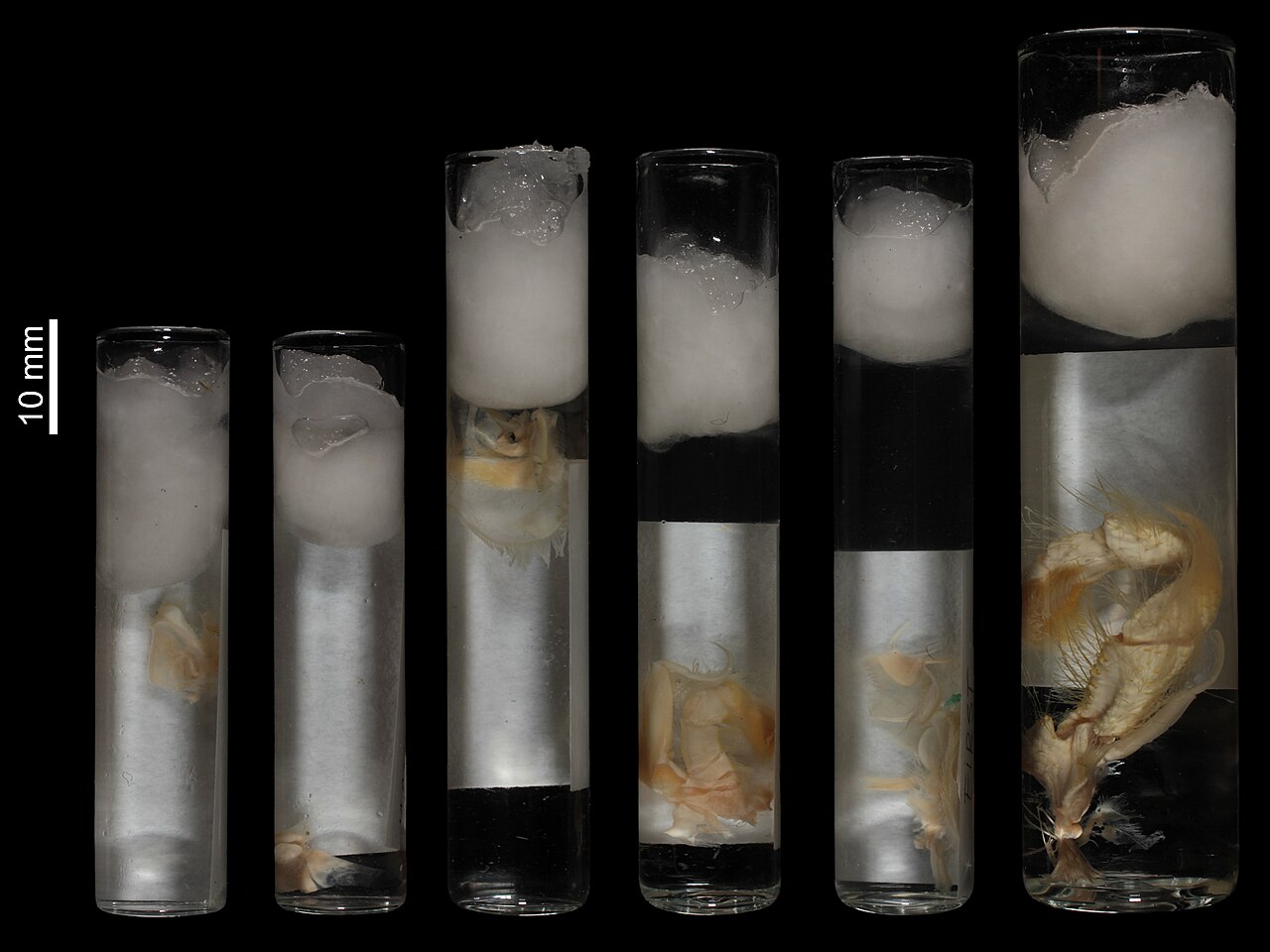
Scientific specimens provide additional anatomical detail, but they should be labelled as preserved animals rather than presented as live seafloor encounters.
More questions below the surface
Vent communities depend on local chemistry and habitat conditions. Learning how their members interact helps scientists understand what may be vulnerable to disturbance.
The yeti crab's greatest surprise is not simply its shaggy appearance. Its arms reveal a connection between an animal and microscopic life in one of Earth's least familiar environments.
Photo credits
Featured image: Alexis Fifis (Ifremer), null; Source; CC BY 4.0. Resized for web display.

Body image 1: ; Source; CC BY-SA 2.5. Resized for web display.

Body image 2: Noémy MOLLARET; Source; CC BY 4.0. Resized for web display.
