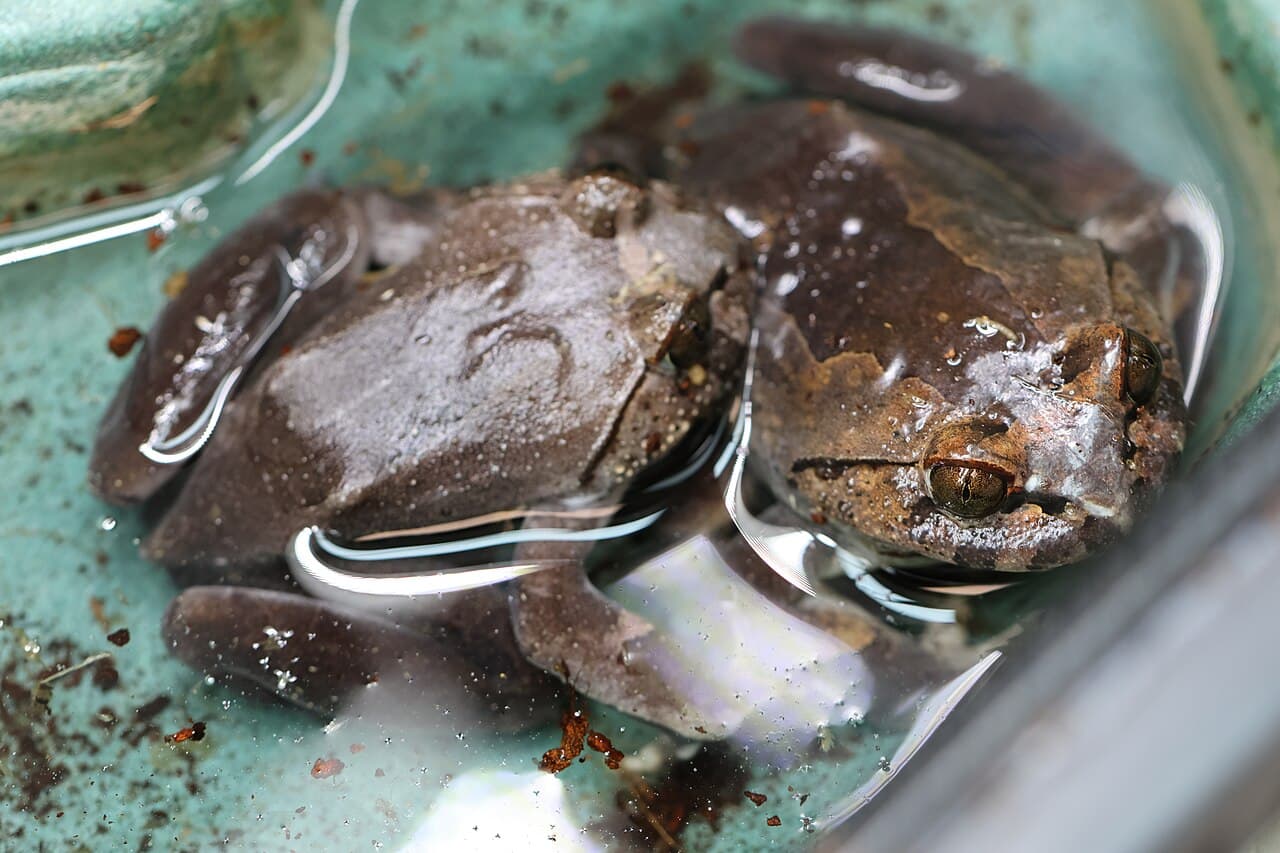
A hairy frog can bring sharp toe bones through its skin as a defense. The structures are not ordinary claws sitting permanently outside the foot.
This unusual mechanism is only one surprise carried by the African amphibian commonly listed as Trichobatrachus robustus.
Bones used in an extraordinary way
Research showed that specialized terminal toe bones can separate from small supporting structures and pierce the surrounding skin when the relevant muscles act.
Harvard's account of the work explains the mechanism and the related frogs in which it occurs.
The projections are bone, rather than the keratin-covered claws familiar from cats. The comparison is useful only if that difference stays clear.
What researchers know—and still ask
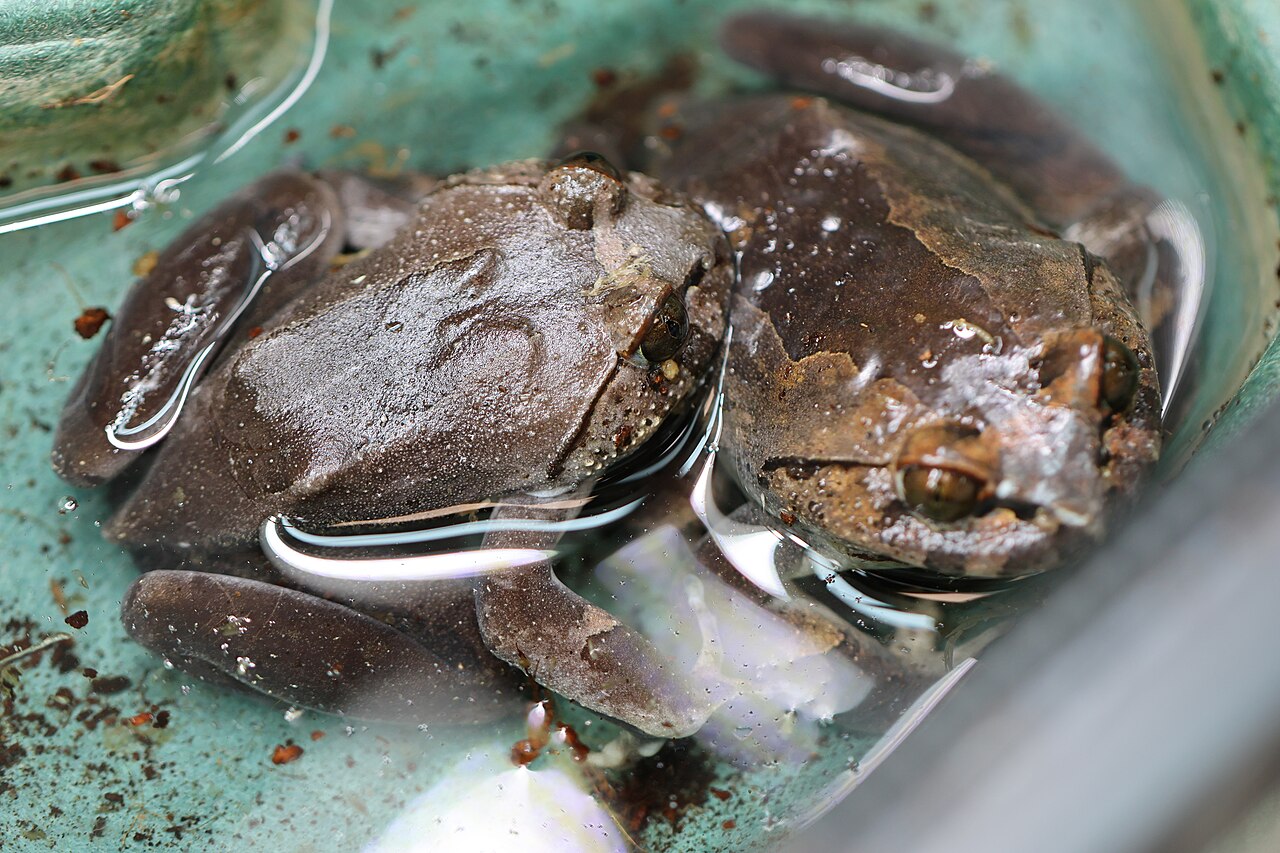
The original anatomical study examined the structures behind the defense.
Anatomy can reveal how a mechanism works without answering every question about its use in the wild. Claims about effortless repeated retraction or instant healing need evidence of their own.
The frog should not be handled or threatened to provoke the response.
The “hair” is skin
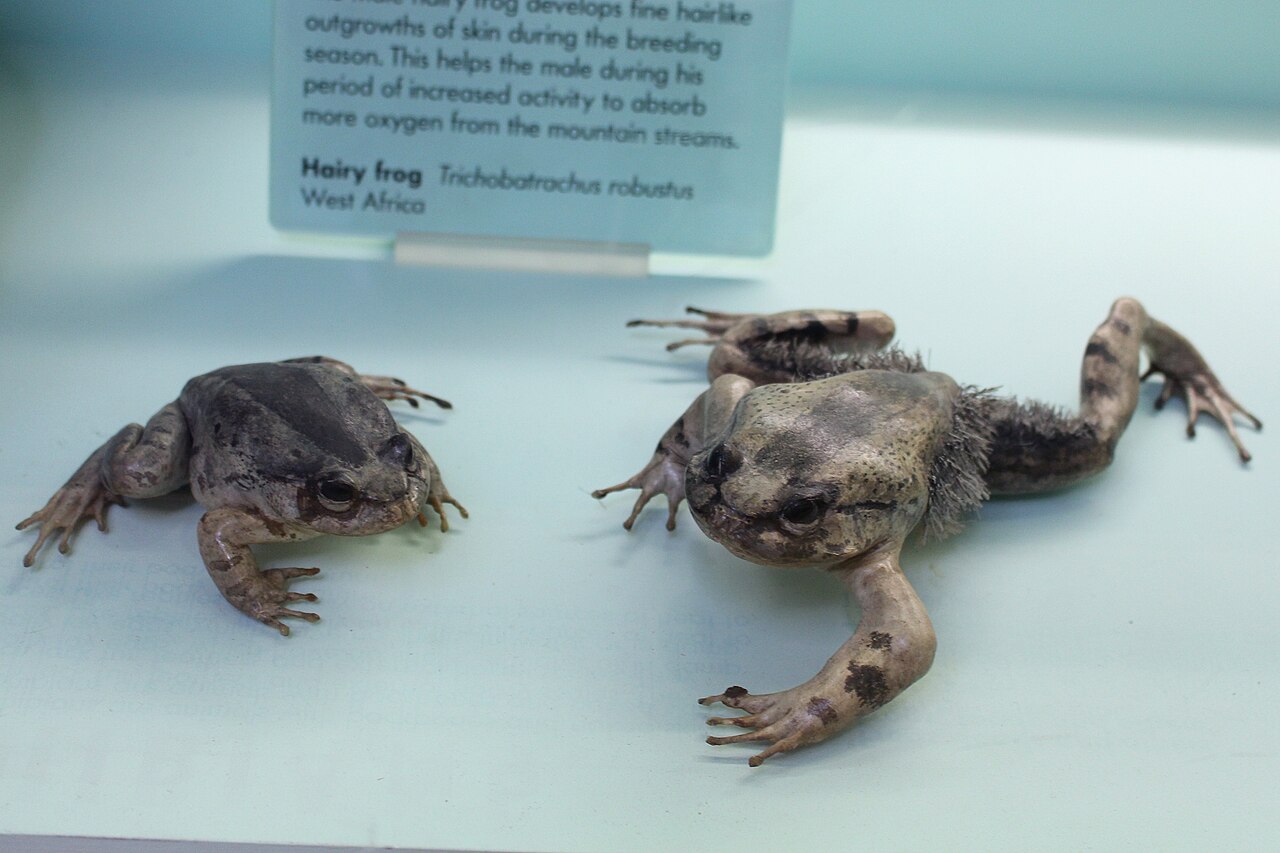
Breeding males can develop fine, hairlike skin projections. They are not true mammalian fur.
Those structures give the frog its familiar name and increase the visible difference between breeding males and other individuals.
A museum display can help show the contrast, provided preserved specimens are identified honestly.
Wonder without a superhero story
An animal's defense does not make it invulnerable. Frogs still depend on suitable water, vegetation, and habitat conditions.
The hairy frog deserves attention for what the evidence shows, without adding comic-book abilities. Its foot contains a remarkable anatomical solution—and its skin provides another reminder that similar appearances can conceal very different structures.
Photo credits
Featured image: Melvin TOULLEC; Source; CC BY-SA 4.0. Resized for web display.

Body image 1: Melvin TOULLEC; Source; CC BY-SA 4.0. Resized for web display.

Body image 2: Emőke Dénes; Source; CC BY-SA 4.0. Resized for web display.
