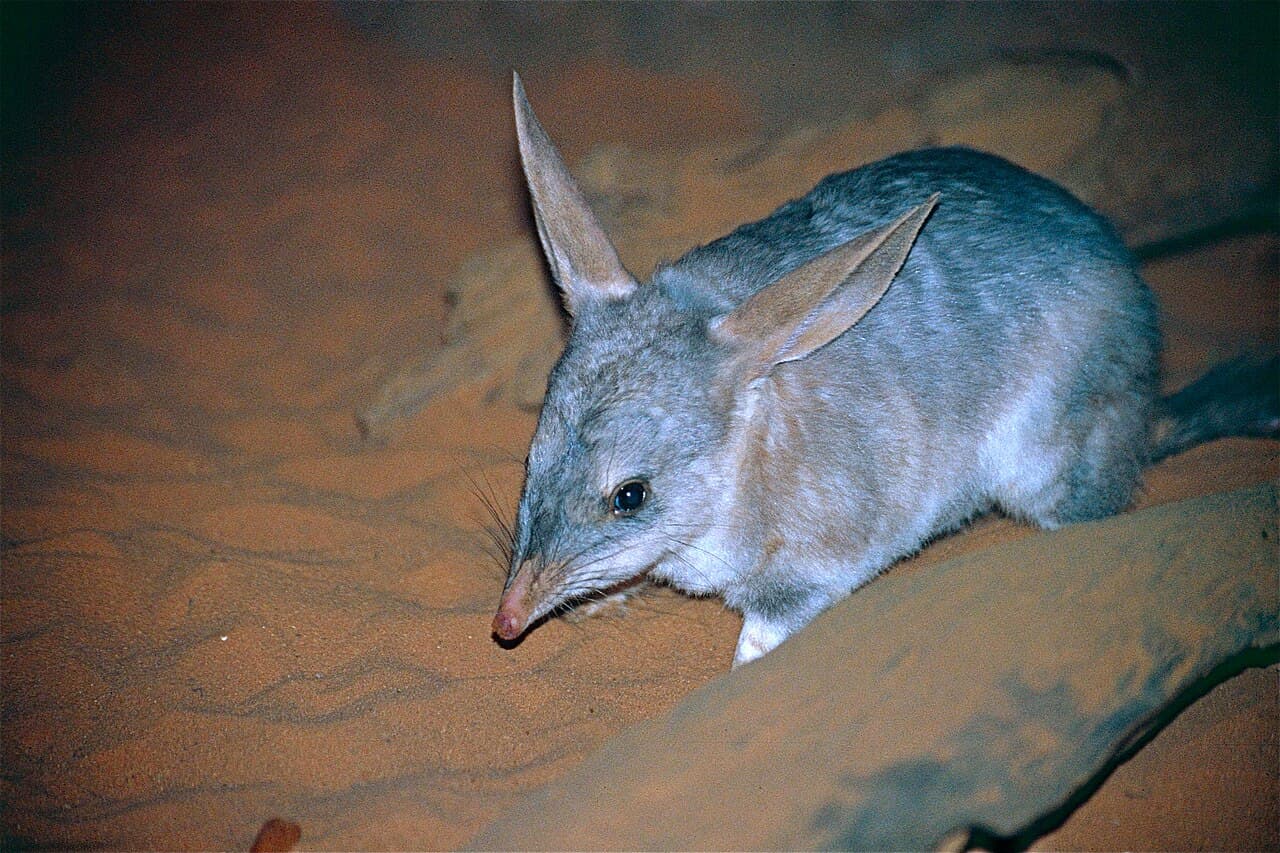
A greater bilby leaves more than footprints behind. Its digging turns soil, creates pits, and builds underground shelter, changing small parts of the landscape as it goes.
Those long ears belong to a marsupial that is also an ecosystem engineer.
Shelter beneath dry country
The greater bilby is Macrotis lagotis. It uses strong claws to dig burrows and usually shelters underground during the day.
The Australian Museum describes its powerful digging and the long, sometimes spiralling burrow.
The ears, pointed snout, and tail create a distinctive appearance, but its hidden home is just as important to understanding the animal.
Digging for a varied meal
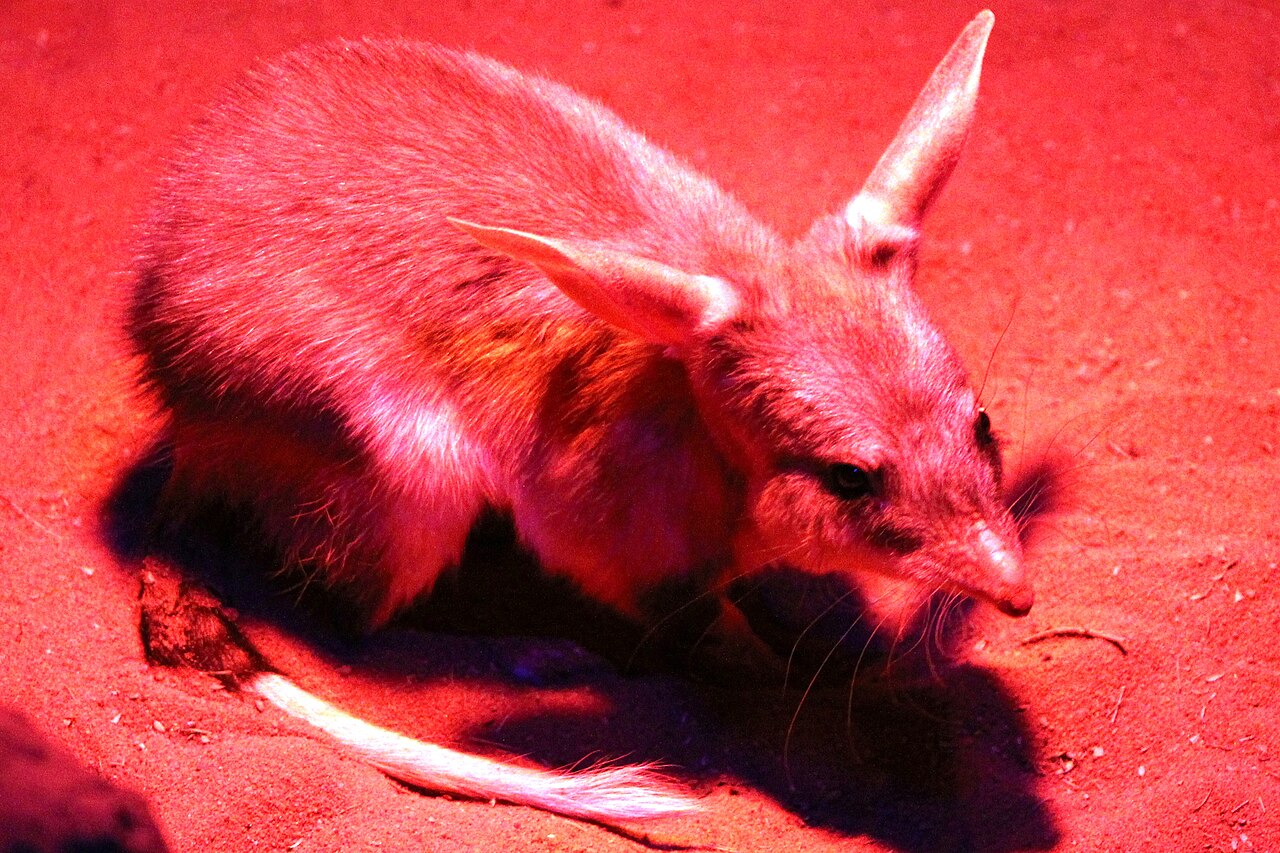
Bilbies search for a mixture of animal and plant foods. Their feeding pits bring buried material toward the surface and disturb the soil.
That disturbance can affect how water enters the ground and where organic material gathers. A small excavation can become useful to more than the animal that made it.
Australian Wildlife Conservancy explains the bilby's broader ecological role.
Burrows can serve other wildlife
Other animals may use bilby diggings and burrows as opportunities for shelter or feeding. That does not mean a bilby deliberately organizes a rescue operation for its neighbors.
The ecological effect comes from creating structures that other species can use.
Keeping that distinction preserves the wonder without turning the animal into a fictional caretaker.
A recovery that needs safe habitat
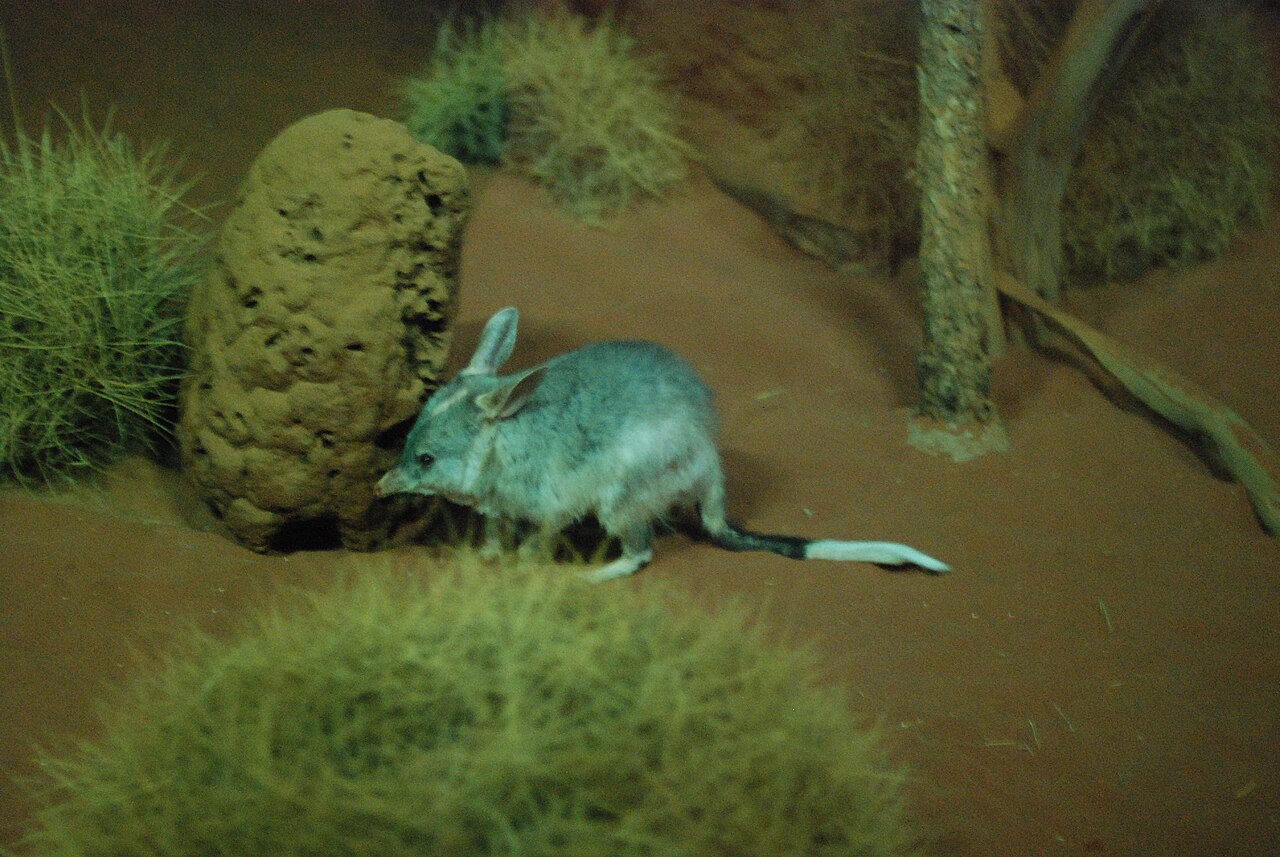
Introduced predators and habitat changes have greatly reduced bilbies across their former range.
The Australian Government's recovery work includes partnerships with Indigenous land managers and other conservation groups.
Protecting bilbies also helps restore their work in the soil. A long-eared animal emerging after dark may be quietly rebuilding opportunities for an entire community.
Photo credits
Featured image: Bernard DUPONT from FRANCE; Source; CC BY-SA 2.0. Resized for web display.

Body image 1: Mertie .; Source; CC BY 2.0. Resized for web display.

Body image 2: Richard Fisher; Source; CC BY 2.0. Resized for web display.
