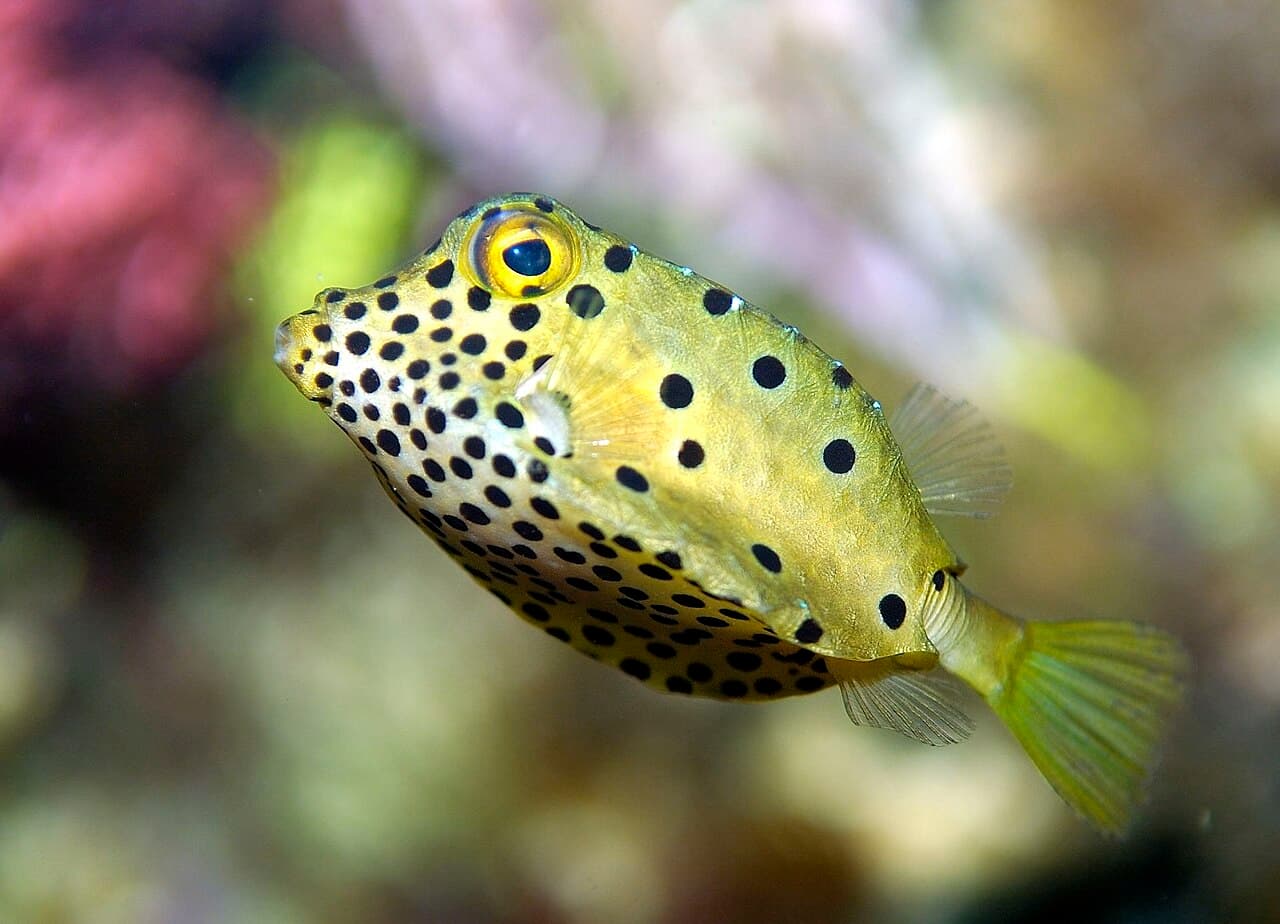
A young yellow boxfish can look like a bright yellow cube covered in black dots. Small fins project from the compact body, giving it an almost toy-like appearance.
But that familiar juvenile look is only one stage in the animal's life.
Growing beyond the yellow cube
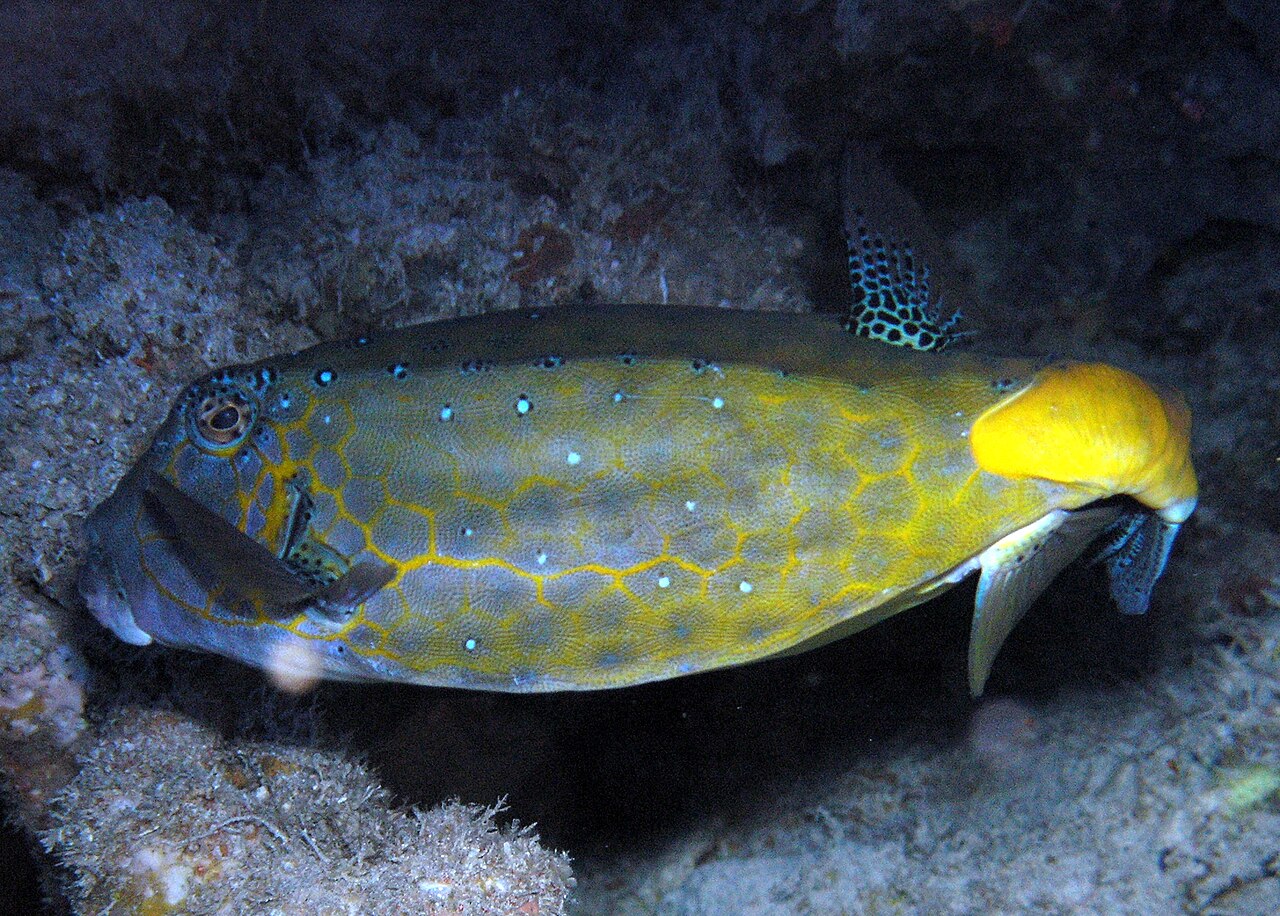
The yellow boxfish, Ostracion cubicus, changes as it matures. The spots become relatively smaller, and the color pattern can shift toward brownish or pale spots with darker edges.
Adults are much larger than the tiny yellow youngsters often shown in photographs. The species can reach about 45 centimeters in length.
The Australian Museum describes these changes and its Indo-West Pacific distribution.
A reef fish with a varied menu
Yellow boxfish inhabit coral and rocky reefs. Crevices, ledges, and other sheltered places form part of their surroundings.
Their diet includes bottom-dwelling animals such as worms, mollusks, and crustaceans, as well as algae. The small mouth belongs to an animal feeding across a varied reef menu.
One species, very different portraits
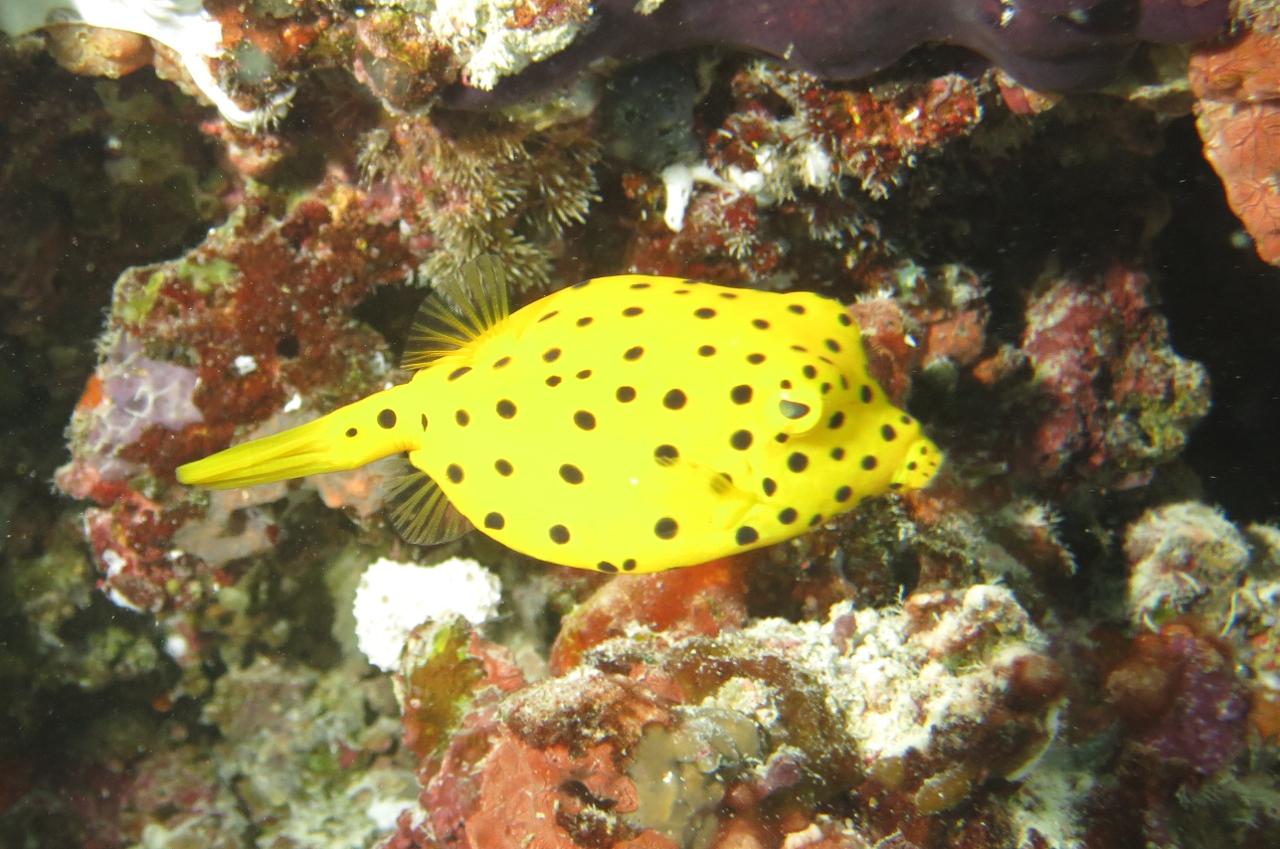
Place a juvenile photograph beside an older fish, and it is easy to see why identifying animals by color alone can be misleading.
The compact shape and black dots make the youngster instantly appealing. The adult reveals the longer story behind that image.
Observe these fish without chasing or handling them, and leave their reef shelters undisturbed.
The yellow boxfish reminds us that a memorable animal portrait captures a moment, not an entire lifetime. Nature's remarkable designs often change as their owners grow.
Photo credits
Featured image: Kofferfisch (Ostracion cubicus) 02.jpg — Norbert Potensky; CC BY-SA 3.0.

Body image 1: Ostracion cubicus.JPG — J. Petersen; CC BY 2.5.

Body image 2: Poisson-coffre jaune juvénile (Ostracion cubicus) (Ifremer 00617-72900).jpg — Jerome Paillet (IFREMER, Laboratoire d'Océanographie Physique et Spatiale, Centre Bretagne - ZI de la Pointe du Diable - CS 10070 - 29280 Plouzané); CC BY 4.0.

Photographs resized for web display where available.