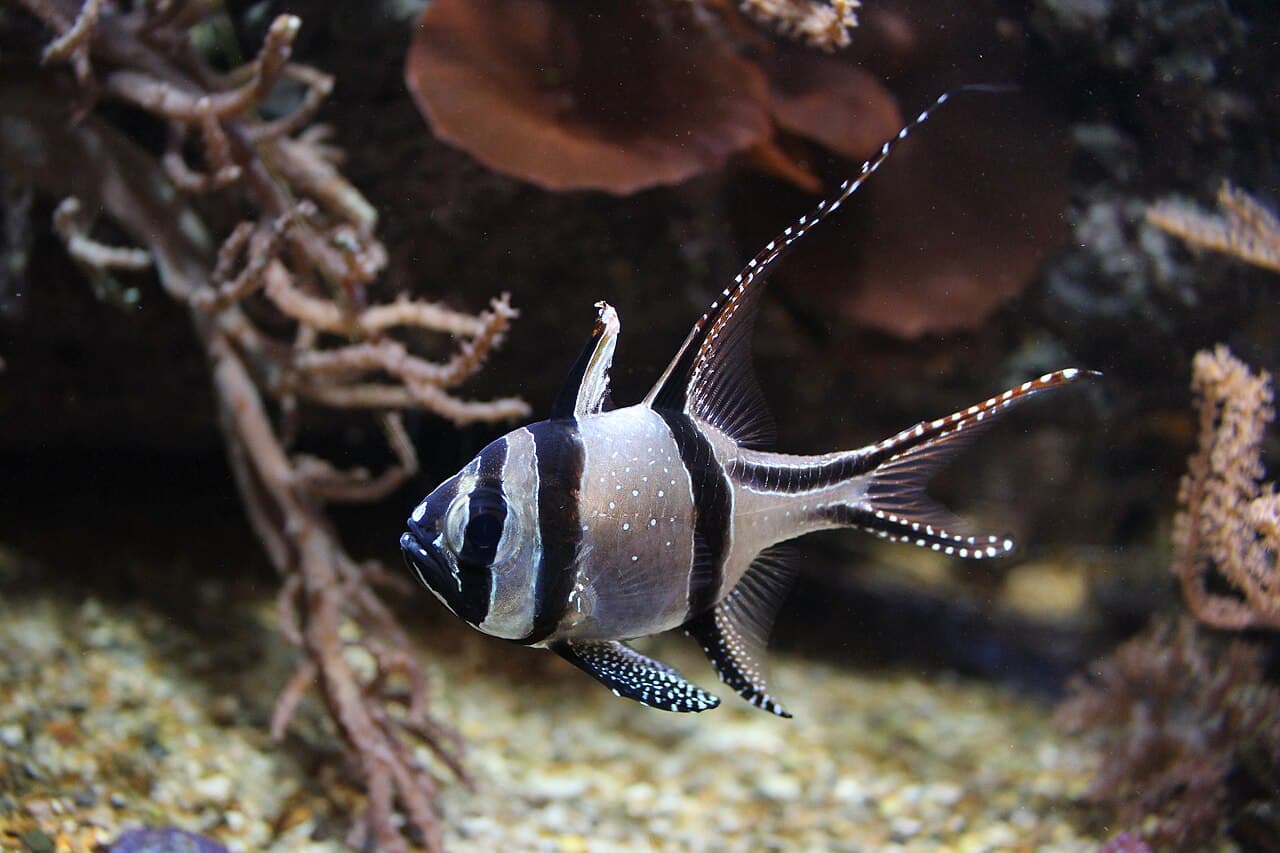
A male Banggai cardinalfish can carry his developing offspring inside his mouth. For weeks, the same mouth normally used for feeding becomes a shelter for the next generation.
Its striking stripes are only the beginning of the story.
A fish with a small natural home
The Banggai cardinalfish, Pterapogon kauderni, is native to Indonesia's Banggai Archipelago. It lives in shallow, relatively calm habitats, including reefs and seagrass beds.
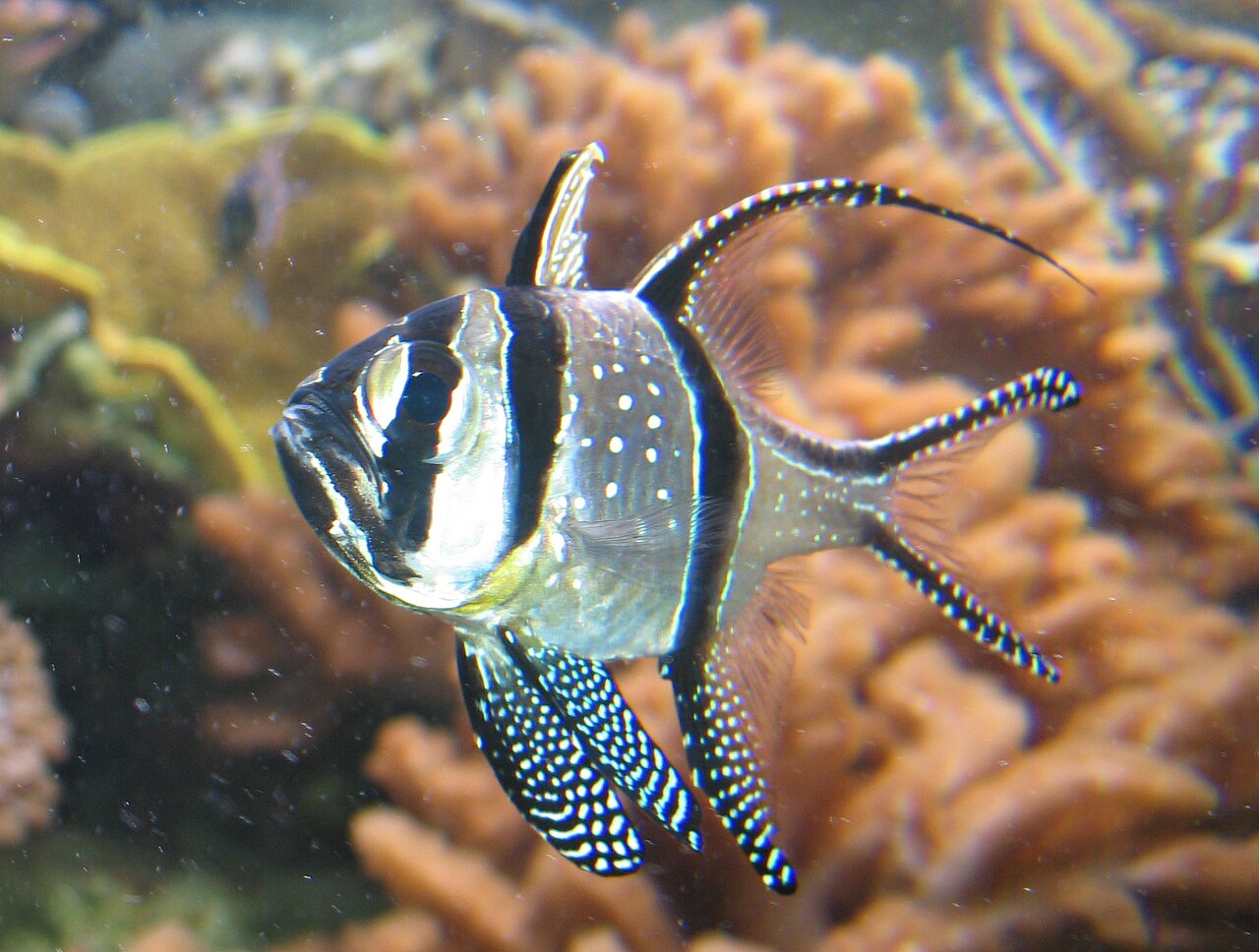
Black bars and pale spots stand out against a silvery body. Long fins complete its distinctive outline.
NOAA Fisheries describes the species and the pressures affecting its wild populations.
A father's mouth becomes a nursery
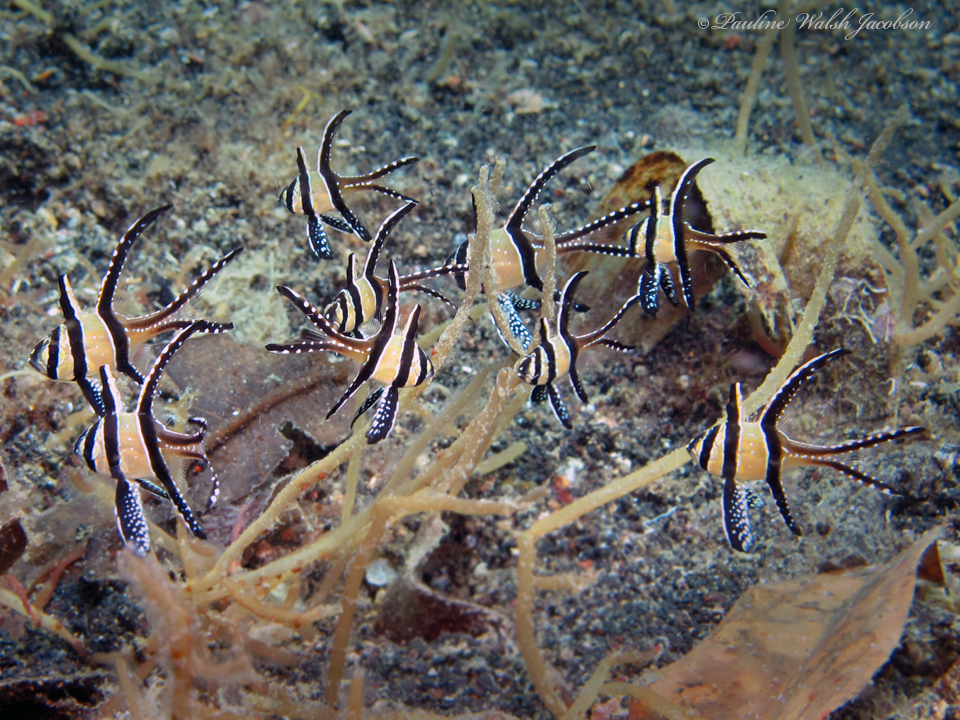
After spawning, the male takes the eggs into his mouth and broods them. He continues protecting the young after they hatch, releasing them when they are more developed.
During this period, feeding stops. Georgia Aquarium describes this paternal mouthbrooding and the care involved.
Young cardinalfish can also shelter among sea urchin spines, anemones, or corals after release.
Beauty with a conservation story
Collection for the ornamental fish trade and habitat damage threaten wild Banggai cardinalfish. Their limited native range makes protecting local habitats especially important.
A fish seen far from Indonesia in an aquarium still has a natural history tied to particular coastal waters.
The Banggai cardinalfish offers a remarkable portrait of parental care: a small, striped father carrying the next generation behind his closed mouth.
Photo credits
Featured image: Banggai-Kardinalbarsch Pterapogon kauderni.jpg — Holger Krisp; CC BY 3.0.

Body image 1: Pterapogon kauderni 280628766.jpg — Pauline Walsh Jacobson; CC BY 4.0.

Body image 2: Pterapogon kauderni NEA.jpg — Pharaoh Hound; CC BY 2.5.

Photographs resized for web display where available.