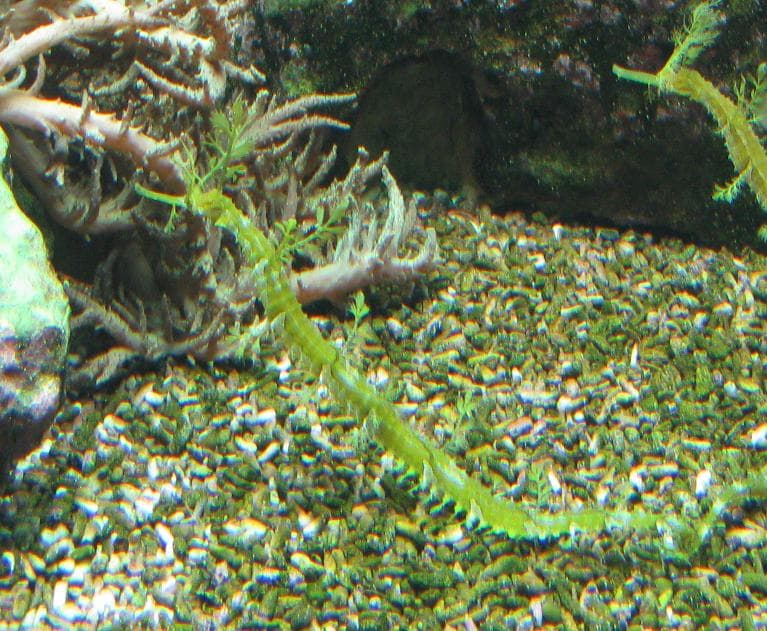
A ribboned pipefish can resemble a narrow piece of weed drifting beside the seabed. Branched skin appendages soften the outline of its long body and snout.
Look closer, and this leafy shape reveals a relative of seahorses—with an equally interesting approach to parenthood.
A pipefish with several names
The ribboned pipefish, Haliichthys taeniophorus, is also called the ribboned pipehorse or ribboned seadragon.
Its colors vary from greenish-yellow to brownish tones. Leaf-like appendages occur on the head and body, helping create its ragged appearance.
Fishes of Australia describes the species from northern Australian waters and nearby parts of Indonesia and Papua New Guinea.
A small-prey specialist
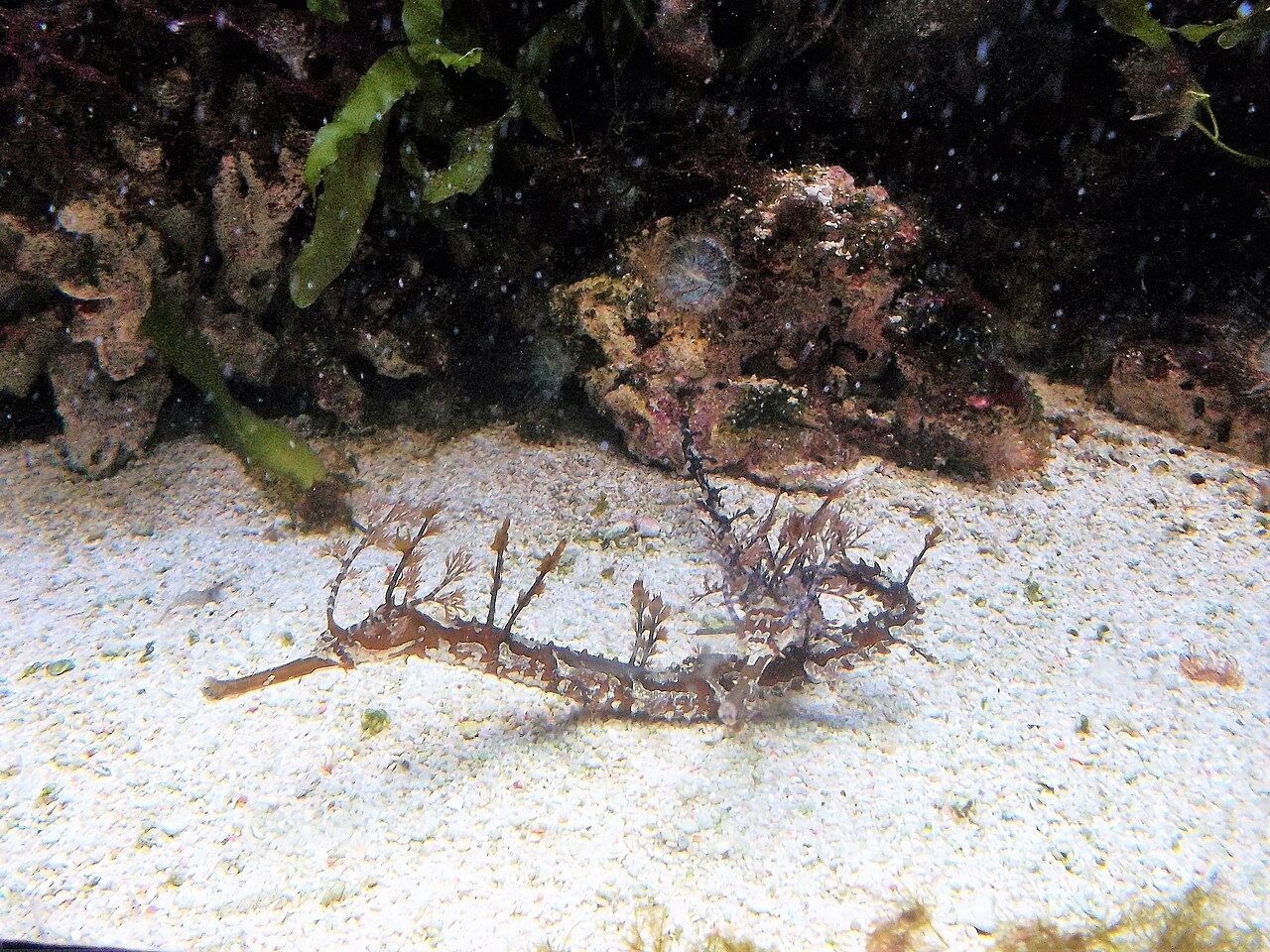
The elongated snout is used to take small crustaceans. Weedy coastal areas, reefs, and other shallow habitats provide places to search for these tiny meals.
Its disguise makes most sense among the plants and bottom growth that interrupt the outline of the fish.
The animal is related to seahorses, but its long, stretched form gives it a very different silhouette.
The male carries the developing young
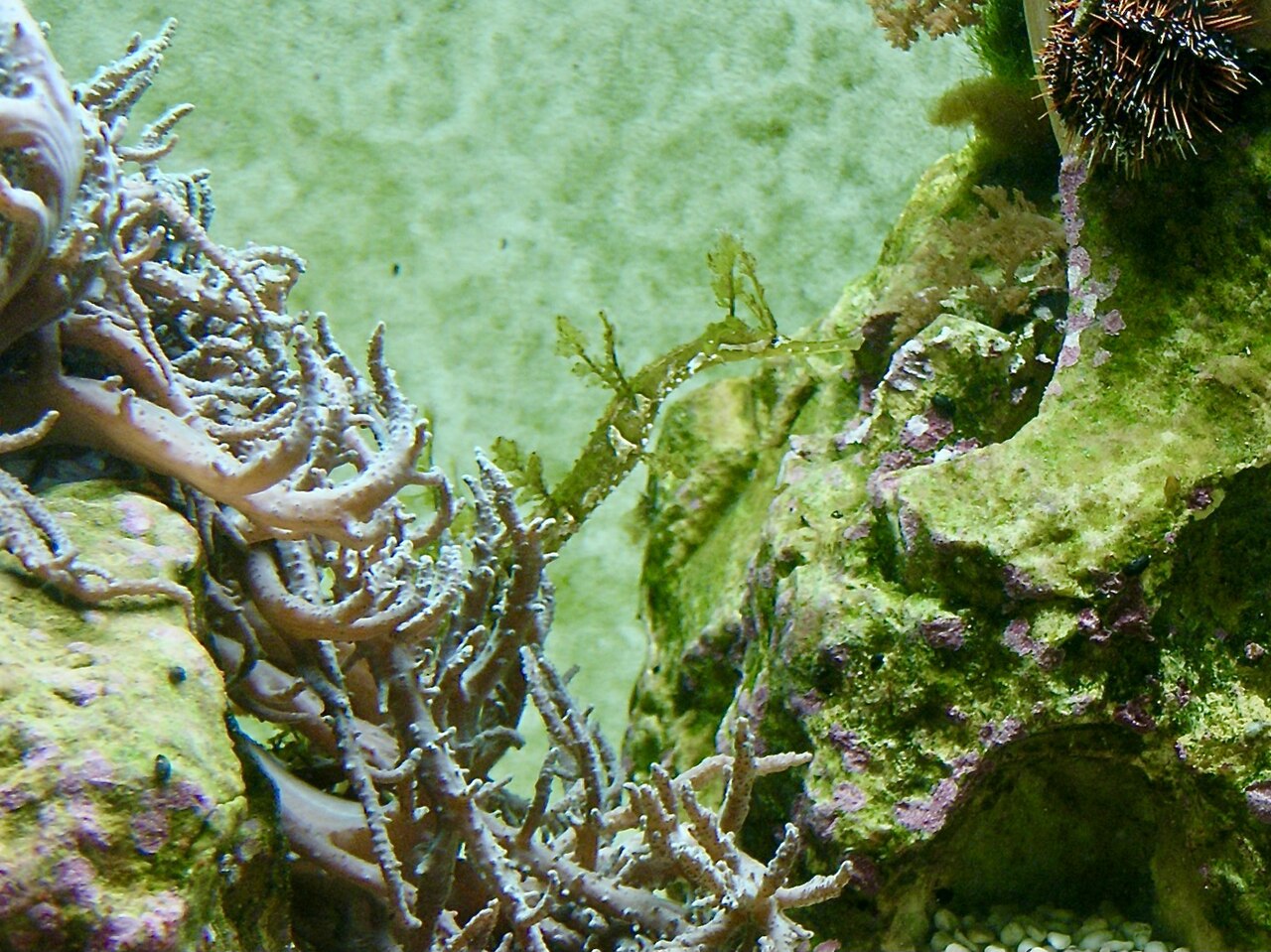
Males brood embryos in a partly exposed pouch beneath the tail. Developing young receive protection within this specialized structure.
The species can also be taken as bycatch in trawling grounds, connecting its coastal home with fishing activity.
A ribboned pipefish offers two reasons to pause: the animal hidden in a leafy outline, and the father carrying the next generation beneath his tail. Both reveal how much can be concealed in a seemingly simple strand of life.
Photo credits
Featured image: Fetzen-Seenadel (Haliichthys taeniophorus).JPG — Cymothoa exigua; CC BY-SA 3.0.

Body image 1: Fetzen-Seenadel Wilhelma Zoo - Stuttgart.jpg — Fiver, der Hellseher; CC BY-SA 4.0.

Body image 2: Syngnathidae Haliichthys taeniophorus 1.1.jpg — NasserHalaweh; CC BY-SA 4.0.

Photographs resized for web display where available.