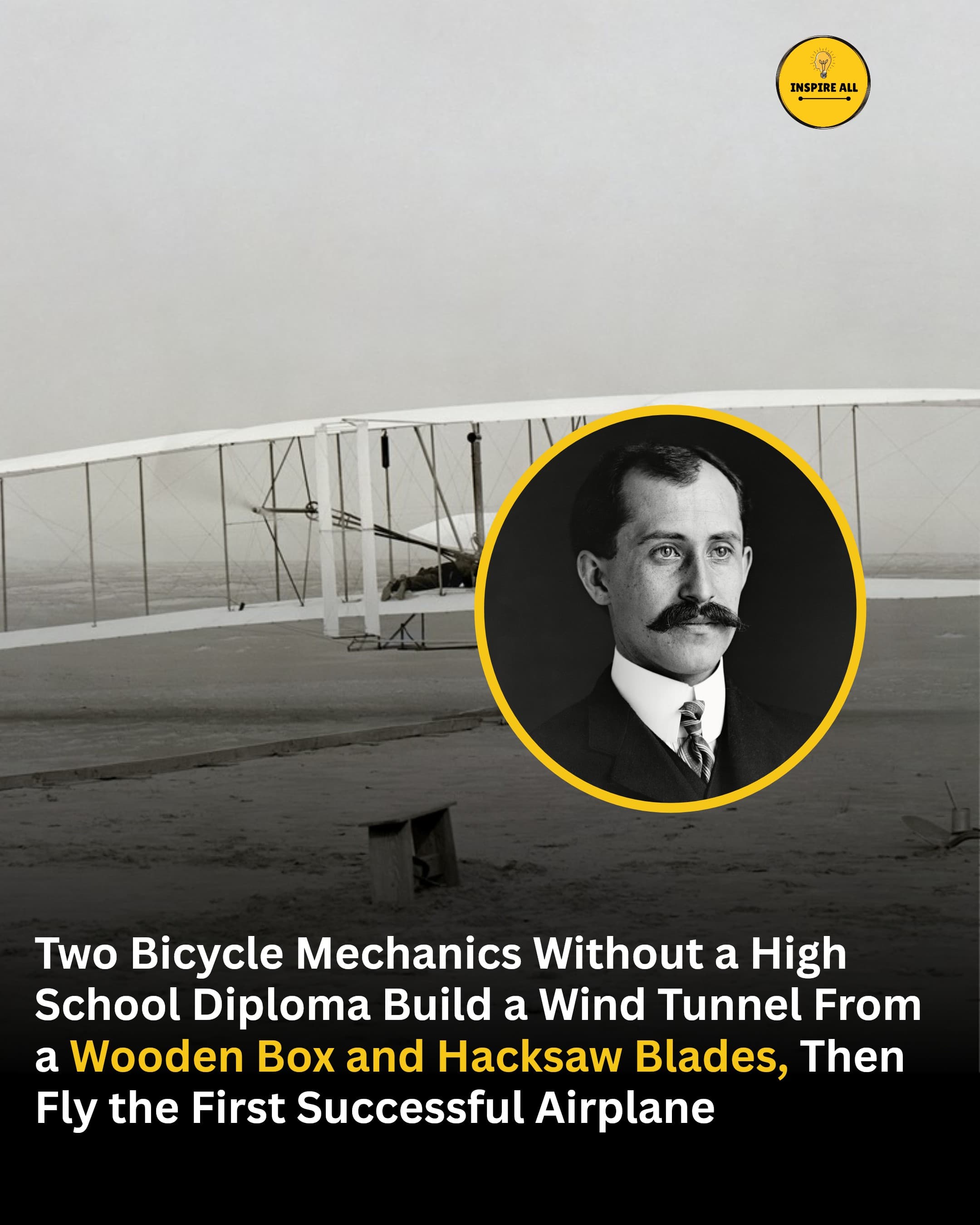
The path from a Dayton bicycle shop to powered flight included a decision to test aerodynamic assumptions rather than keep relying on them.
Wilbur and Orville Wright’s successful flights on December 17, 1903, followed years of gliding, measurement and redesign.
A small wind tunnel helped them investigate why their earlier wings had performed poorly. The Wright Brothers Aeroplane Company’s history describes the 1901 test apparatus and their comparisons of miniature wing shapes.
Their workshop skills helped make a difficult scientific question testable on a manageable scale.
Testing before another full-size attempt
A wind tunnel lets an experimenter move air past a model and compare its behaviour with other designs.
For the Wrights, the purpose was practical: better measurements could guide the next aircraft. The test rig was part of an iterative process, not a single object that independently made flight possible.
The distinction matters because the brothers also needed control, propulsion and the ability to pilot what they built.
What the flight record shows
The National Park Service’s account emphasizes their gliding experience and the importance of controlling an aircraft in the air.
It also explains that they used wind-tunnel data in developing efficient propellers. When a suitable lightweight engine was unavailable, they designed their own.
At Kill Devil Hills, North Carolina, Orville’s first successful flight travelled about 120 feet. Three more followed that day. The final flight, with Wilbur at the controls, covered 852 feet in 59 seconds.
The milestone is properly described in terms of powered, controlled flight. Earlier balloons, gliders and other experiments are part of aviation history too.
An achievement made from connected problems
The appealing workshop story can make it sound as though improvised materials were all the brothers needed.
Their results show something more demanding. They combined a test apparatus with flying experience and changes to several parts of the aircraft.
That is what gives the wind tunnel its place in the story: it supplied information they could use, then check against another real flight.
The small models in a wooden box were one step in a larger cycle of measuring, building and learning in the air.
This historical account draws on the Wright Brothers Aeroplane Company and National Park Service. Featured graphic supplied by Inspire All.
Related reading: Himaja’s voice-controlled Braille printer and Gargi Agrawalla’s portable alert prototype.