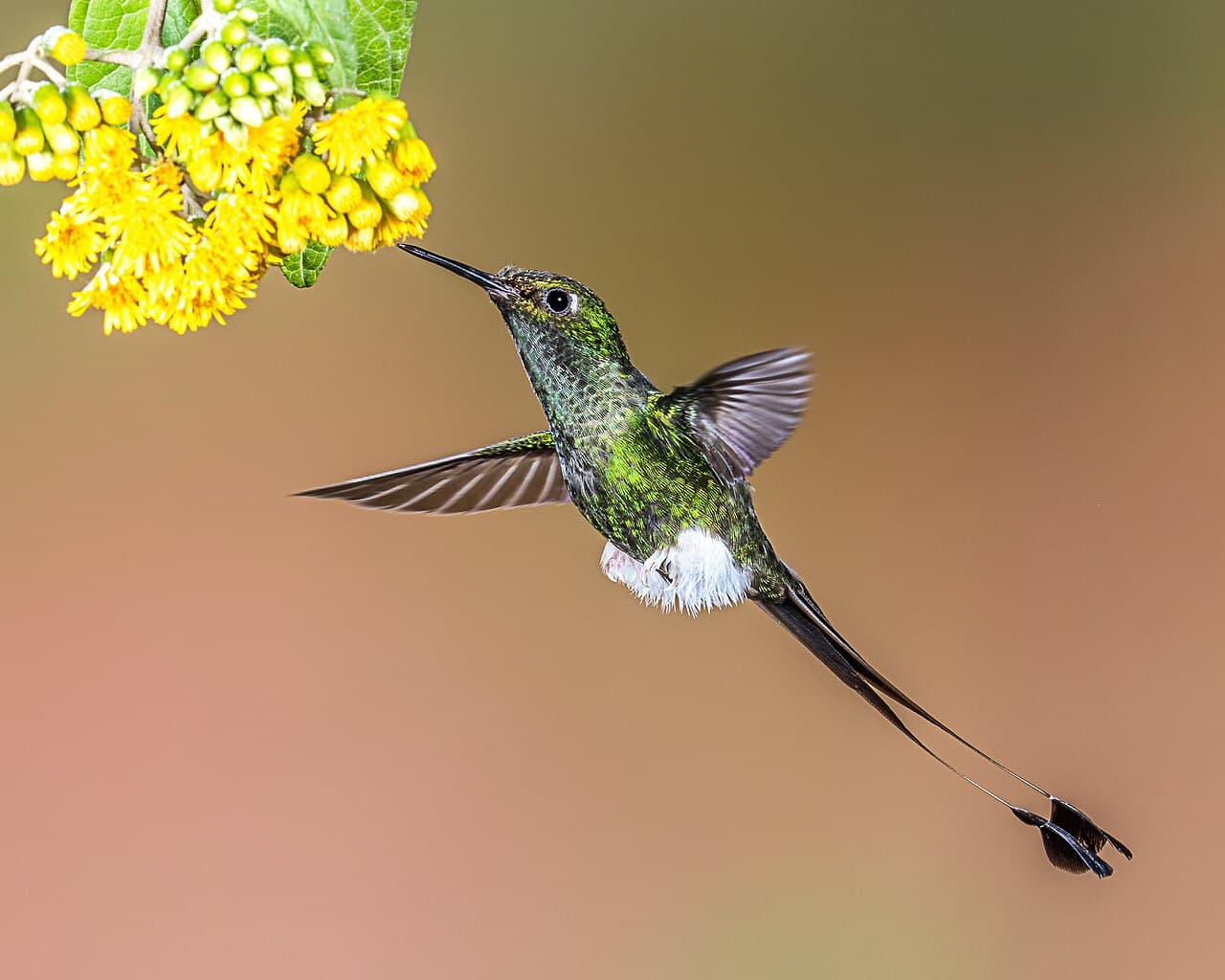
White feather puffs surround its legs, while two long tail shafts end in broad dark flags. A male white-booted racket-tail looks as though it has arrived dressed for a very unusual occasion.
The “boots” are real feathers. This hummingbird, Ocreatus underwoodii, is one of the birds historically grouped under the name booted racket-tail.
A more precise name
The IOC World Bird List's name updates record the change to white-booted racket-tail following species splits.
This article focuses on the white-booted bird of Colombia, Venezuela, and Ecuador. Related racket-tails farther south have different combinations of features, so a precise name helps keep the photographs and range together.
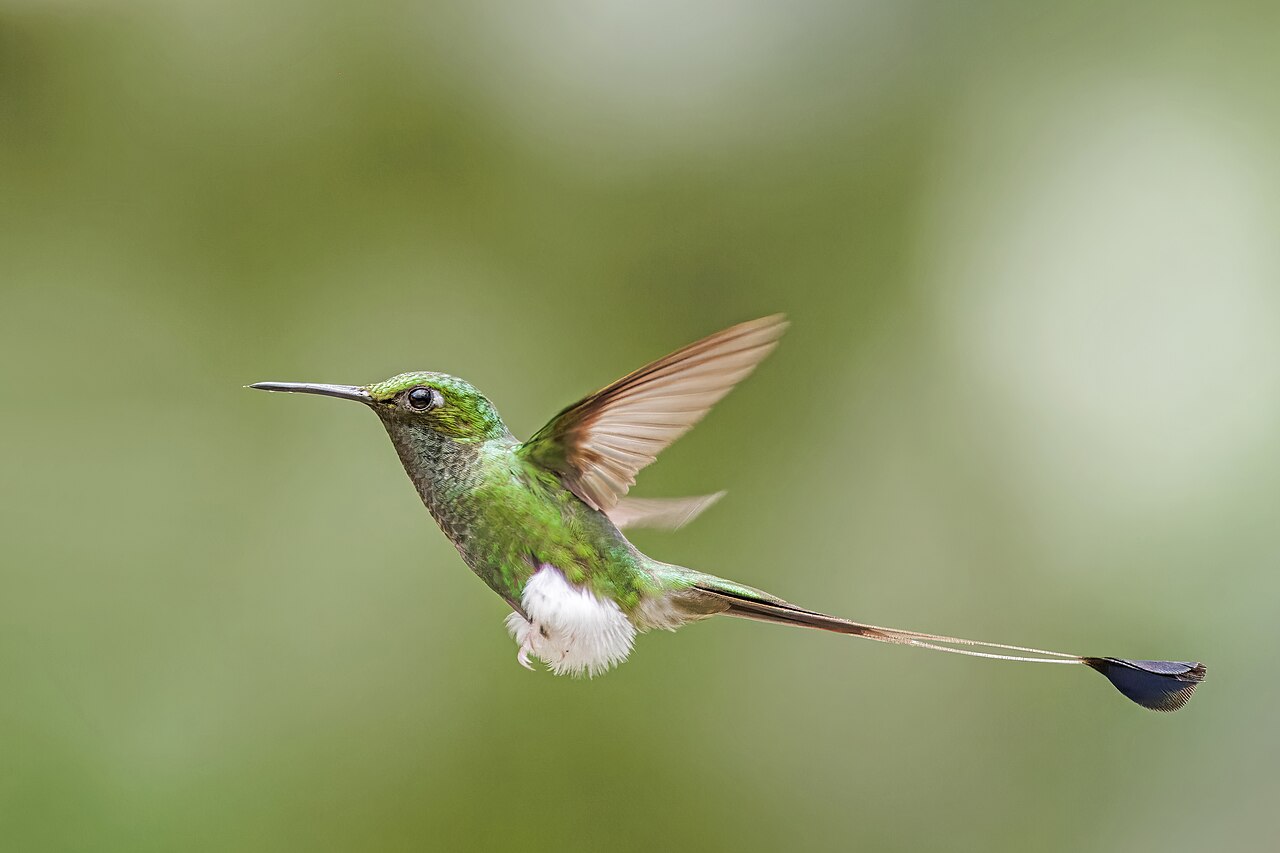
Only the male carries the long flags
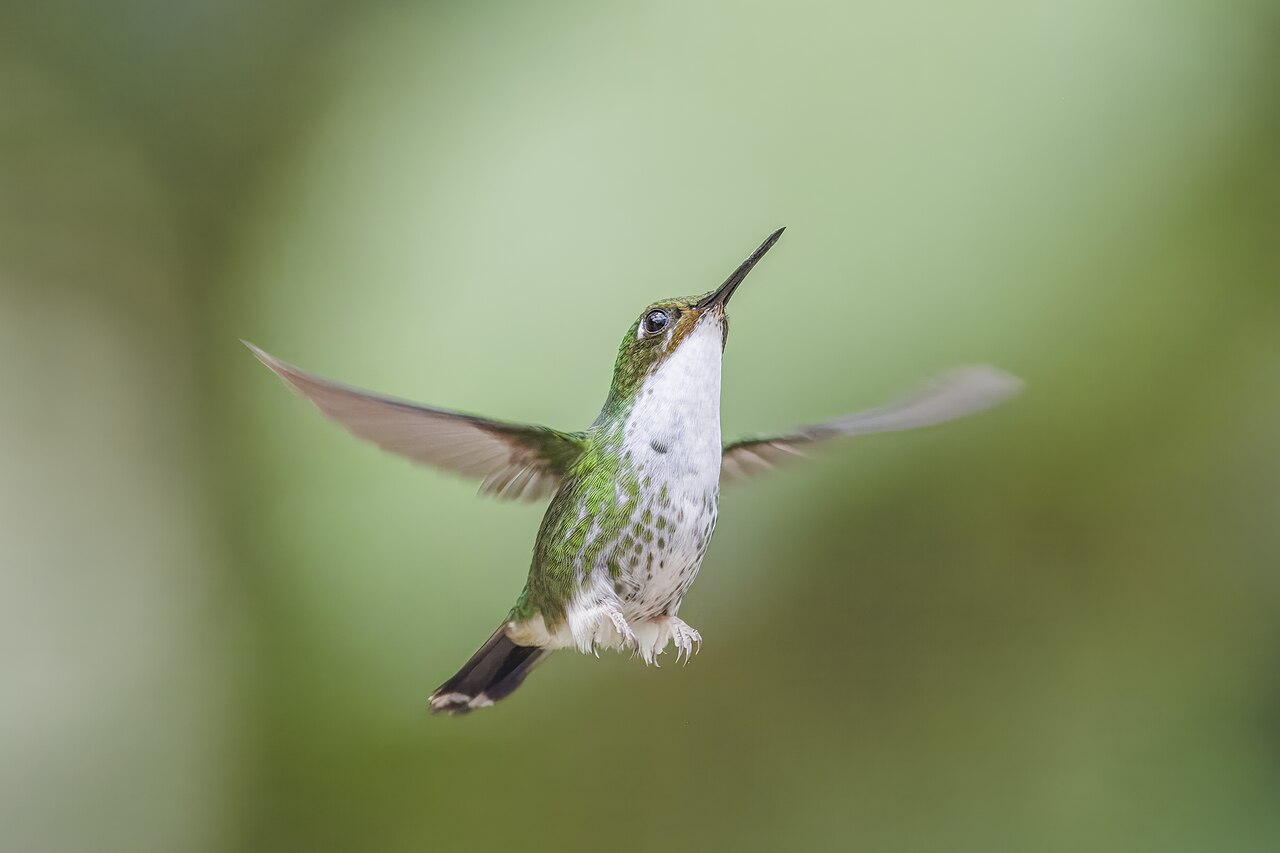
The BirdForum identification account describes green upperparts and white leg puffs in both sexes. Males have the greatly extended outer tail feathers; females lack those long rackets and have pale underparts with varying green markings.
That contrast matters when looking at a pair of photographs. A female without flags is not a bird that has necessarily lost its tail.
Life beside mountain flowers
White-booted racket-tails use Andean forest and its edges, including ravines and areas of regrowth. Their food includes nectar and small insects.
A short, straight bill reaches the food at flowers while rapid wing movements keep the bird in place. Between visits, a fine branch becomes a useful resting point.
The white puffs and slender tail can make the animal appear almost weightless. Yet every movement belongs to the practical work of feeding and surviving.
Protect the habitat behind the portrait
Native flowering vegetation and forest cover provide more than an attractive background. They form the bird's food supply and living space.
Watching from a distance allows the bird to choose its own route between flowers. A photograph becomes more meaningful when it records behavior without interrupting it.
The boots and flags make this hummingbird memorable. The mountain habitat around them is what makes the whole remarkable bird possible.
Photo credits
Featured image: White-booted Racket-tail hummingbird, male, Tandayapa Bird Lodge, Ecuador (21874952801).jpg — Andy Morffew from Itchen Abbas, Hampshire, UK, CC BY 2.0.

Body image 1: White-booted racket-tail (Ocreatus underwoodii melanantherus) male in flight Paz de las Aves.jpg — Charles J. Sharp, CC BY-SA 4.0.

Body image 2: White-booted racket-tail (Ocreatus underwoodii melanantherus) female in flight Paz de las Aves.jpg — Charles J. Sharp, CC BY-SA 4.0.

Photographs resized to up to 1,280 pixels wide for web display.