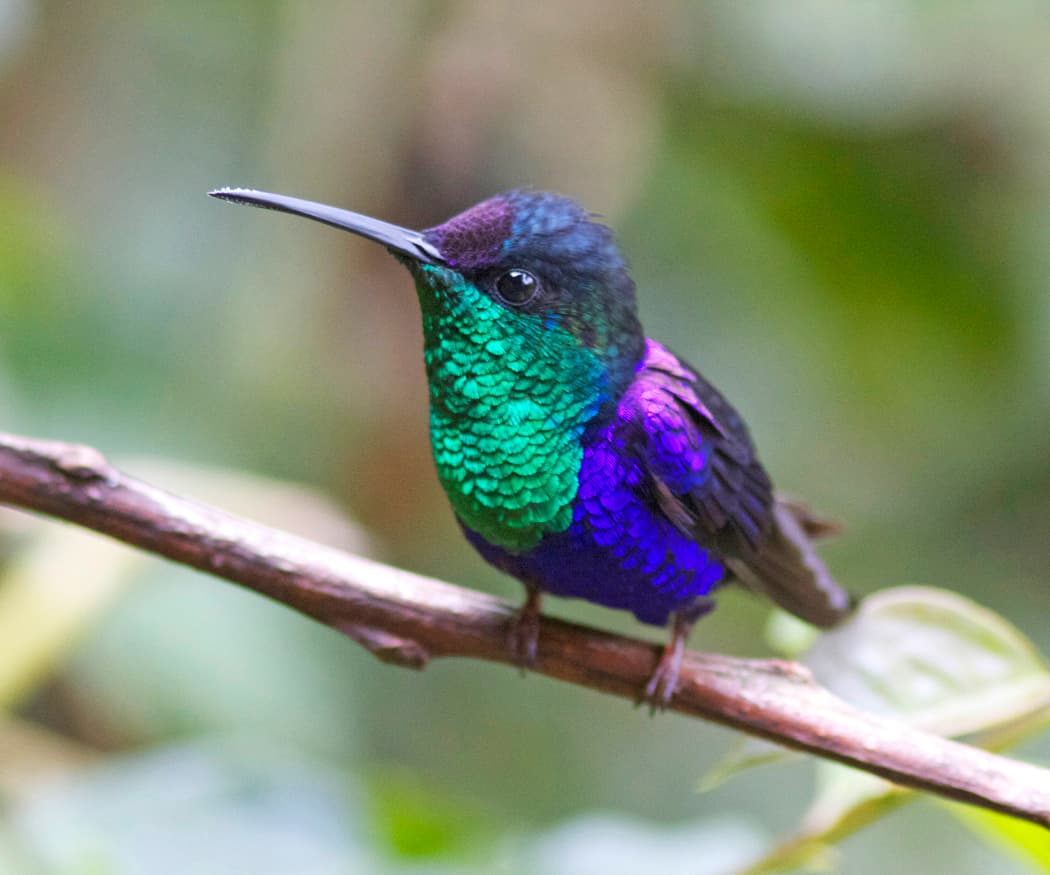
A small turn of the head can bring a violet crown into view above a brilliant green throat. A moment later, the same hummingbird can look much darker.
The violet-crowned woodnymph is a form of the crowned woodnymph, Thalurania colombica. Its jewel-like appearance is only the beginning of an interesting story about light, flowers, and the way scientists classify birds.
A familiar name within a wider species
Cornell's eBird taxonomy includes northern and Colombian violet-crowned birds within crowned woodnymph. Other populations in that species have a greener crown.
The South American Classification Committee explains the evidence behind combining formerly separated woodnymph populations.
The distinction is useful: a photograph labelled “crowned woodnymph” need not show exactly the same crown color in every part of the range.
Color made by the feather's structure
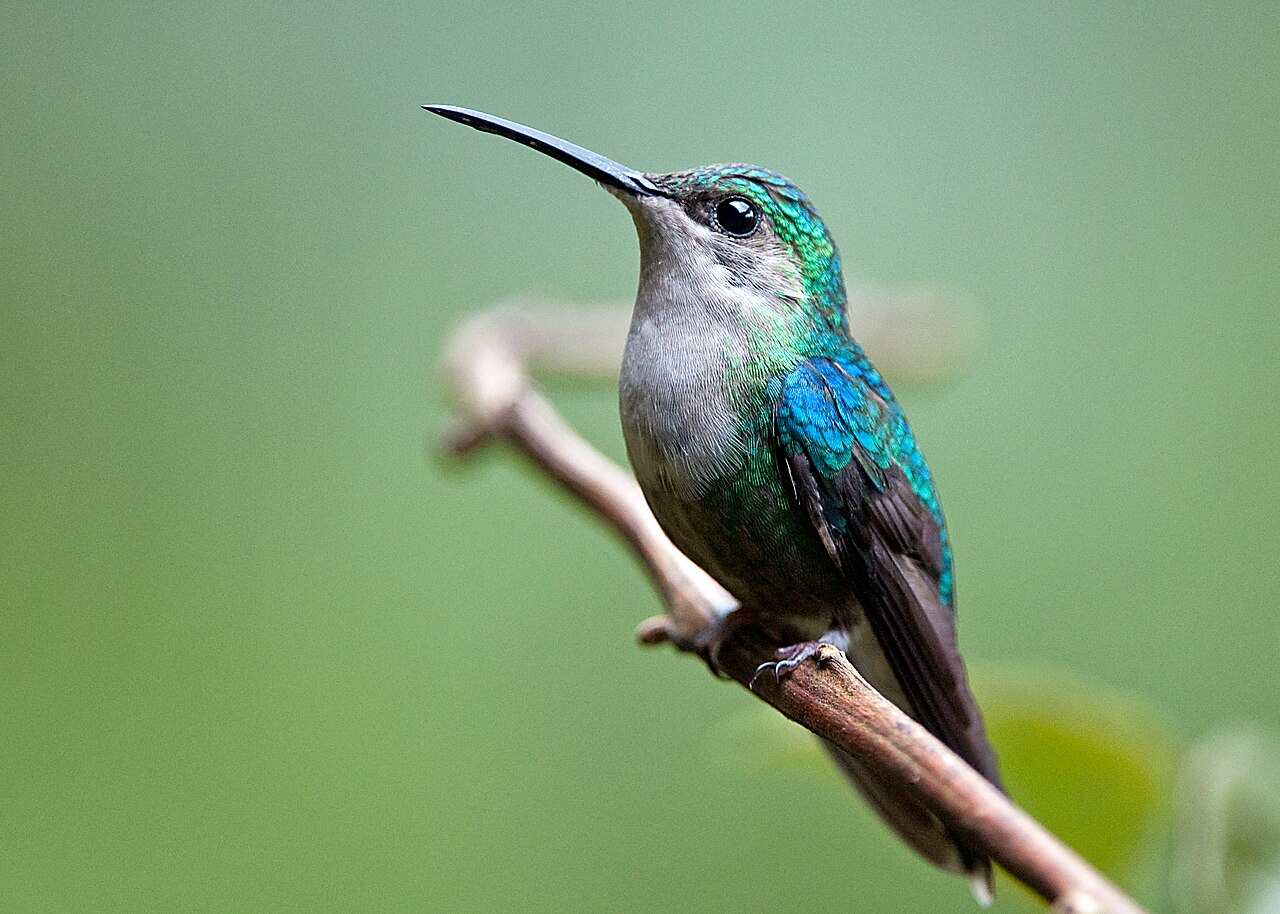
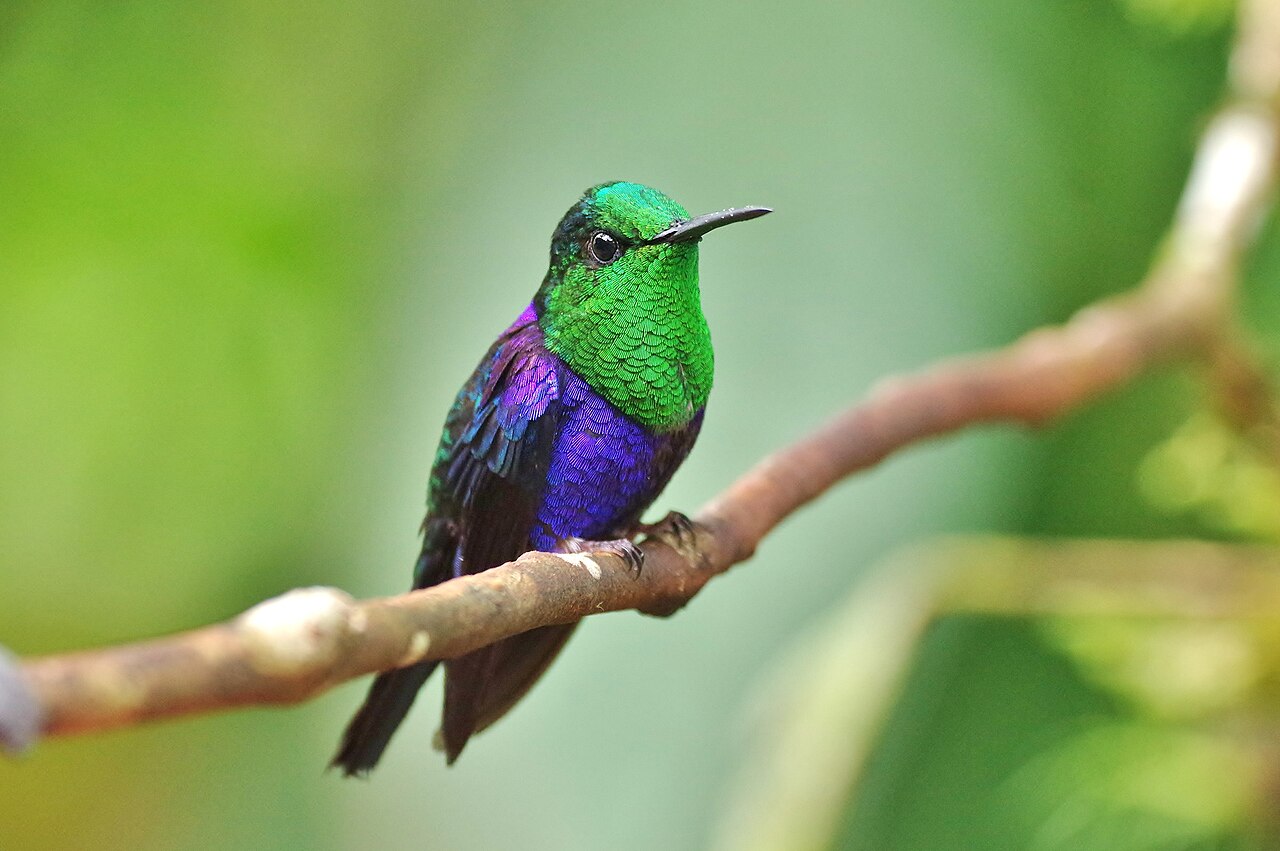
Males in the violet-crowned group combine shining green with violet areas. Females are less vividly patterned, with much paler underparts.
As Cornell's Bird Academy explains for iridescent hummingbird feathers, microscopic structures interact with light. The angle changes the visible result.
The bird is not switching its colors on and off. A shift in posture changes what an observer can see.
A flower-filled forest life
Crowned woodnymphs take nectar and small animal foods. They use humid forest, edges, and other suitable wooded settings.
A Colombian bird account describes nectar feeding among shrubs, herbs, epiphytes, and small trees, as well as taking tiny insects and spiders.
A flowering branch is therefore a feeding place. The surrounding plants supply cover and connect that meal with the next one.
More than a flash of violet
Keeping native vegetation and a varied supply of flowering plants helps maintain the living setting behind the portrait.
A hummingbird can appear and disappear in seconds. Learning what to watch for makes those seconds richer: crown color, a pale female's underside, the angle of light, and the quiet branch between meals.
The wonder is not limited to the brightest photograph. It is there in the changing views of the same living bird.
Photo credits
Featured image: Violet crowned Woodnymph.jpg — Joseph C Boone, CC BY-SA 3.0.

Body image 1: Thalurania colombica female in Costa Rica.jpg — Kathy & sam from Beaverton OR, USA, CC BY 2.0.

Body image 2: Thalurania colombica 25626623.jpg — thibaudaronson, CC BY-SA 4.0.

Photographs resized to up to 1,280 pixels wide for web display.