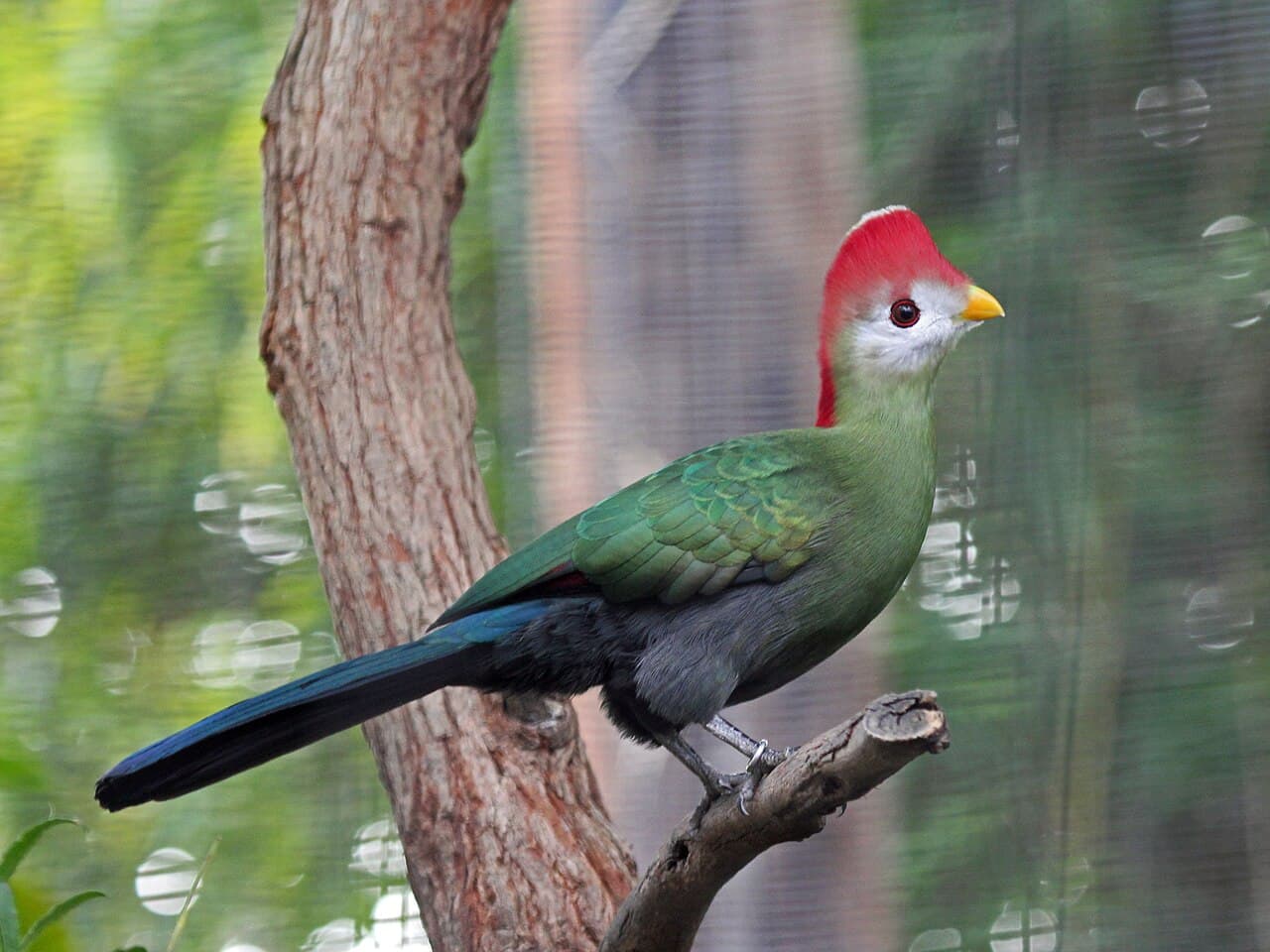
A red-crested turaco can sit almost motionless among green leaves, its scarlet crown the one detail that gives it away. When it moves, the white face and long tail complete a striking forest portrait.
This African bird, Tauraco erythrolophus, is native to Angola. Its colors attract attention, but patience reveals a capable climber with a life closely tied to trees.
A crown above a white face
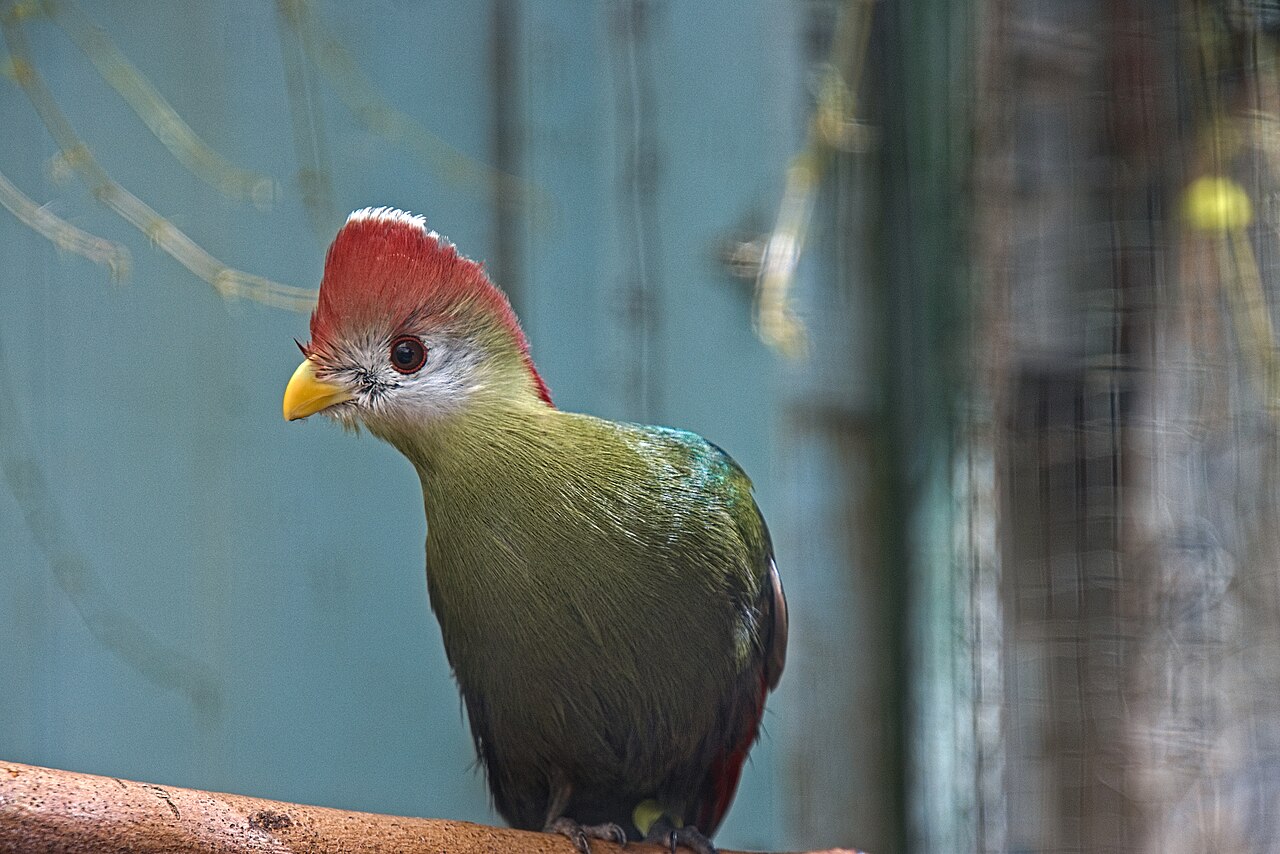
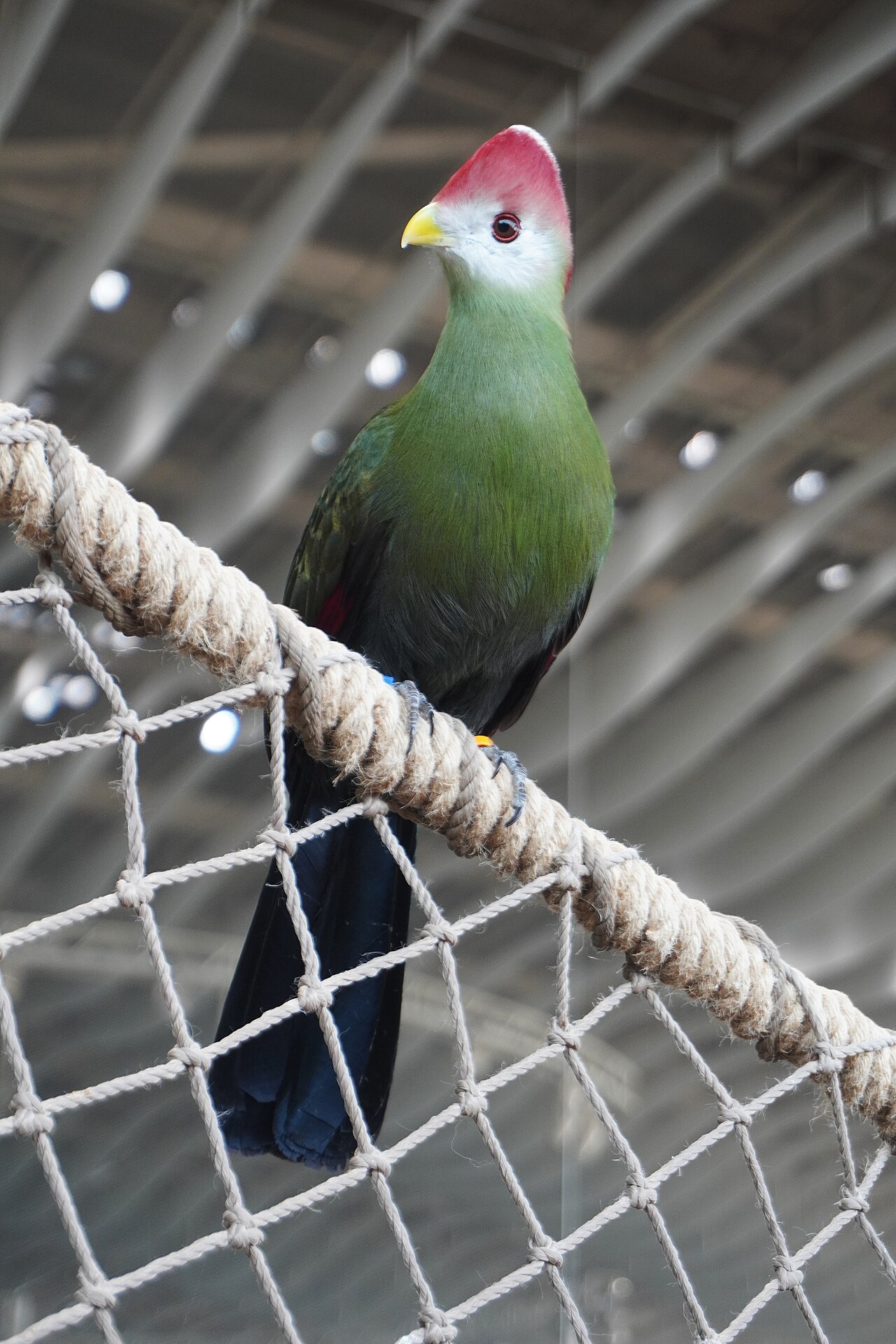
The red crest stands above pale facial feathers, a yellow bill, and green plumage. Darker blue tones occur on the wings and tail, with brilliant red flight feathers revealed more clearly when the wings open.
London Zoo's species account describes this combination and notes how easily a still bird can be missed among leaves.
A closed wing and an open wing tell different parts of the color story. One photograph cannot show every feature at once.
Climbing through the canopy
Red-crested turacos move around branches with an agility that can recall parrots. Their diet includes fruit, berries, flower buds, young shoots, and some insects.
Watching a bird feed connects its bright appearance with ordinary needs. A fruiting tree is a place to find energy, not simply a convenient perch for a photograph.
A simple nest and shared work
London Zoo describes a rather fragile platform of twigs placed in a tree. It is a different solution from a cockatoo's deep hollow or a bee-eater's underground tunnel.
The California Academy of Sciences account introduces the species through its birds in human care and the coordinated breeding work behind them.
Those observations help connect close-up appreciation with the work of maintaining healthy populations.
Keep Angola's forests part of the picture
London Zoo lists the species as Least Concern while identifying habitat destruction as a threat. A reassuring category does not make forest loss harmless.
Protecting a bird's home means keeping food, cover, and breeding places together. For a tree-dwelling species, an intact patch of forest offers far more than scattered ornamental trees.
The crest is a wonderful invitation to look. The rest of the bird's life gives us a reason to keep looking.
Photo credits
Featured image: Red-crested Turaco RWD.jpg — DickDaniels (http://theworldbirds.org/), CC BY-SA 3.0.

Body image 1: 2020-06-24 - Rothaubenturako (Tauraco erythrolophus) Tierpark Gettorf (1).jpg — Fabian Horst, CC BY-SA 4.0.

Body image 2: Tauraco erythrolophus 20240609.jpg — Steven Sun, CC BY-SA 4.0.

Photographs resized to up to 1,280 pixels wide for web display.