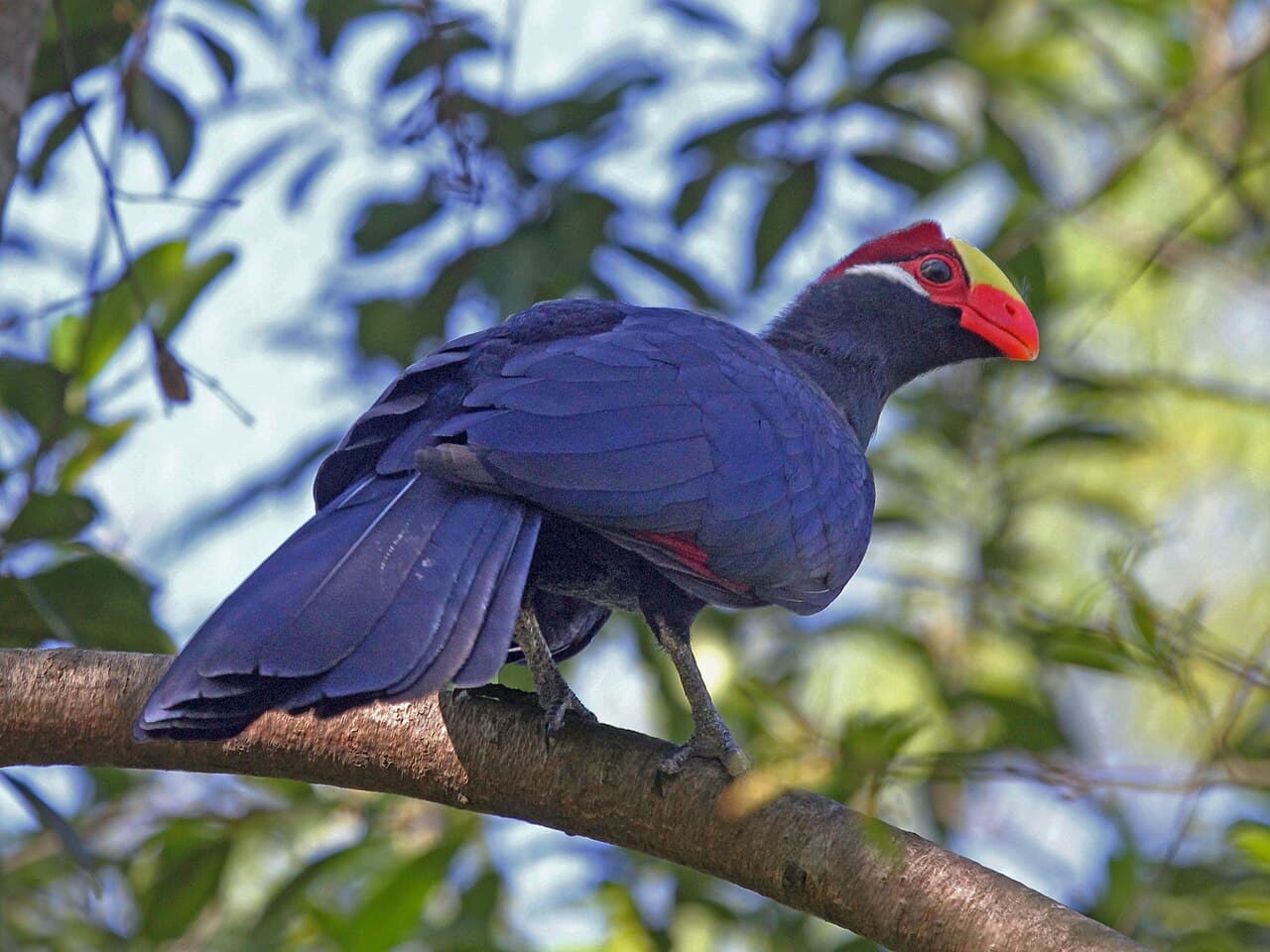
A violet turaco can look almost dark in the shade, then reveal a rich purple-blue body, yellow forehead, and red crown. When it spreads its wings, another surprise appears: vivid red feathers.
This is Musophaga violacea, also called the violaceous turaco. Its colorful face belongs to a fruit-loving bird of West African woodland and forest.
More colors than the name suggests
The violet body is only one part of its appearance. A bright bill and forehead, red around the eye, and a pale patch behind it create a distinctive face.
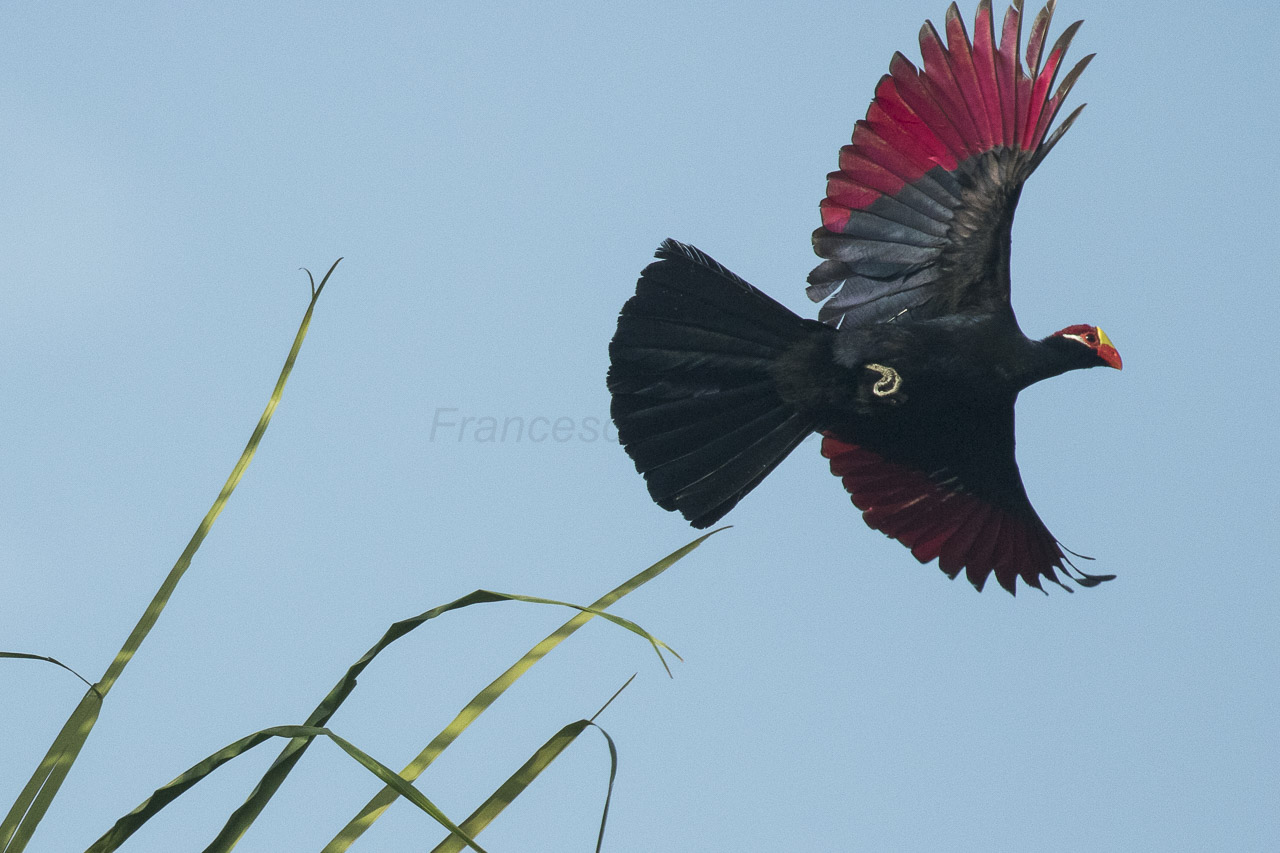
The Central Florida Zoo account highlights the unusual red pigment in turaco feathers. The wing flash is therefore part of the bird's natural coloring, not an effect added to a photograph.
The difference between a perched and flying bird can be dramatic. Folded wings hide features that become obvious for a moment in flight.
Branches are the main roads
Violet turacos spend much of their time in trees. They often hop and clamber between branches rather than making long flights.
ZooParc Overloon describes that branch-to-branch movement and a diet rich in fruit, berries, and figs. Other foods add variety.
A canopy is a three-dimensional route system. A bird can move upward, sideways, and down to another feeding place without ever touching the ground.
A fruit meal can move a seed
Eating fruit links turacos with the plants around them. Seeds that pass through the bird can be deposited away from the tree where the fruit was eaten.
Exmoor Zoo identifies this role in forest regeneration and lists the species as Least Concern.
It is an everyday ecological connection hidden behind a spectacular coat: a meal for the bird may become a new opportunity for a plant.
Keep the branches connected
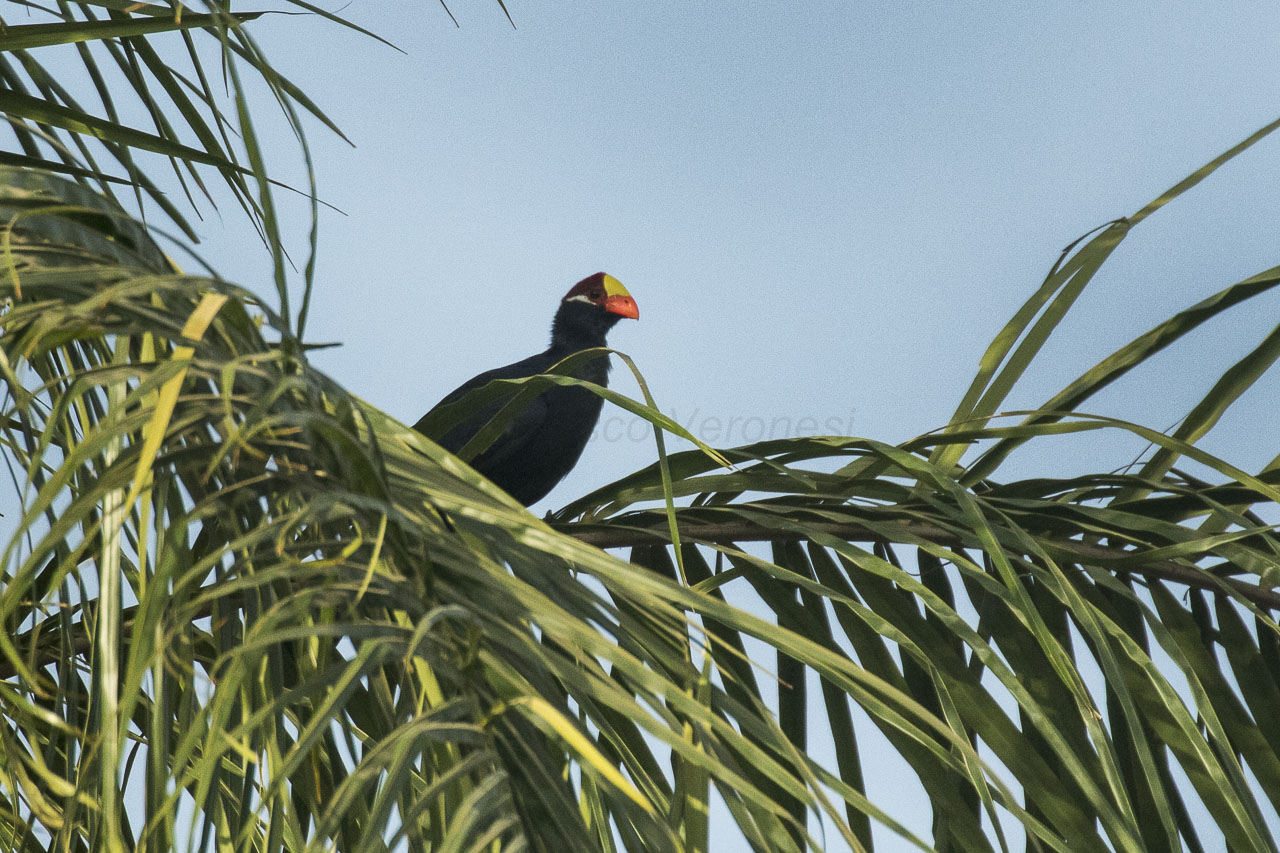
Forest protection maintains food supplies and the routes between them. A bird that moves through the canopy needs more than one beautiful tree.
The yellow forehead may catch your eye first. Stay with the scene, and the violet turaco becomes part of a larger living pattern—fruit, seeds, branches, and a forest renewing itself.
Photo credits
Featured image: Violet Turaco RWD3.jpg — DickDaniels (http://theworldbirds.org/), CC BY-SA 3.0.

Body image 1: Violet Turaco - Gambia (31807337964).jpg — Francesco Veronesi from Italy, CC BY-SA 2.0.

Body image 2: Violet Turaco - Gambia (32527881451).jpg — Francesco Veronesi from Italy, CC BY-SA 2.0.

Photographs resized to up to 1,280 pixels wide for web display.