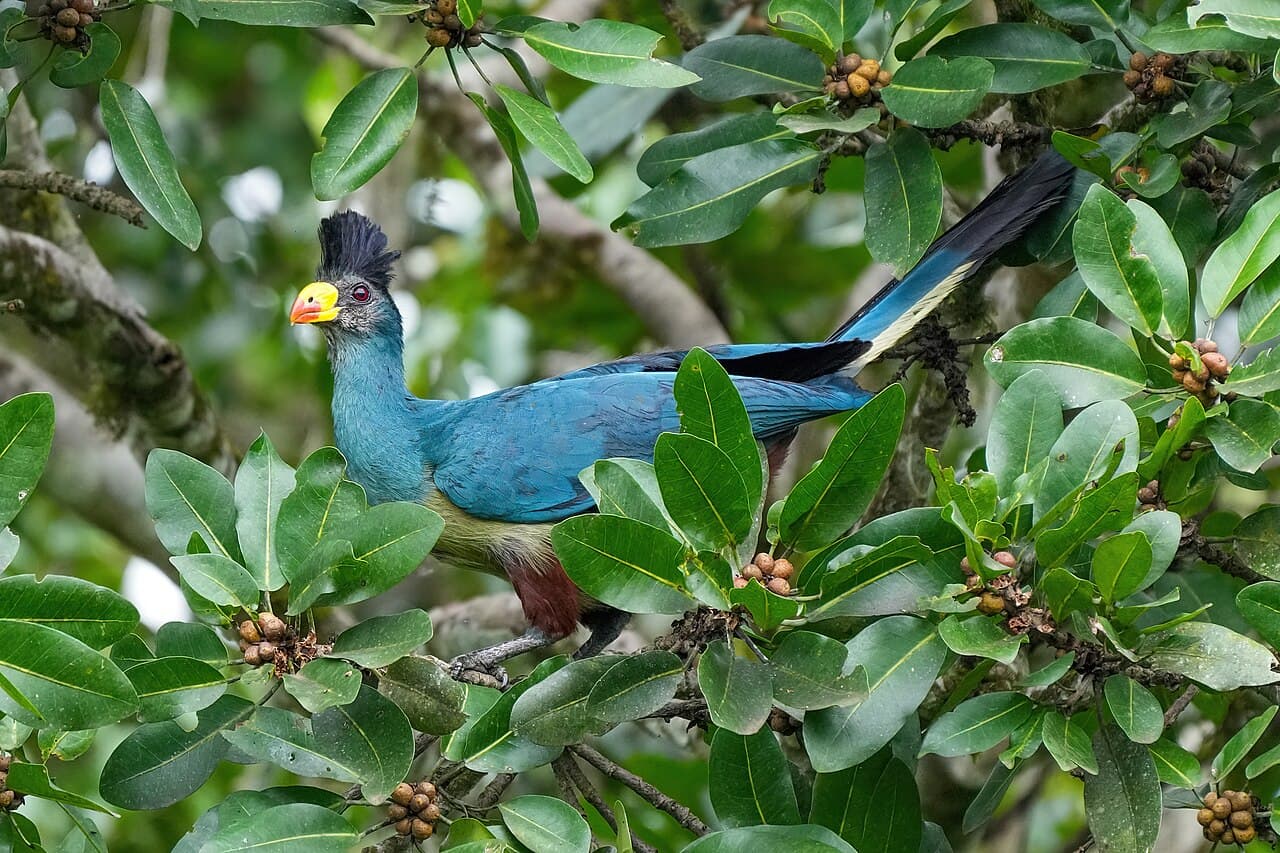
A great blue turaco can stretch roughly three-quarters of a meter from bill to tail. It is the largest turaco, yet its leafy forest home can still hide much of that impressive bird.
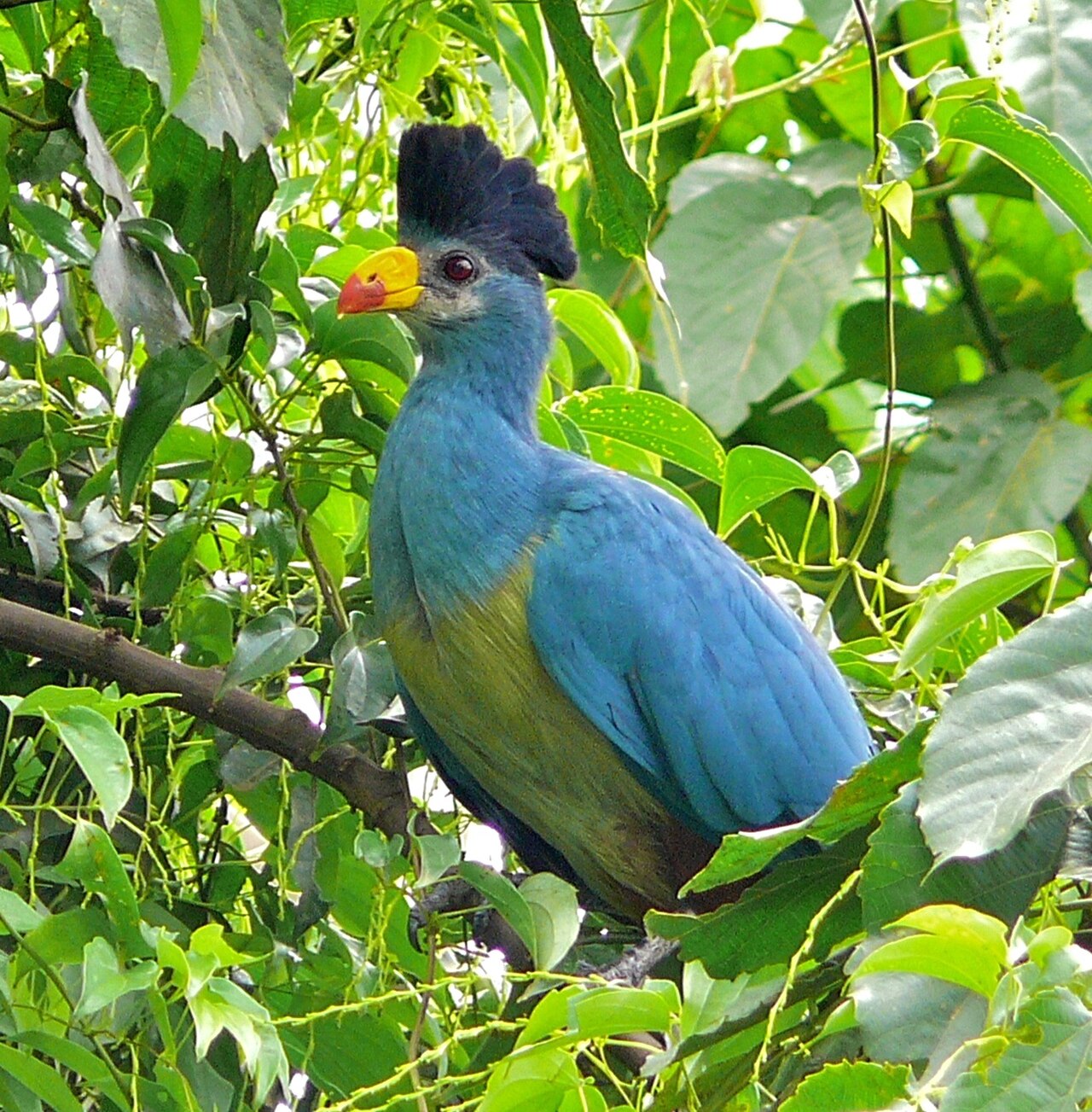
Known scientifically as Corythaeola cristata, it combines blue-green plumage with a tall dark crest and a large yellow bill tipped in red. A glimpse between branches can feel like a small piece of the forest suddenly coming into focus.
A giant within its family
Zoo Miami describes great blue turacos reaching about 30 inches in overall length and living in the forest canopy of western and central Africa.
The long tail contributes to that size. A perched bird's outline is therefore worth studying from the bill right down to the tail tip.
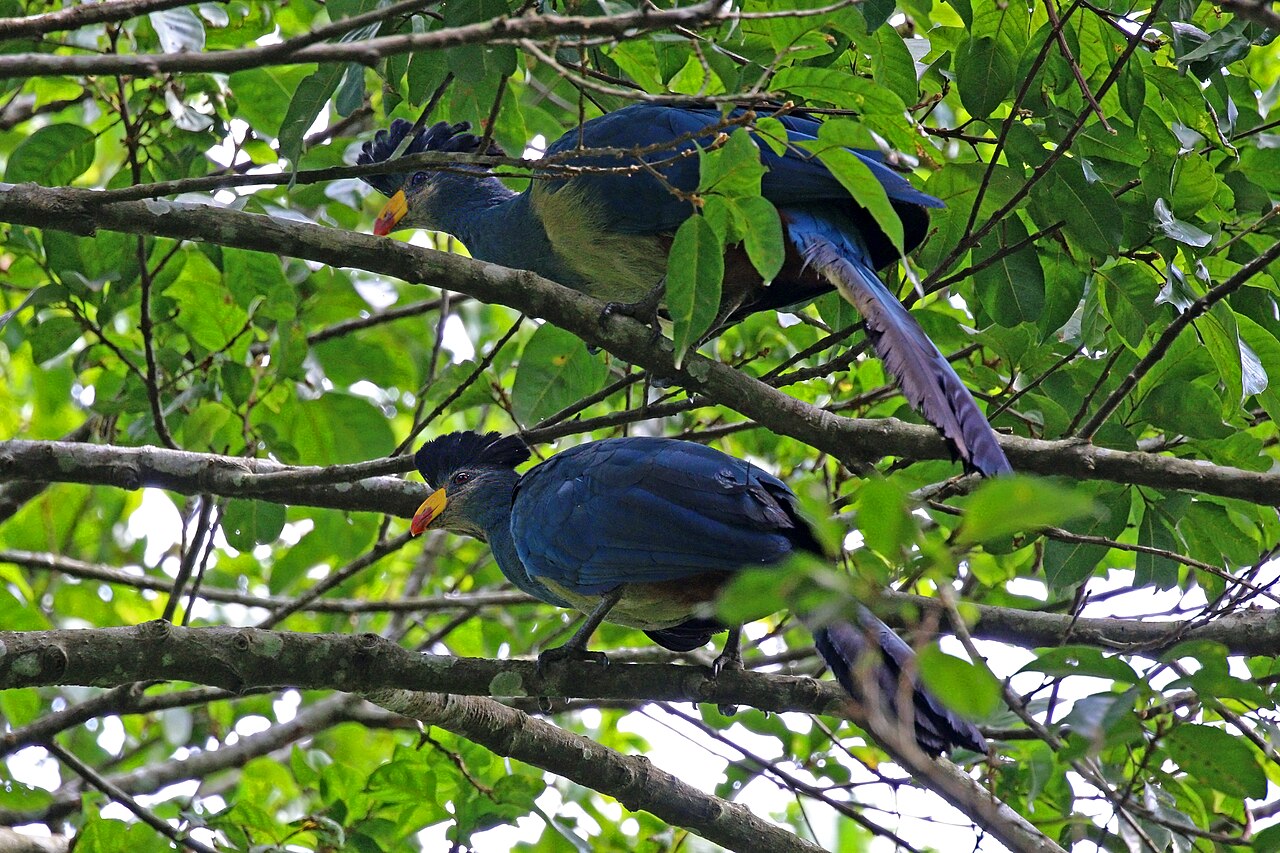
The photographs here include wild birds recorded in Uganda. Their leafy surroundings show why even a large, colorful animal is not always easy to see.
Feeding high above the ground
Fruit, leaves, flowers, and shoots form important parts of the menu. The bird moves through a landscape where food is scattered across many branches and trees.
A study published in The Auk on turaco diets in Rwanda examined how forest turacos use plant foods. It offers a useful reminder that the canopy is a feeding environment with changing resources, rather than a uniform sea of leaves.
For an observer, the best clue may be movement in a fruiting tree or a view of the large bill between foliage.
The forest is part of the animal's story
Tall trees supply more than food. They provide the routes and cover used by a canopy bird.
The European Association of Zoos and Aquaria's turaco guidelines bring together species biology and care information, reflecting how much there is to learn beyond a striking appearance.
A bigger reason to look up
Protecting forest helps preserve these relationships between birds and plants. A great blue turaco is a memorable ambassador for a habitat full of less conspicuous lives.
Its crest makes an immediate impression. The more lasting wonder is that such a large bird can move through a world of branches just above our heads.
Photo credits
Featured image: 017 Great blue turaco at Kibale forest National Park Photo by Giles Laurent.jpg — Giles Laurent, CC BY-SA 4.0.

Body image 1: Great blue turaco (Corythaeola cristata).jpg — Charles J. Sharp, CC BY-SA 4.0.

Body image 2: Great Blue Turaco (Corythaeola cristata) (6807900043), crop.jpg — Bernard DUPONT from FRANCE, CC BY-SA 2.0. Source photograph cropped.

Photographs resized to up to 1,280 pixels wide for web display.