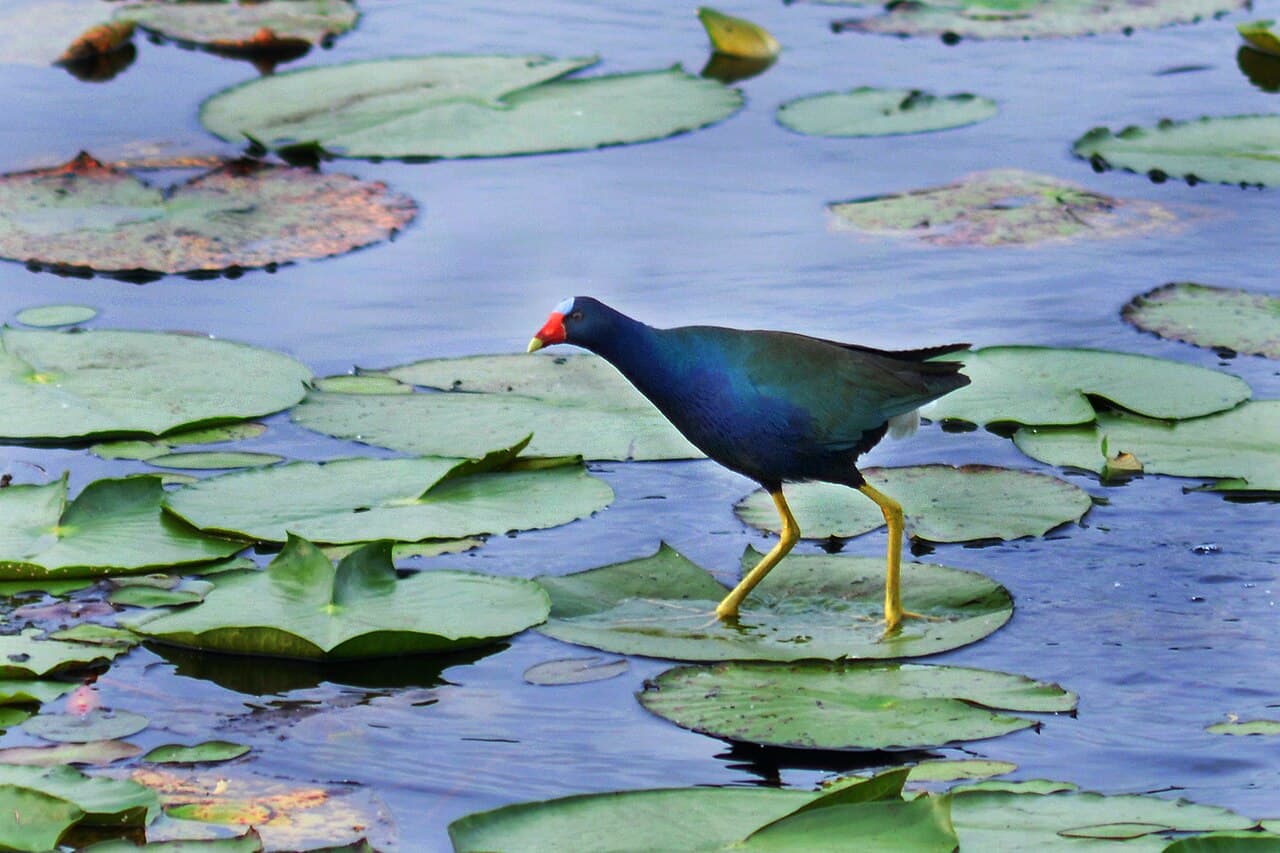
A purple gallinule can step across floating plants with toes that seem far too long for its body. Those extraordinary feet help turn lily pads and marsh stems into places to walk, climb, and feed.
This colorful rail, Porphyrio martinica, lives in wetlands of the Americas. Its purple-blue body, greenish back, pale blue forehead shield, and red-and-yellow bill create a remarkable contrast with bright yellow legs.
Feet made for a floating world
Cornell's identification guide describes the long toes gripping stems and helping the bird move across aquatic vegetation.
The support is the plants themselves. The gallinule is not walking on bare water; it is placing its feet over a shifting surface of leaves and stems.
Watch carefully and its slow, deliberate steps become as interesting as its colors.
A varied wetland menu
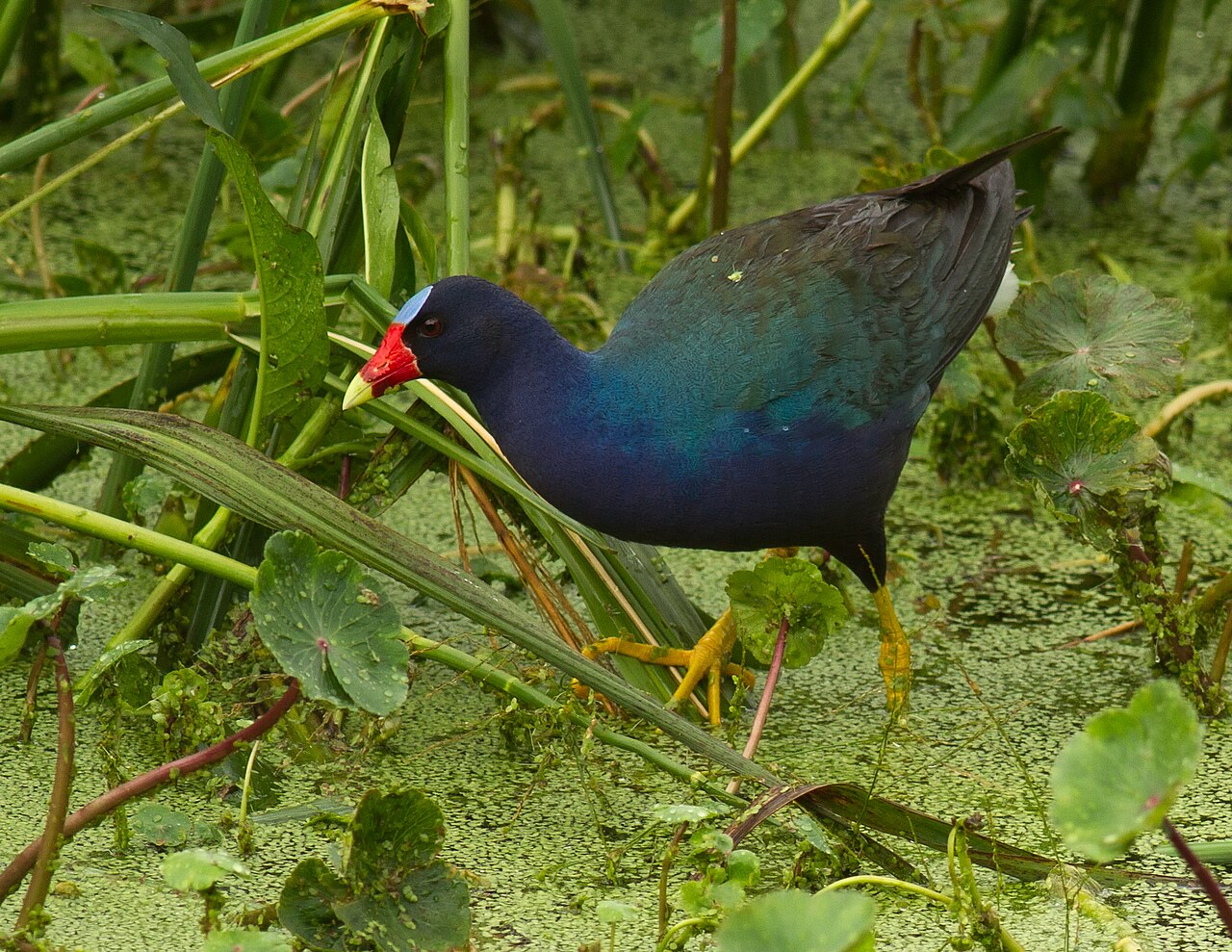
Purple gallinules eat many plant foods, including seeds, flowers, and tubers. They also take invertebrates and small animals.
Cornell's life-history account describes freshwater marshes with dense vegetation as important feeding and nesting habitat. A pond's plant cover is therefore part of the bird's working landscape.
A bird reaching toward a seed head may use its toes to cling to a narrow stem. The same features that support walking also help it reach a meal above the surface.
Young birds have a different look
Juveniles are mostly brown rather than brightly purple. The adult colors appear as they mature.
That change can make a family group surprisingly varied in appearance. Size, shape, long toes, and behavior may be better clues than color alone.

Wetlands hold the whole picture together
The species is considered of relatively low conservation concern globally, but Cornell notes regional declines. Keeping wetlands healthy remains important even for a bird with a broad range.
Water, dense plants, food, and cover work together. Removing the vegetation can remove much of what makes a wetland useful to this bird.
The purple gallinule's colors deserve admiration. Its careful progress across a lily pad is an equally wonderful reminder of how closely an animal can fit its habitat.
Photo credits
Featured image: Purple gallinule (Porphyrio martinicus), Attwater Prairie Chicken National Wildlife Refuge.jpg — William L. Farr, CC BY-SA 4.0.

Body image 1: Purple gallinule, High Island, Texas.jpg — Frank Schulenburg, CC BY-SA 4.0.

Body image 2: Purple Gallinule (Porphyrio martinicus) (31747248606).jpg — Bernard DUPONT from FRANCE, CC BY-SA 2.0.

Photographs resized to up to 1,280 pixels wide for web display.