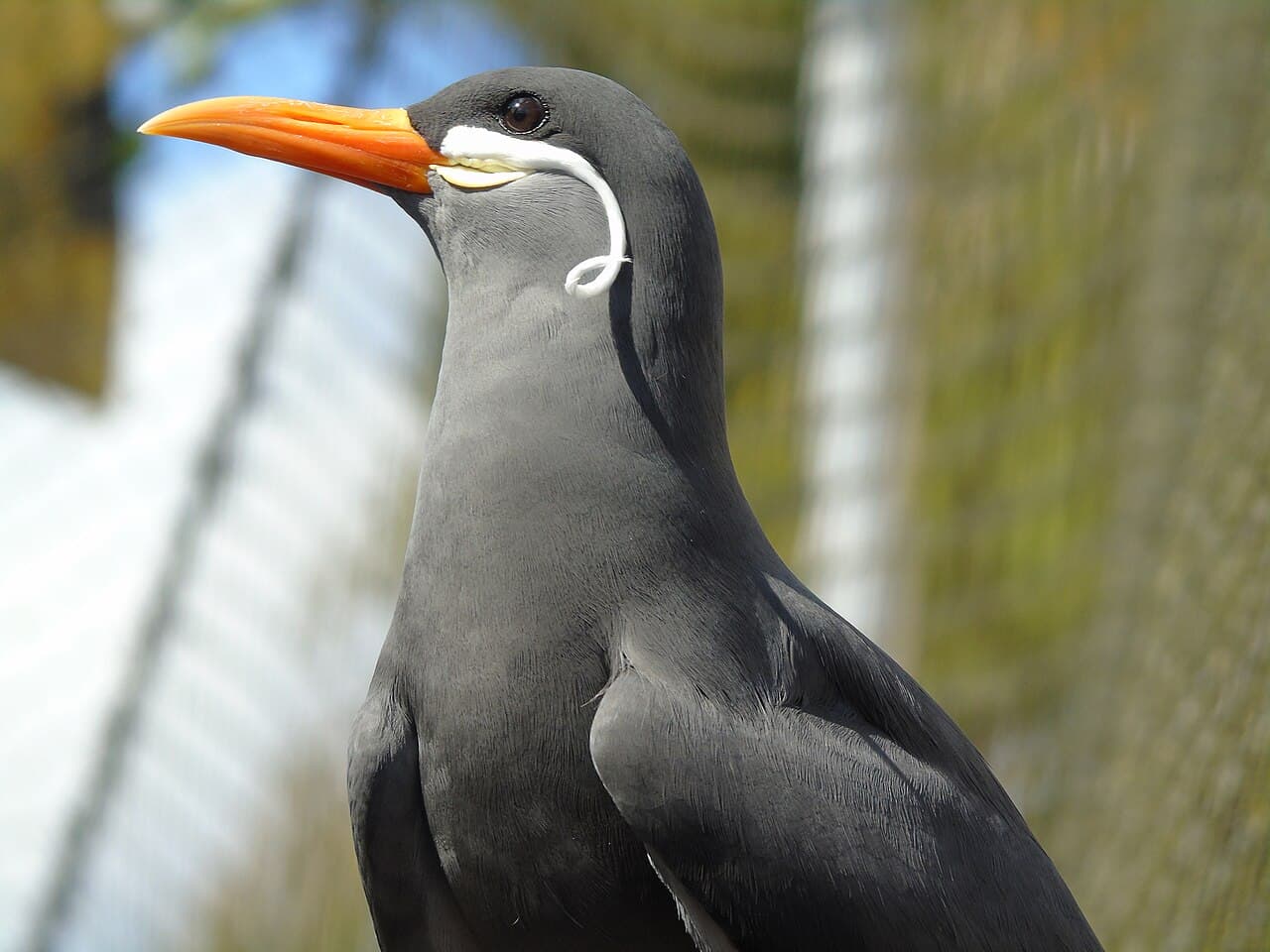
Long white feathers curl away from an Inca tern's face like an elegant mustache. Both adult males and females wear this striking feature, making the bird one of the coast's most distinctive seabirds.
The Inca tern, Larosterna inca, lives along the Pacific coast of Peru and Chile. Dark gray plumage and a red-orange bill and feet set off the pale facial plumes.
A mustache made of feathers
The white curls are natural feathers, not whiskers. They extend from the sides of the face and become especially conspicuous against the dark body.
The National Aviary describes the mustache in both sexes and the species' social, colony-nesting life.
A portrait can make the bird look comically dignified. Out over the water, its attention is on a much more practical matter: finding fish.
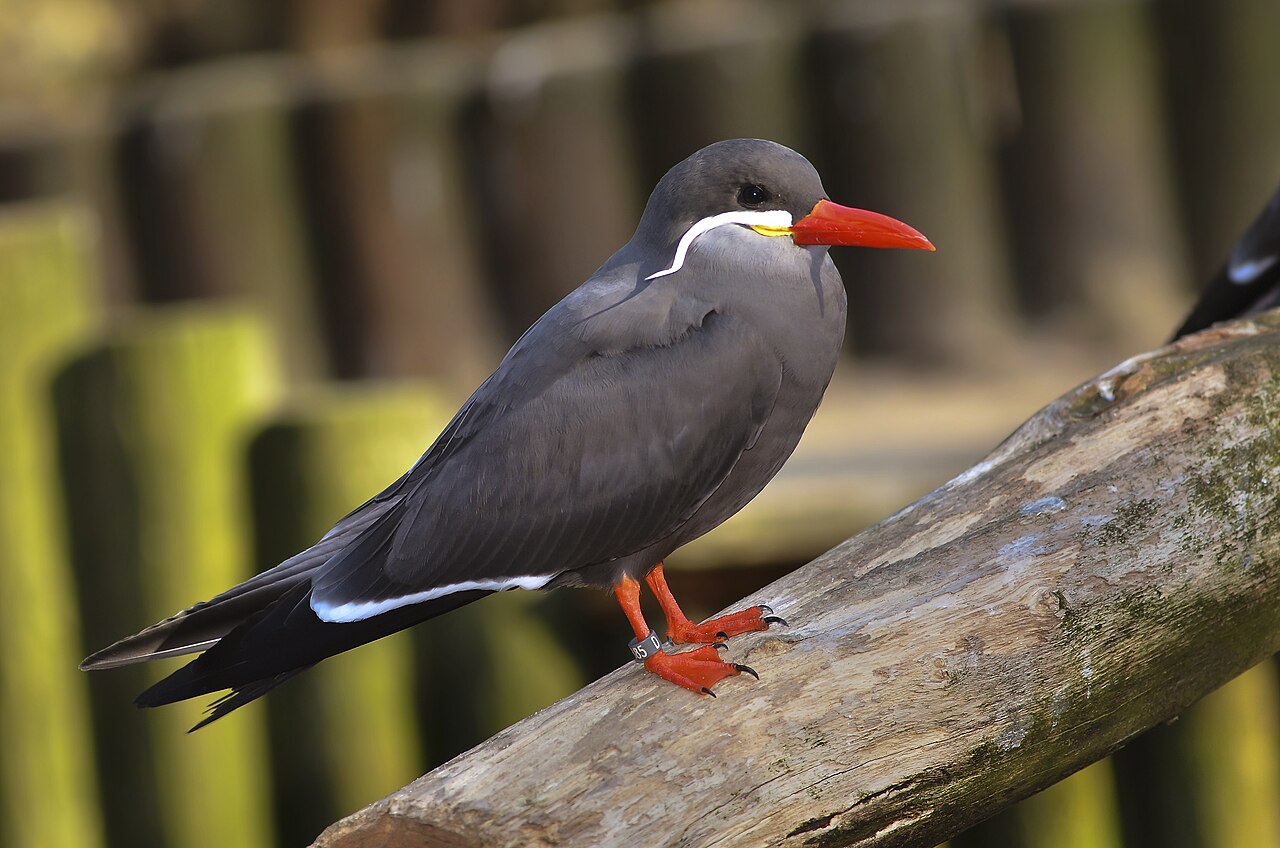
Life beside the Humboldt Current
The National Aviary's species information connects Inca terns with the rich coastal waters of the Humboldt Current.
Fish form their diet. Their dependence on marine food links their breeding success with conditions beyond the nesting island or cliff.
A coastal bird's habitat therefore includes both land and sea. Protecting one without considering the other leaves part of the story unfinished.
A sheltered place to nest
Inca terns use rocky coastal sites and islands, placing nests in suitable cavities, crevices, or burrows. They can even use abandoned Humboldt penguin burrows.
Suitable cover matters more than one exact kind of nest hole. The birds can use a range of sheltered spaces, including some human-made structures.
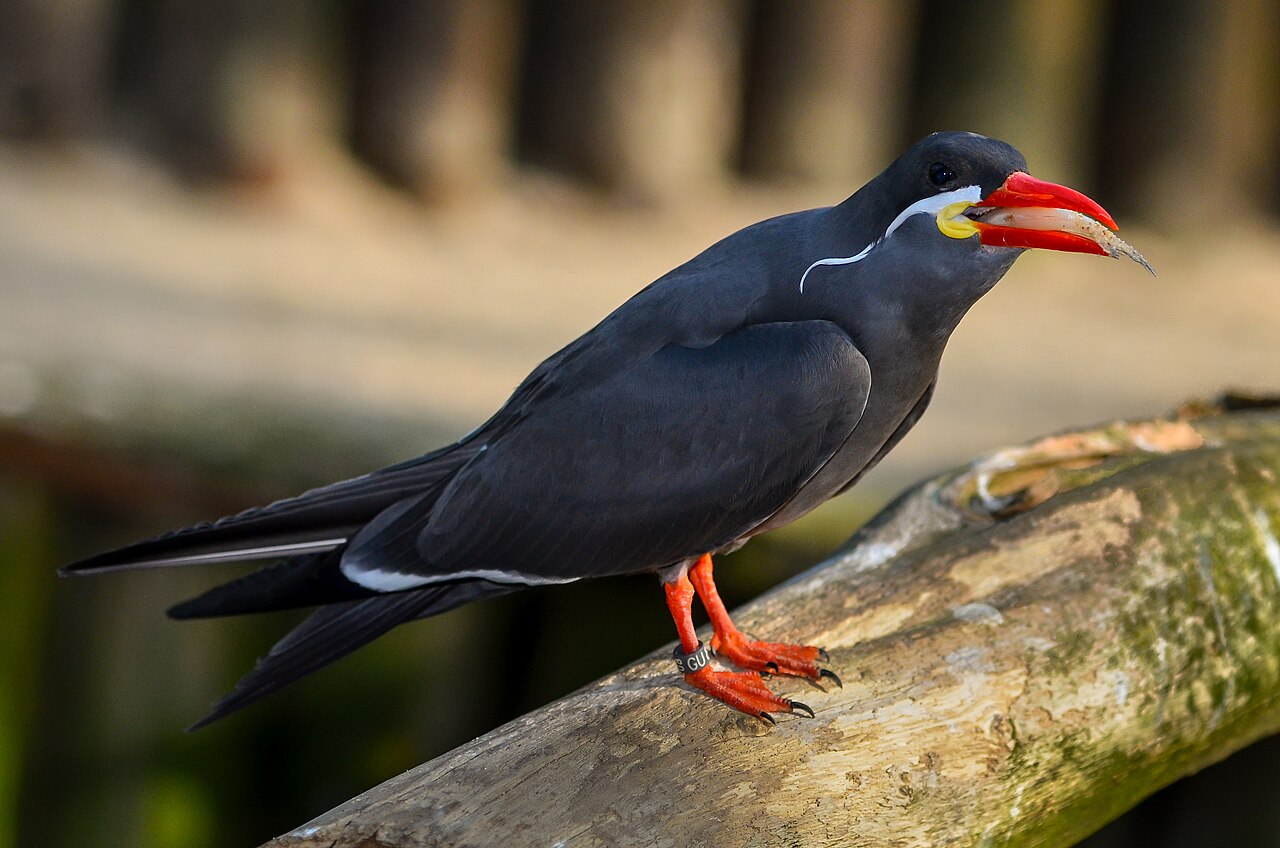
A future for a remarkable coastline
The National Aviary lists the species as Near Threatened. Its conservation update identifies overfishing and introduced predators among concerns in the wild.
Maintaining fish supplies and protecting nesting sites address different parts of the same bird's needs. Rats and cats on islands can threaten breeding success even when the sea nearby still holds food.
The mustache brings us close enough to notice an unusual bird. The coast and ocean around it reveal why that small feather detail belongs to a much larger natural wonder.
Photo credits
Featured image: Larosterna inca.007 - Zoo de Bristol.jpg — Fernando Losada Rodríguez, CC BY-SA 4.0.

Body image 1: Larosterna inca (Inca Tern - Inkaseeschwalbe) Weltvogelpark Walsrode 2012-002.jpg — Olaf Oliviero Riemer, CC BY-SA 3.0.

Body image 2: Larosterna inca (Inca Tern - Inkaseeschwalbe) Weltvogelpark Walsrode 2012-010.jpg — Olaf Oliviero Riemer, CC BY-SA 3.0.

Photographs resized to up to 1,280 pixels wide for web display.