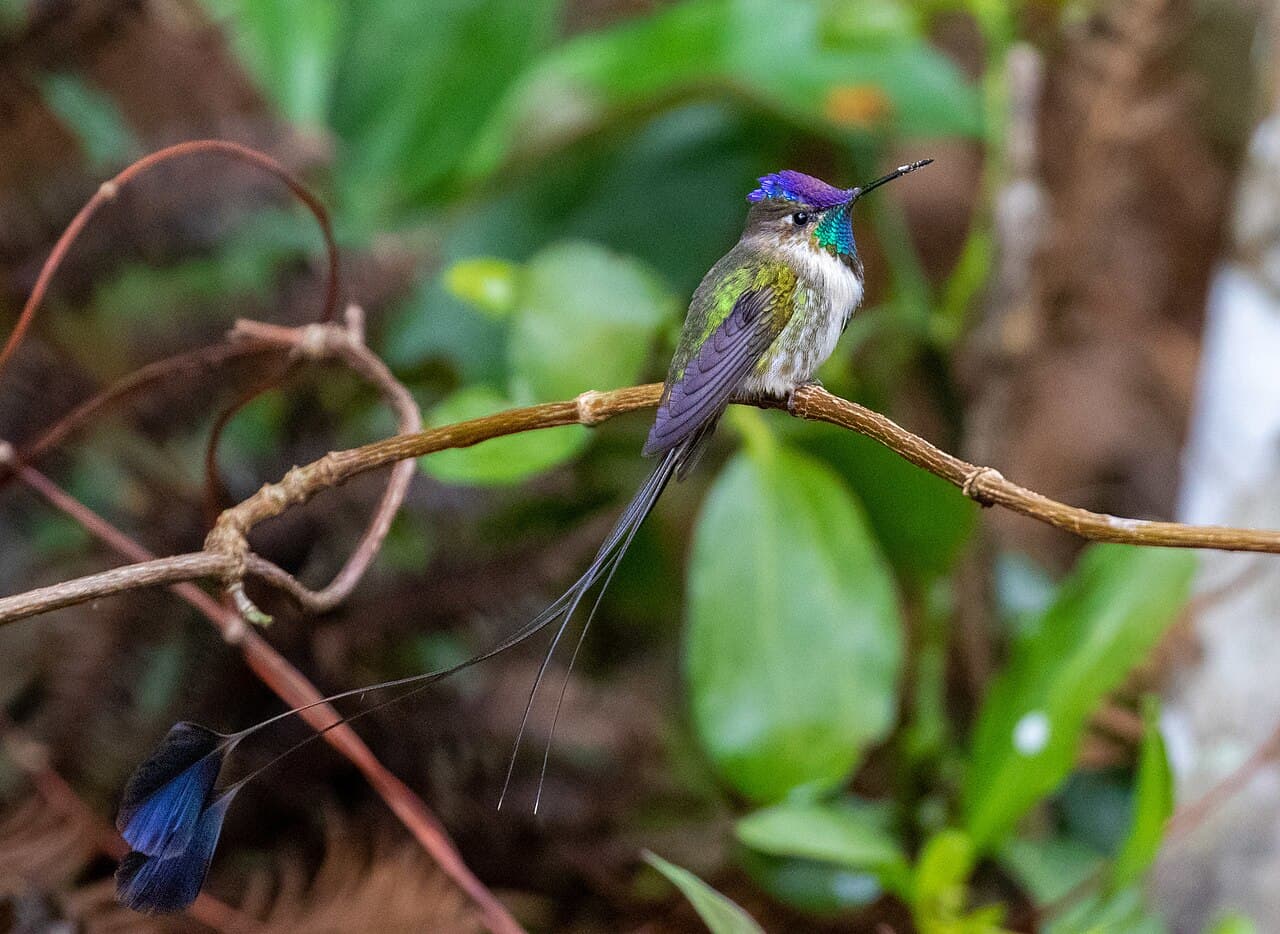
Two thin tail feathers trail behind a male marvelous spatuletail, each ending in a broad violet-blue paddle. During display, those strange shapes turn a small hummingbird into an extraordinary moving silhouette.
The marvelous spatuletail, Loddigesia mirabilis, lives in a limited part of northern Peru. Its unusual tail is famous, but its restricted home makes its conservation story just as important.
Four feathers, two spectacular tips
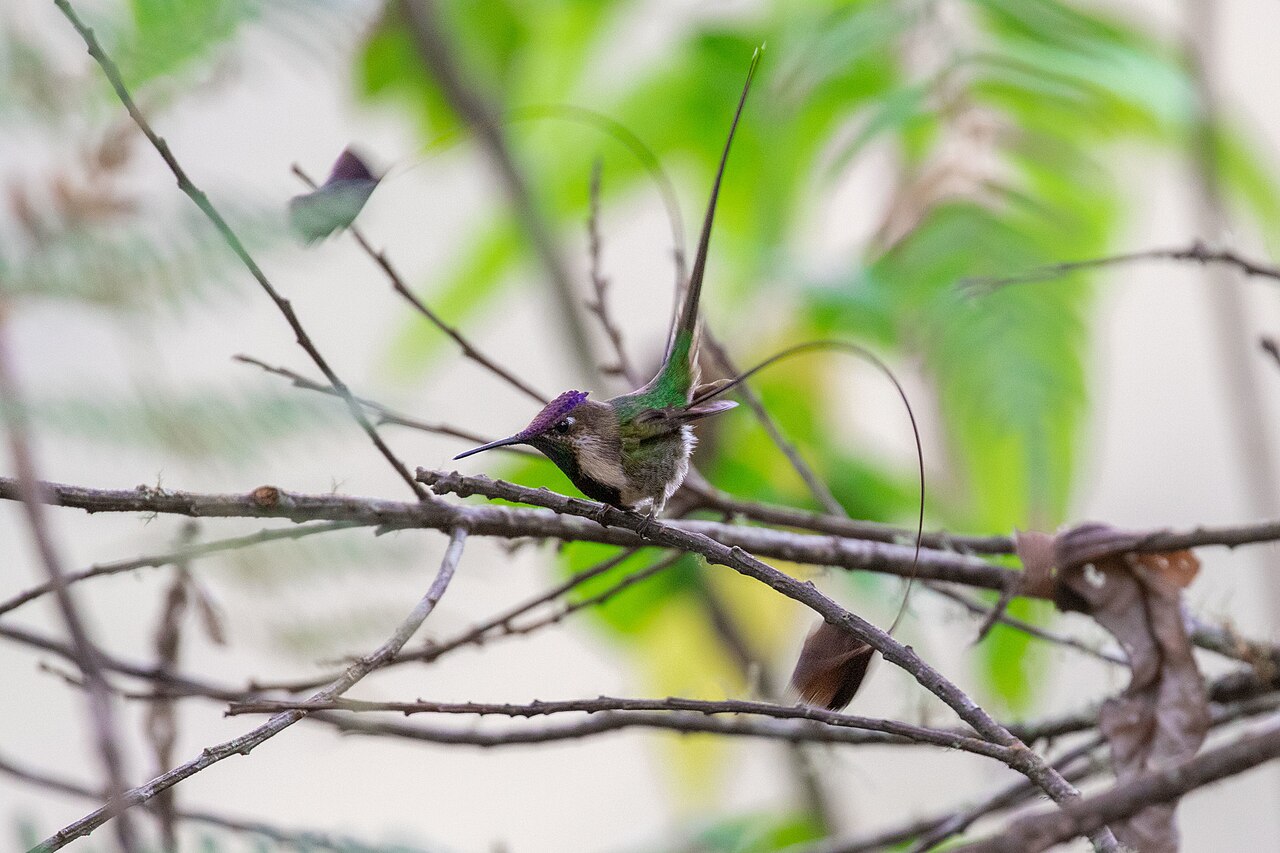
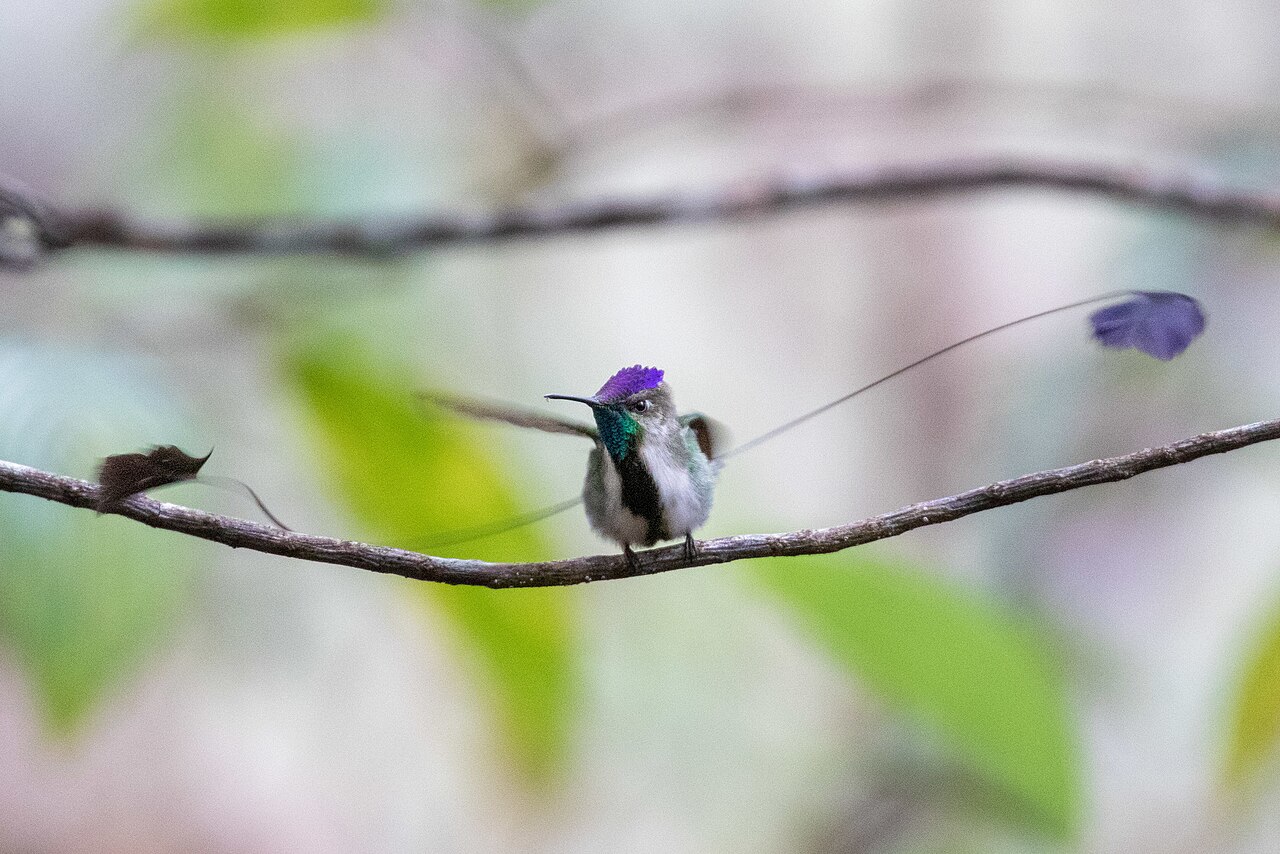
The American Bird Conservancy species account describes a tail made of only four feathers. In males, the two outer feathers grow into long shafts ending in enlarged tips called spatules.
The male also has a blue crown, a shining throat patch, and a dark stripe down otherwise pale underparts. Females have a much less exaggerated tail.
The display belongs to a living bird's courtship. It is not a permanent pose, and an ordinary perched view may reveal a different-looking animal.
A small home in the Andes
The species is associated with the Río Utcubamba region of northern Peru, using flowering shrubs, forest edges, regrowth, and scrub in mountain landscapes.
A limited range means that local habitat changes can affect a large part of the species' world. Protecting suitable patches nearby matters more than pointing to healthy habitat far beyond its range.
A female's quieter work
Males perform elaborate courtship displays. After mating, the female builds the nest and rears the young.
ABC's account of rare South American bird nests describes her small open-cup nest and the work of protecting habitat around Huembo Reserve.
The famous tail may get the attention, but a successful nest is what carries the story into another generation.
Room for the remarkable
ABC and its Peruvian partner ECOAN have supported habitat protection and restoration at Huembo. Their 2026 restoration update places the spatuletail within a wider effort to restore northern Peruvian forests.
Burning and clearing vegetation remain important concerns. Flowering shrubs and safe nesting cover are practical needs behind the spectacular appearance.
A tail like this can make nature seem wonderfully inventive. Keeping its home alive lets that invention continue.
Photo credits
Featured image: Loddigesia mirabilis 114707728.jpg — thibaudaronson, CC BY-SA 4.0.

Body image 1: Loddigesia mirabilis 114707788.jpg — thibaudaronson, CC BY-SA 4.0.

Body image 2: Loddigesia mirabilis 114707924.jpg — thibaudaronson, CC BY-SA 4.0.

Photographs resized to up to 1,280 pixels wide for web display.