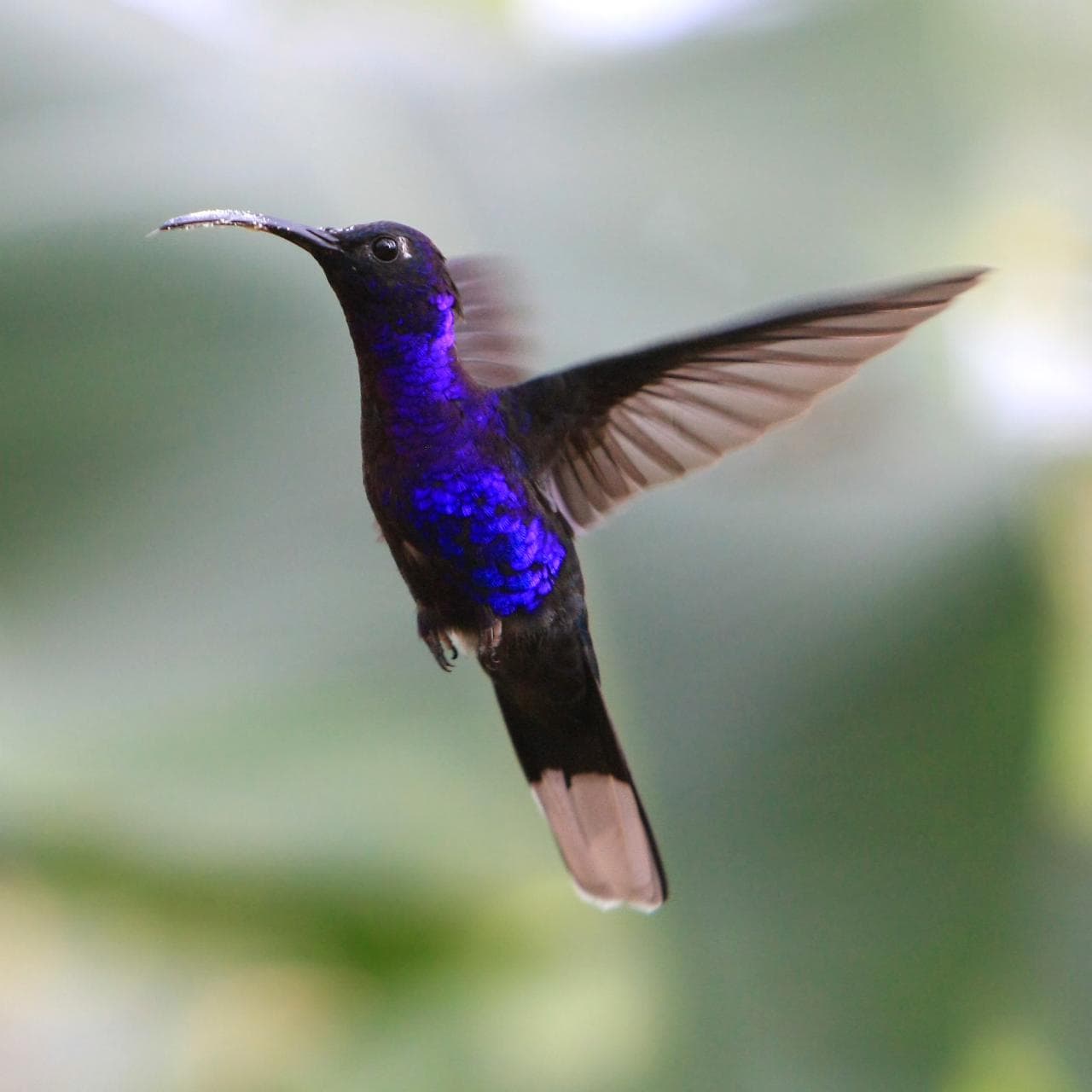
A violet sabrewing may look almost dark until it turns toward the light. Then a male's purple plumage can flare into view, transforming the same bird without changing a single feather.
This large hummingbird, Campylopterus hemileucurus, occurs from southern Mexico through parts of Central America to western Panama. A curved bill and conspicuous white outer tail tips help complete its distinctive shape.
A big presence in a tiny-bird family
The BirdForum field account describes a bird around 13–15 centimeters long. Males have deep violet coloring; females are greener above and paler below, with a violet throat.
Size is relative. Beside a cockatoo it would be small, but beside many hummingbirds a sabrewing has a substantial presence.
Why the colors change with the view
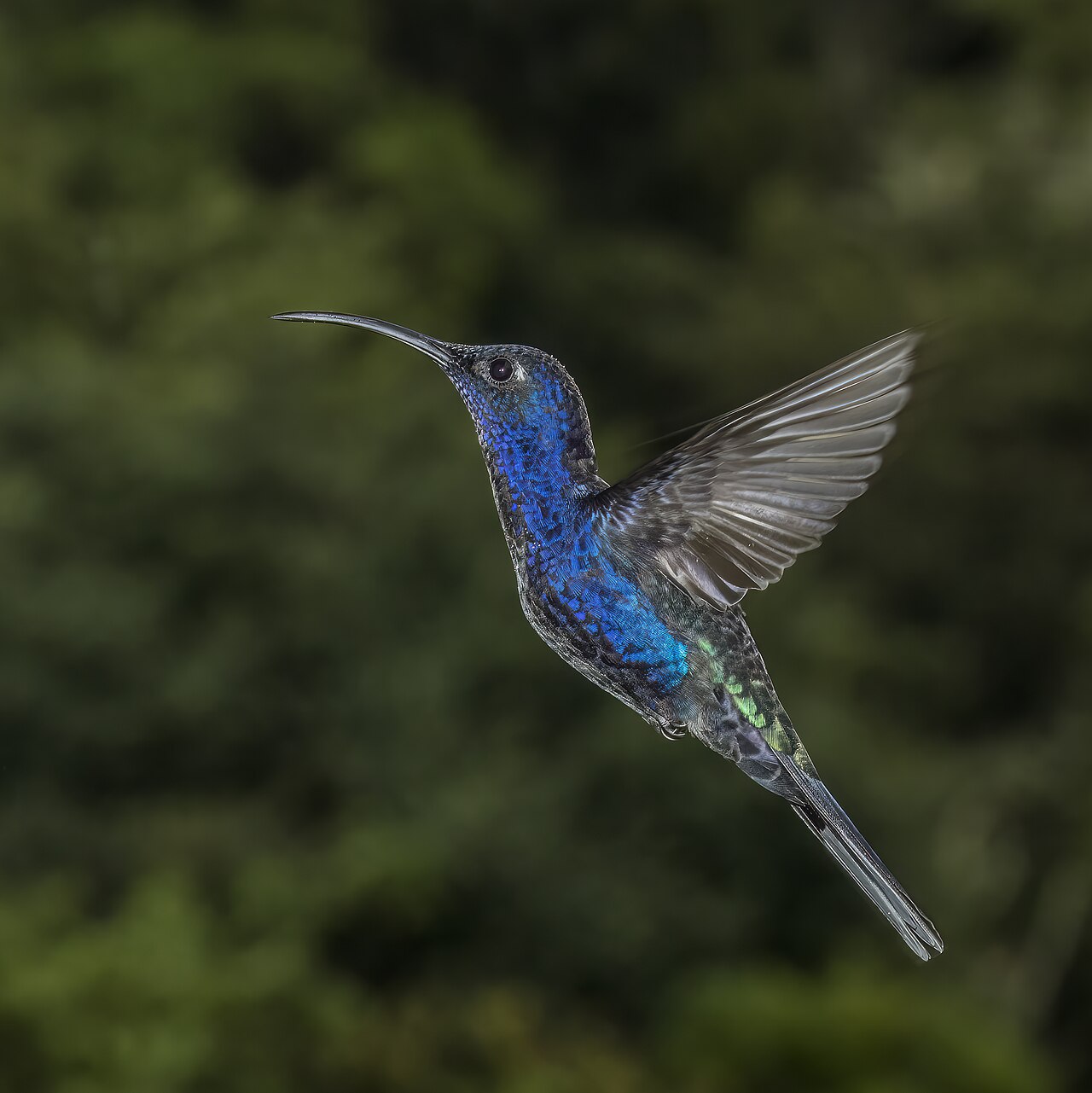
Iridescence comes from the way light interacts with tiny structures in feathers. It is not simply a layer of purple pigment.
Cornell's Bird Academy explanation shows the general principle in another hummingbird: the arrangement of keratin, melanin, and air changes which light reaches the observer at different angles.
That is why two honest photographs can show very different brightness. The bird, the sunlight, and the camera are not always aligned the same way.
Flowers are feeding stations
Violet sabrewings take nectar and small arthropods. The Animal Diversity Web account records both parts of the diet.
Nectar supplies energy, while small animal foods add nutrients. A flowering forest is therefore more than a colorful backdrop: it supports the constant business of feeding.
Keep the living network around the flowers
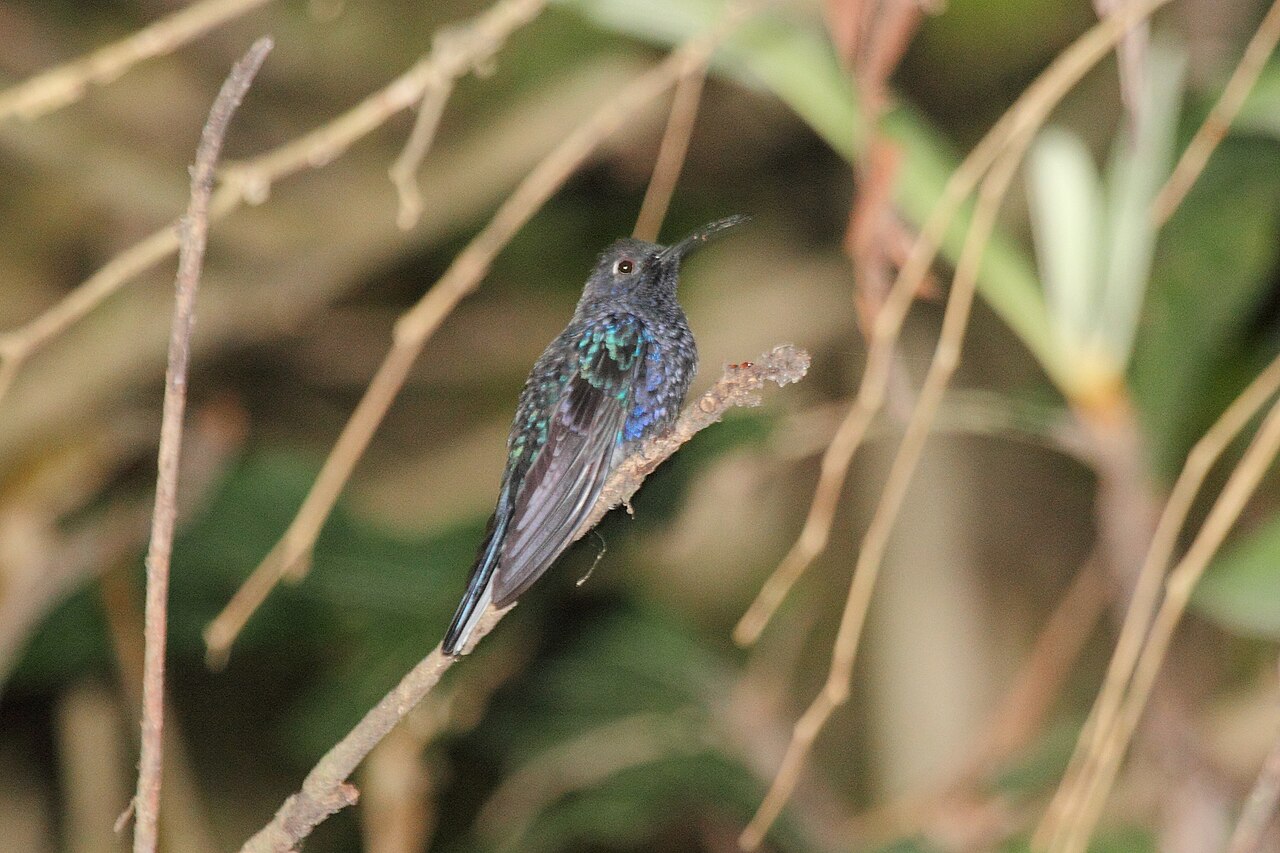
Humid forest and its edges provide the setting for this bird. Protecting flowering plants and the vegetation around them helps retain the relationships that make hummingbird life possible.
The most rewarding moment may come while the bird is still. One slight turn can reveal a blaze of violet, showing how much wonder depends on taking time to look.
Photo credits
Featured image: Campylopterus hemileucurus -Costa Rica -flying-8.jpg — Steve Ryan, CC BY-SA 2.0.

Body image 1: Violet sabrewing (Campylopterus hemileucurus mellitus) male in flight.jpg — Charles J. Sharp, CC BY-SA 4.0.

Body image 2: Violet Sabrewing (Campylopterus hemileucurus).jpg — Dominic Sherony, CC BY-SA 2.0.

Photographs resized to up to 1,280 pixels wide for web display.