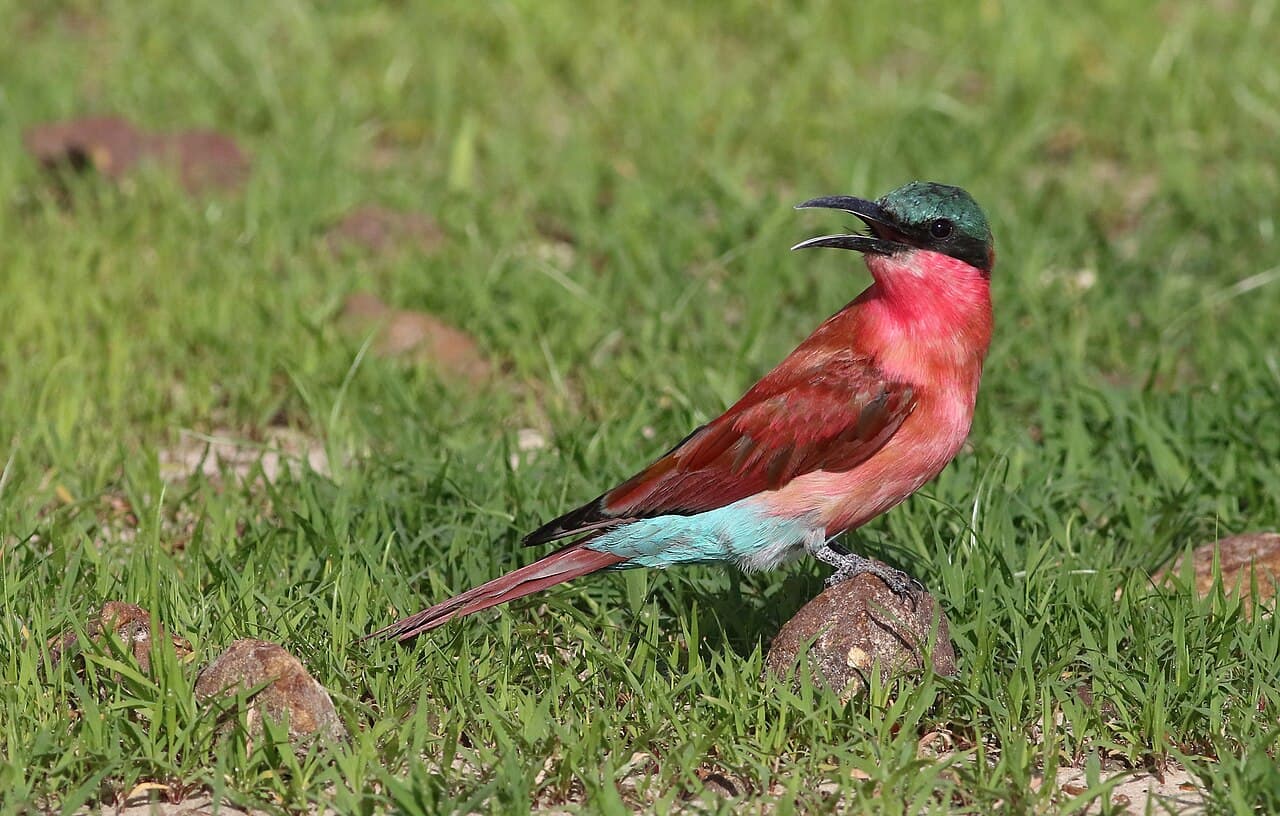
A sandy riverbank can become a moving wall of pink-red wings when southern carmine bee-eaters gather to breed. Each bird is striking; a busy colony turns the whole scene into a spectacle.
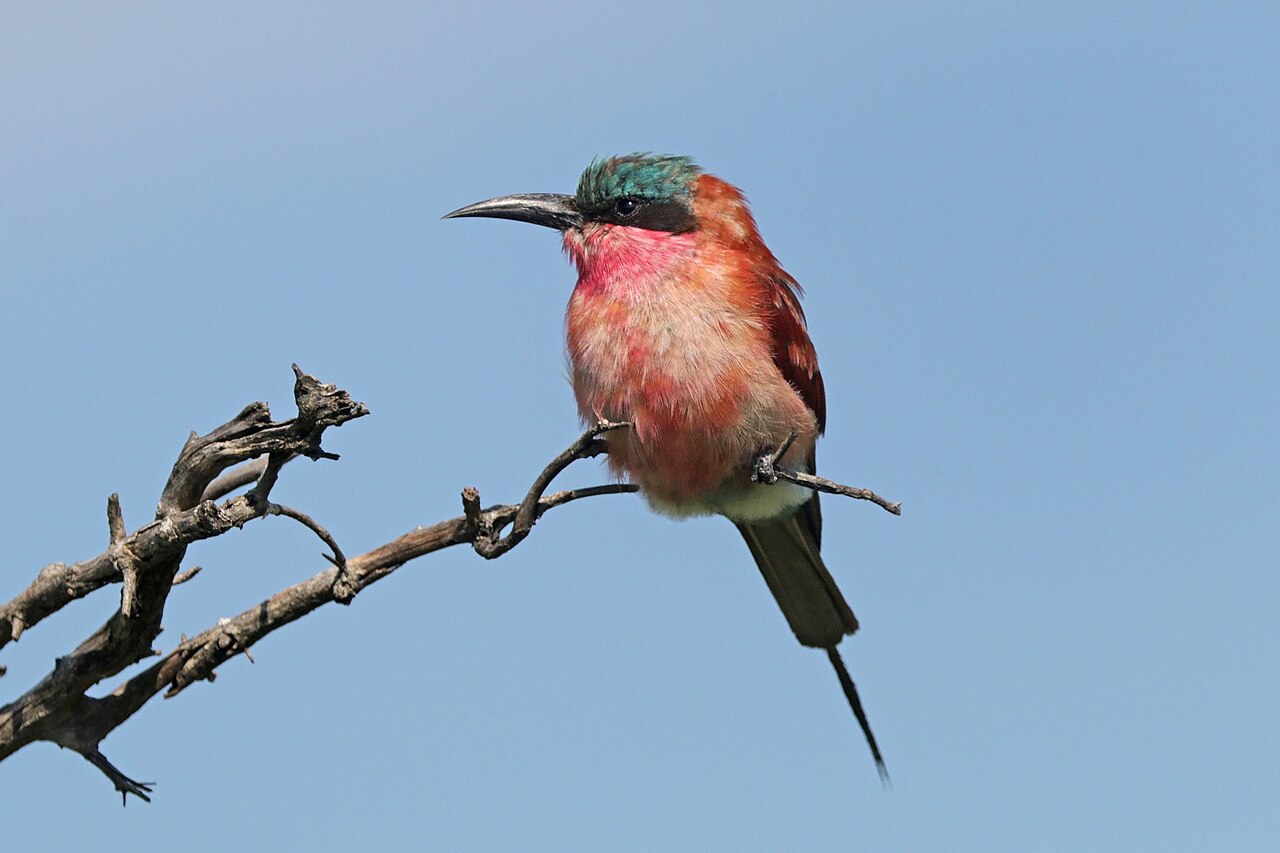
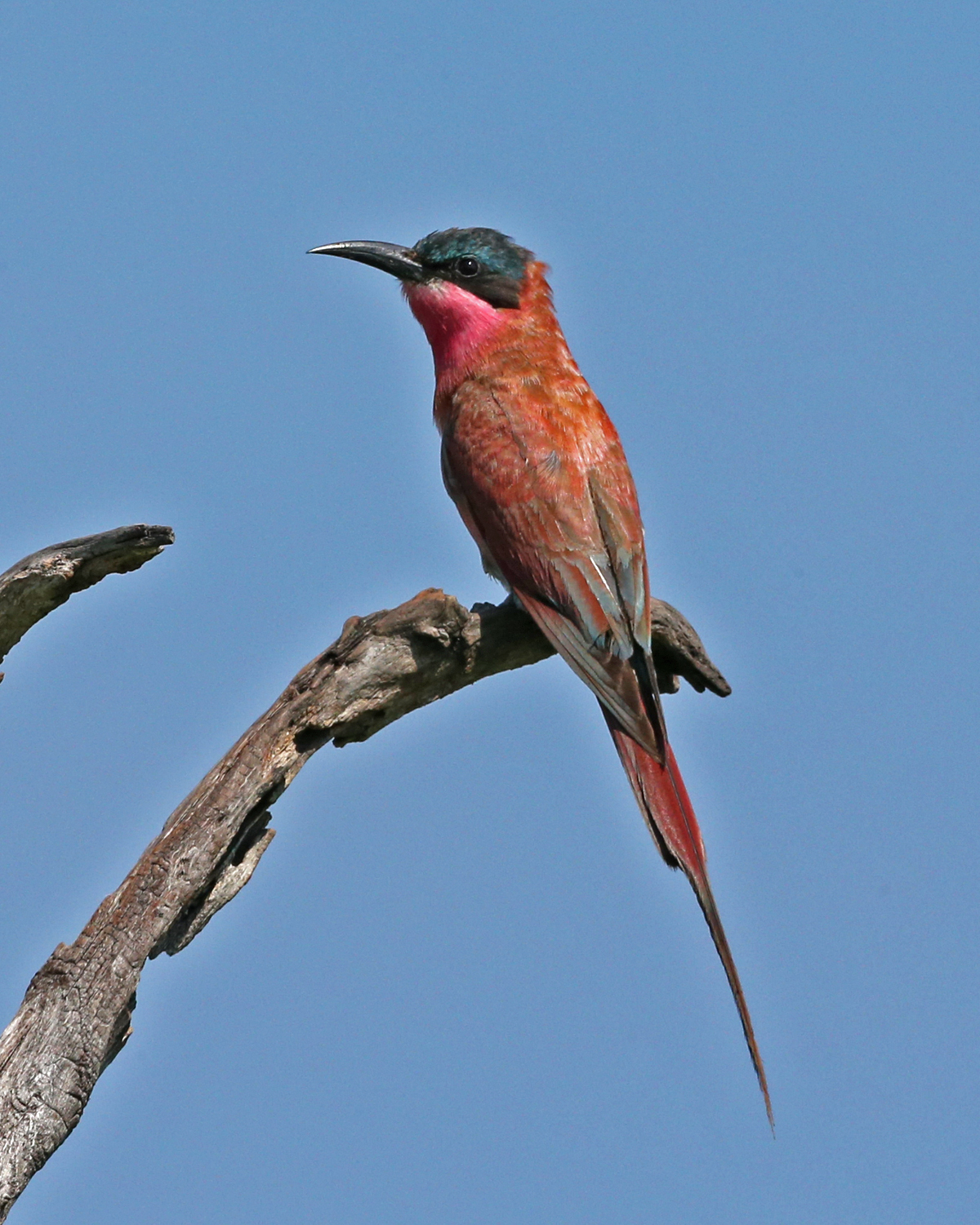
There are northern and southern carmine bee-eaters. This article follows the southern species, Merops nubicoides, whose vivid body, turquoise crown, and long tail streamers match the familiar carmine image.
A colorful hunter above the grass
The South African National Biodiversity Institute describes a bird adapted to catching insects in flight. Dragonflies, termites, and locusts are among its foods.
A perch offers a place to watch and to handle prey. The bird may rub or strike an insect against it before eating.
These bee-eaters can also exploit insects disturbed by larger animals. Some perch on mammals or large birds, gaining a useful viewpoint over the moving grass.
Hundreds of neighbors in the bank
The breeding colony is the heart of the story. Pairs dig burrows into suitable banks, creating individual nesting spaces close to many others.
Zambia Tourism's account of the Luangwa colonies describes birds returning seasonally and excavating long tunnels along steep riverbanks.
A bank with many entrance holes may look rough and bare. To the birds, it is valuable real estate beside a landscape full of food.
Following the seasons
Southern carmine bee-eaters migrate within Africa. Their breeding and nonbreeding movements connect different habitats as seasons change.
The date of a visit matters: a bank full of birds at one time of year may be quiet at another. The landscape is part of an annual journey, rather than a permanent stage set.
Space for the colony
Riverbank nesting makes disturbance especially relevant. Keeping a respectful distance lets adults reach their burrows and return to the hunt.
Conservation means valuing both the individual birds and the processes that maintain their habitat: rivers, banks, and insect-rich open country.
One carmine bee-eater can brighten a branch. A colony reveals something larger—the wonder of many separate lives following the same seasonal rhythm.
Photo credits
Featured image: Southern carmine bee-eater, Merops nubicoides, Chobe National Park, Botswana (31617949644).jpg — Derek Keats from Johannesburg, South Africa, CC BY 2.0.

Body image 1: Southern carmine bee-eater (Merops nubicoides).jpg — Charles J. Sharp, CC BY-SA 4.0.

Body image 2: Merops nubicoides, Khwai, Botswana 1.jpg — Lip Kee from Singapore, Republic of Singapore, CC BY-SA 2.0.

Photographs resized to up to 1,280 pixels wide for web display.