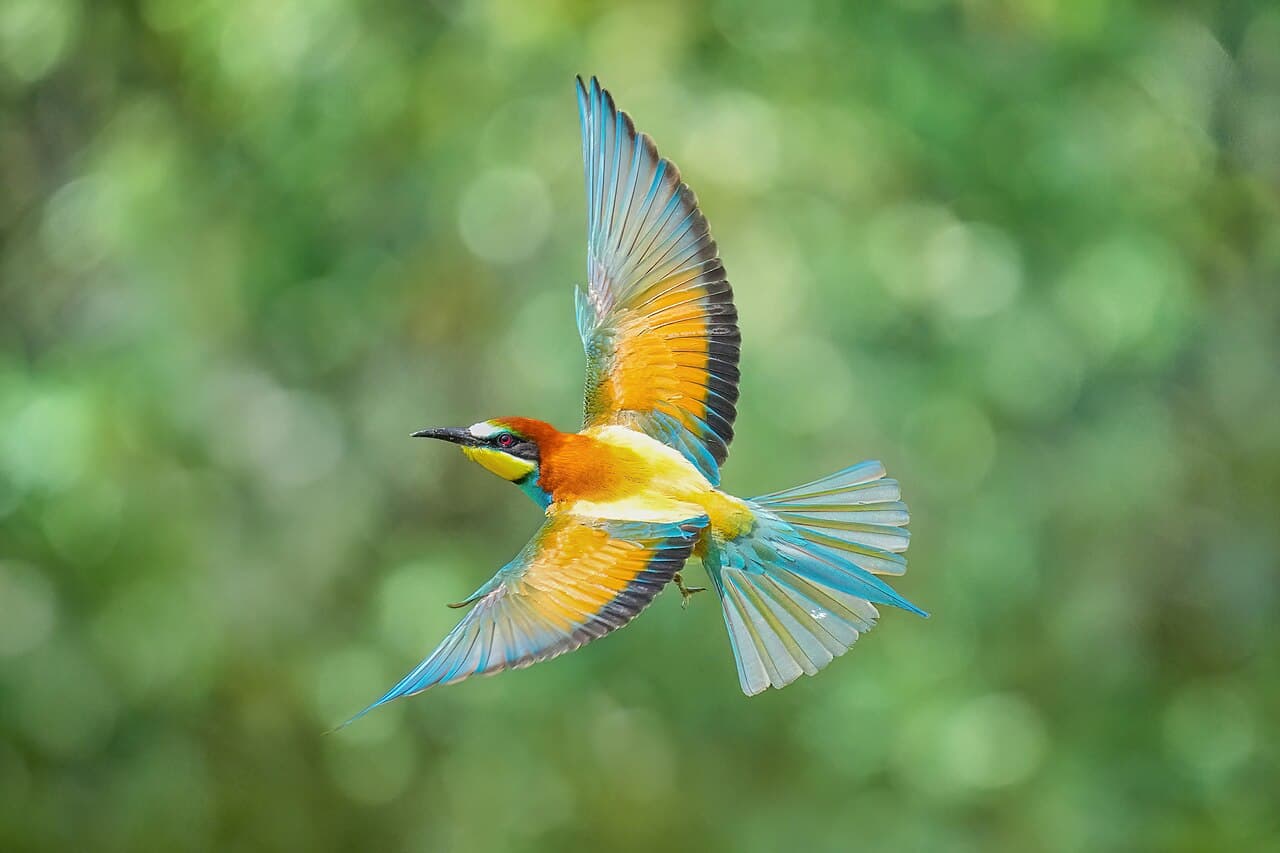
A bird dressed in chestnut, yellow, turquoise, and green may spend its day making quick flights from a perch. The European bee-eater turns those flashes of color into precise insect hunts.
Known scientifically as Merops apiaster, it is a migratory bird whose journeys connect breeding grounds with African nonbreeding areas. Its name captures only part of that much larger story.
A chase followed by preparation
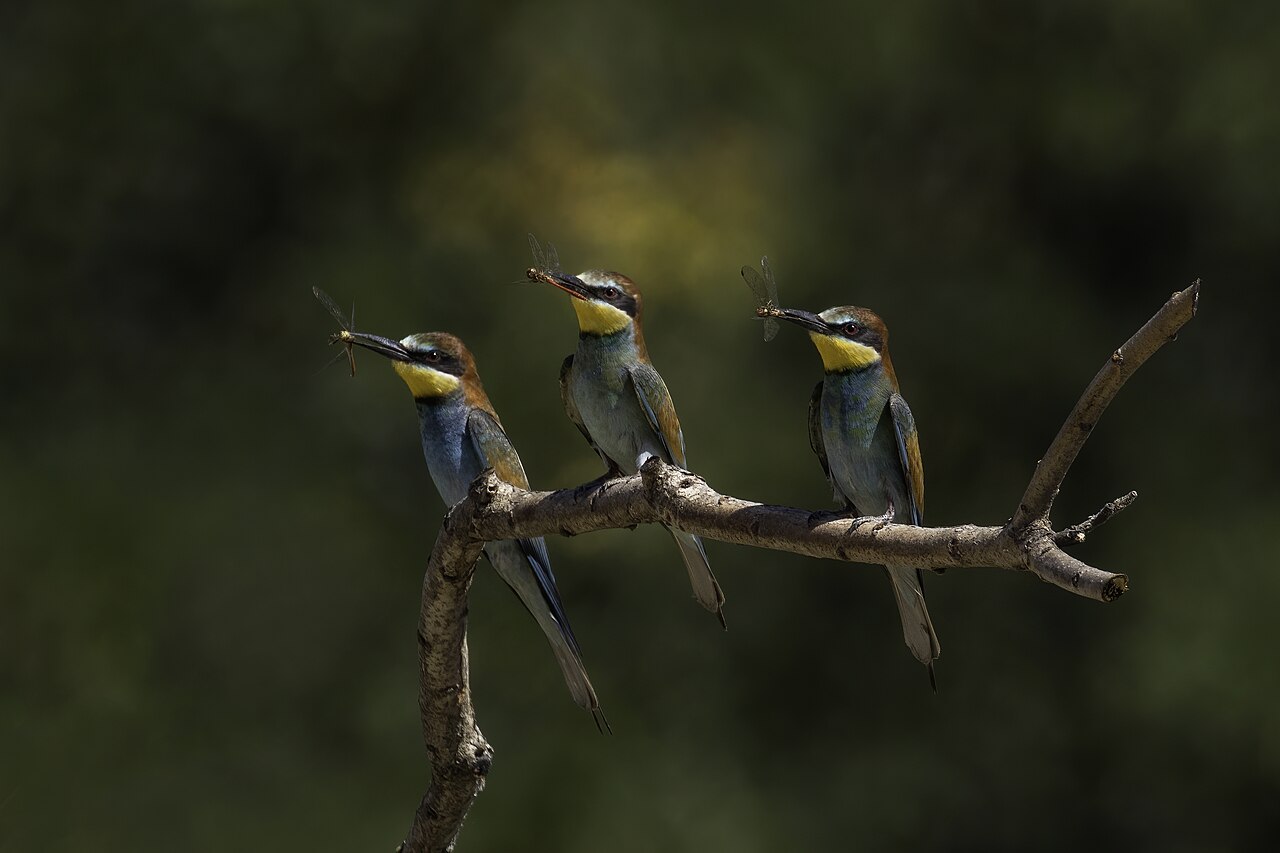
European bee-eaters watch for flying insects and launch from a perch to catch them. Bees are among their prey, alongside other insects such as dragonflies.
The RSPB's bee-eater account describes how captured bees and wasps are struck against a branch to deal with their sting and venom.
A returning bird may therefore still have work to do before eating. The chase is only the first stage of the meal.
A nursery dug into the bank
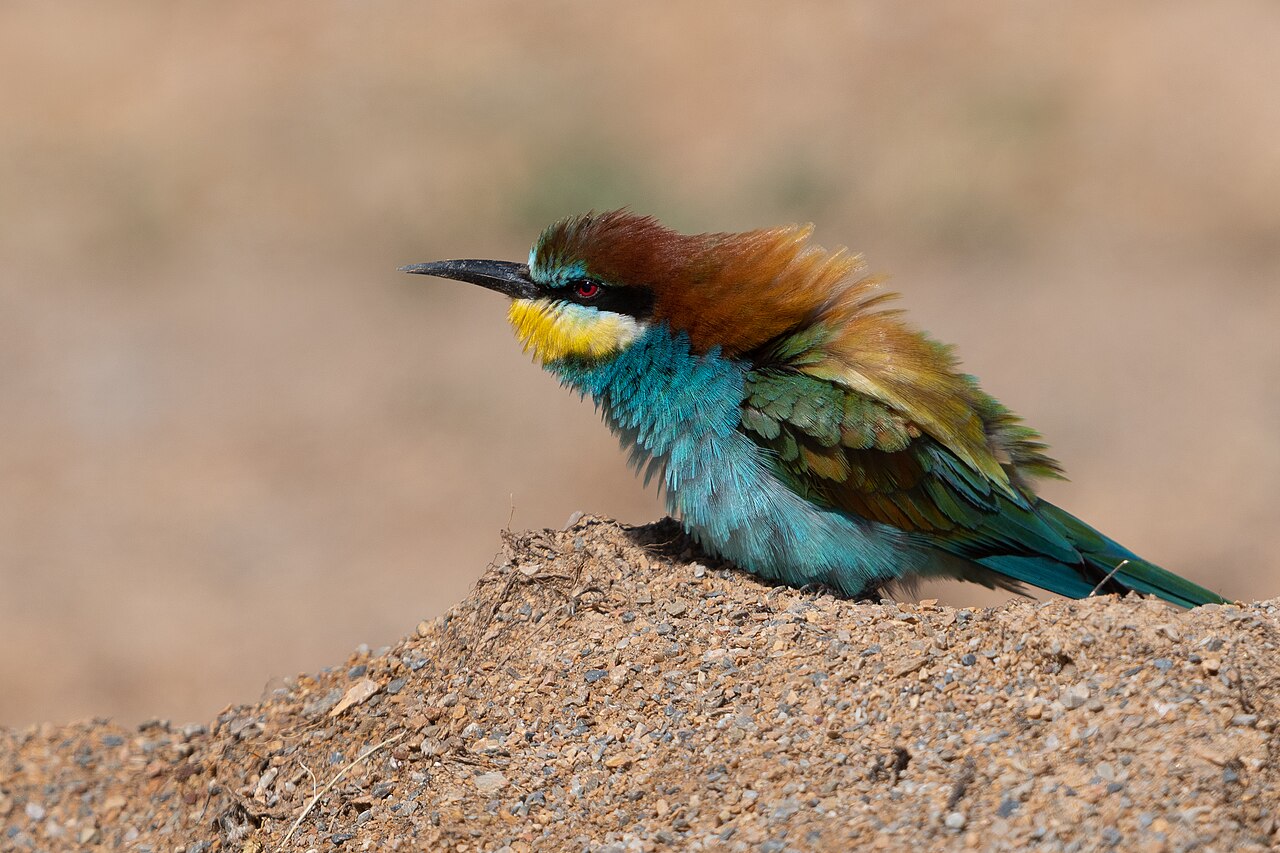
Rather than building a cup among branches, these bee-eaters dig nest tunnels in sandy banks and similar ground, including suitable quarry faces.
They often nest in groups. Calls, arrivals, and departures can turn an ordinary-looking bank into a lively breeding colony.
The San Diego Zoo Wildlife Alliance overview explains how burrow nesting and aerial insect hunting shape the lives of the bee-eater family.
A life across borders
European bee-eaters commonly breed in southern Europe and North Africa and travel into Africa outside the breeding season. They occasionally breed farther north, including Britain.
The RSPB has documented and helped protect British nesting attempts. A spectacular visitor attracts attention, but the birds still need room to feed and a quiet approach to their burrows.
Let a distant view become a longer story
A colorful migrant depends on more than the place where we happen to see it. Safe breeding sites and insect-rich feeding habitat must exist along a wider journey.
Keep back from occupied banks and avoid blocking flight paths. Watching a bird return with food is rewarding enough without getting close to its nest.
The rainbow colors make the first impression. The migration and underground nursery make it unforgettable.
Photo credits
Featured image: 019 European bee-eater in flight in in Pfyn-Finges Photo by Giles Laurent.jpg — Giles Laurent, CC BY-SA 4.0.

Body image 1: European Bee-eater (Merops apiaster) at Ichkeul NP.jpg — El Golli Mohamed, CC BY-SA 4.0.

Body image 2: European bee-eaters (Merops apiaster) with dragonflies.jpg — Charles J. Sharp, CC BY-SA 4.0.

Photographs resized to up to 1,280 pixels wide for web display.