A rainbow bee-eater catches a bee in midair, carries it to a perch, and rubs it against the branch before swallowing. Its meal involves both a fast chase and careful preparation.
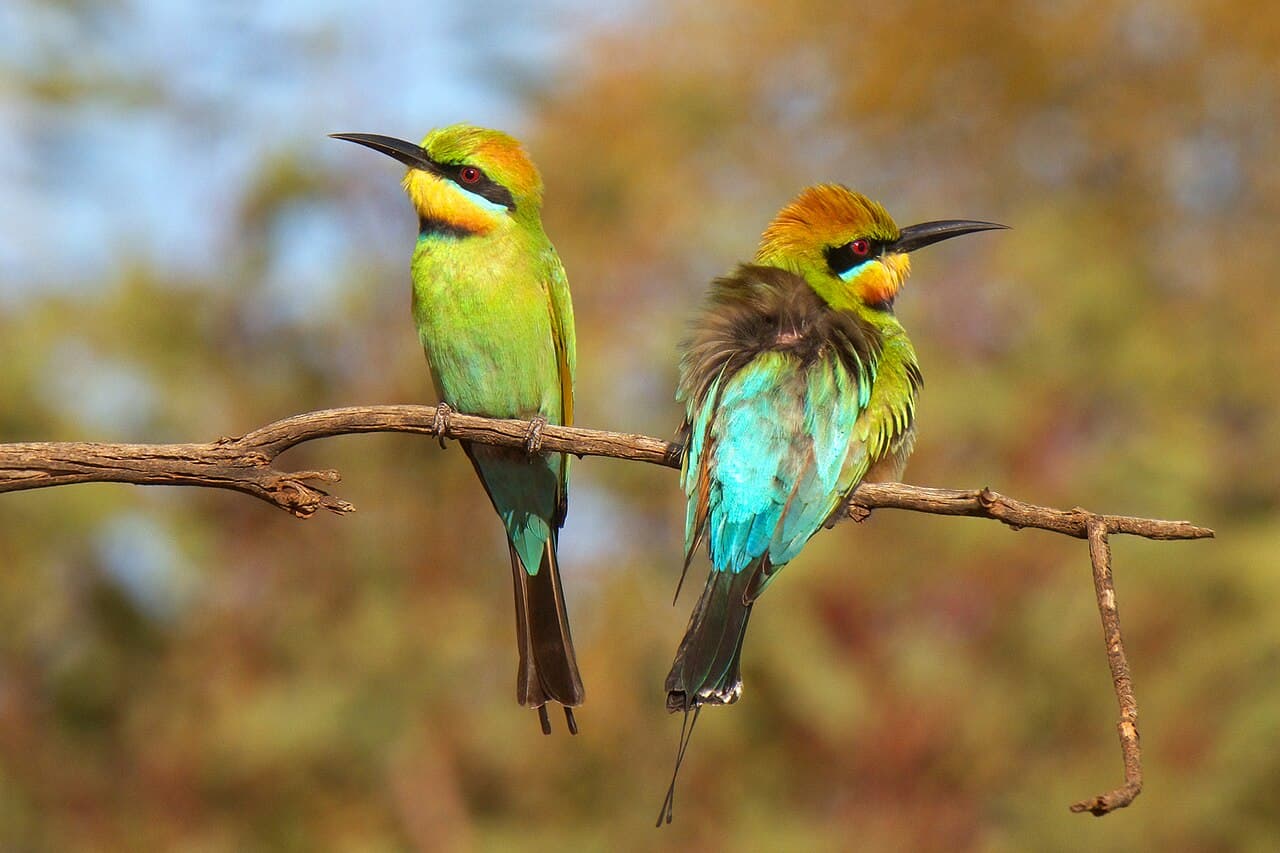
This colorful bird, Merops ornatus, is Australia's bee-eater. Its green body, golden head, dark eye stripe, and orange-yellow throat create a bright pattern on a slender frame.
Watch the perch
A bird sitting on an exposed branch may appear to be resting. Stay with it, and that branch can become the starting point for a sudden hunting flight.
The Australian Museum records a diet of flying insects, including bees, wasps, dragonflies, beetles, butterflies, and moths. Stinging prey is rubbed against a perch to remove the sting and venom glands.
The name describes a favorite food, rather than the whole menu.
The nest is below ground
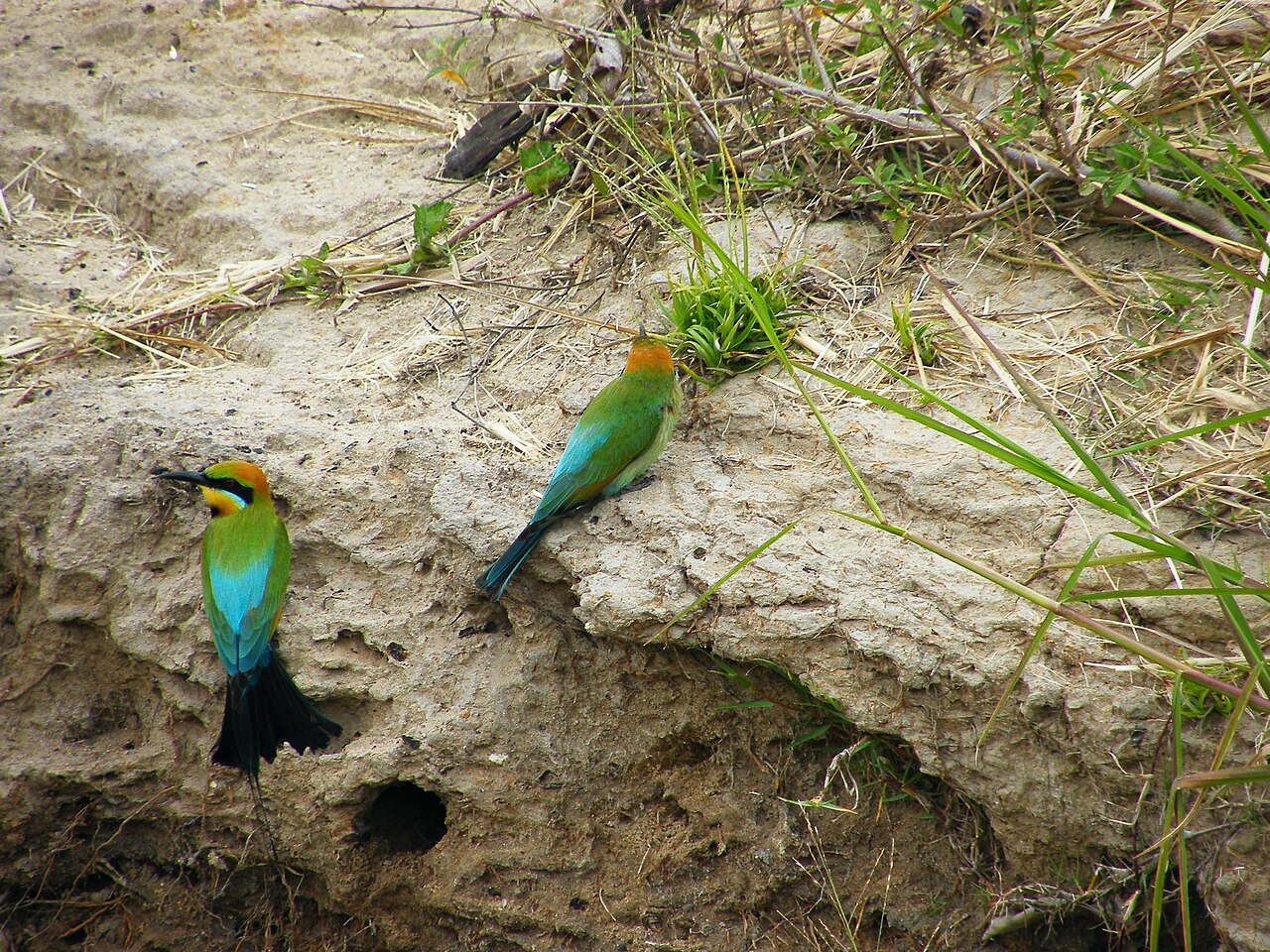
Rainbow bee-eaters excavate a tunnel into suitable sandy ground or a bank. At its end lies the nesting chamber, hidden from a casual view of the landscape.
Both parents incubate and feed the young, and helpers sometimes assist. The bright adults return to a nursery that can be almost invisible from above.
That is a good reason to keep away from occupied burrows. An apparently bare bank may contain a family.
A bird on the move
Southern populations head north for winter, while some northern populations remain throughout the year. Their movements connect seasonal food supplies across a broad landscape.
Bee-eater background from San Diego Zoo Wildlife Alliance places this hunting style within a wider family of colorful insect-catching birds.
A colorful neighbor needs quiet space
The Australian Museum identifies disturbance at active mines and quarries and introduced predators among risks to nesting birds. Nest sites need protection even when they occur in places people have altered.
Watch from a respectful distance and let the birds return freely. A rainbow bee-eater's beauty includes the chase, the perch, and the hidden tunnel that makes its next generation possible.
Photo credits
Featured image: Rainbow Bee-eaters at Round Hill Nature Reserve NSW Australia.jpg — PotMart186, CC BY-SA 4.0.

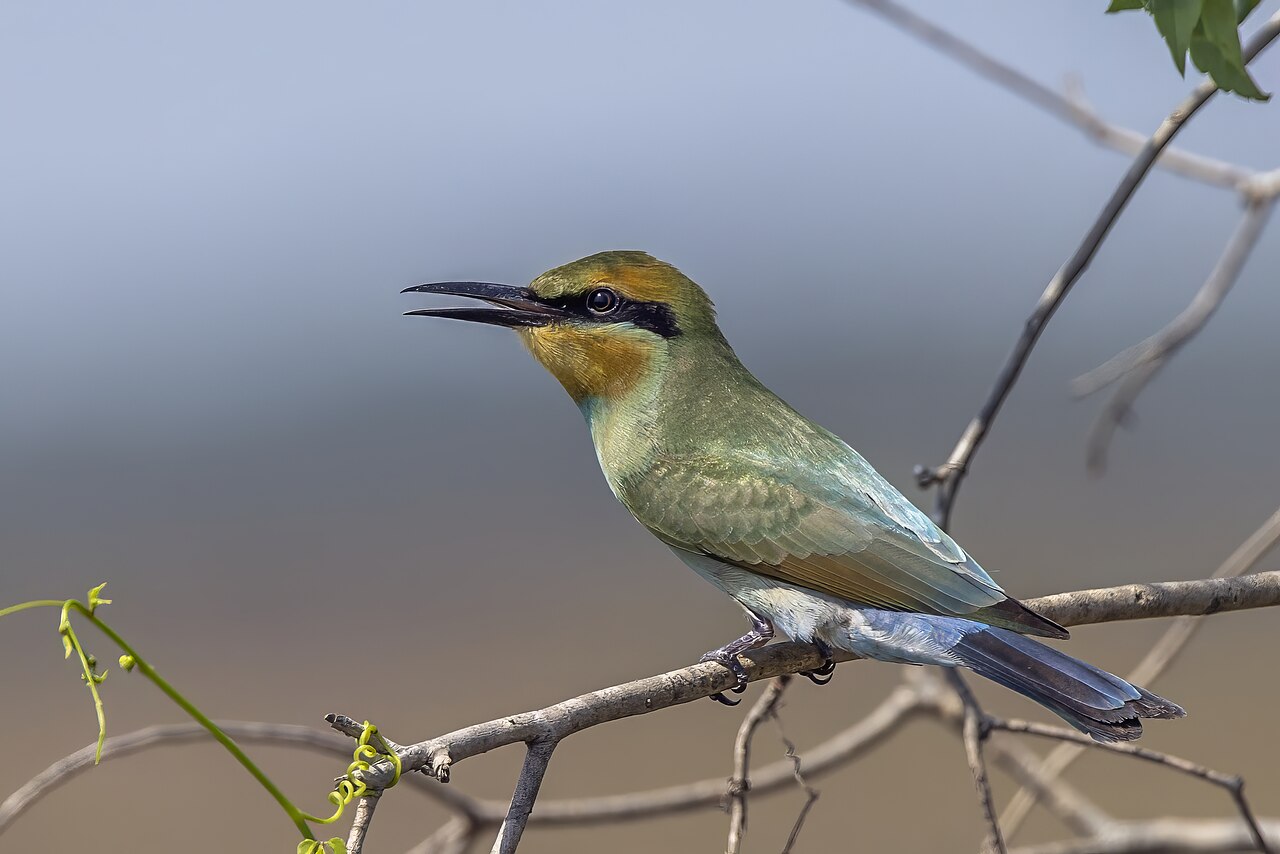
Body image 1: Rainbow bee-eater (Merops ornatus) Fogg Dam 2.jpg — Charles J. Sharp, CC BY-SA 4.0.

Body image 2: Rainbow bee-eater at nest burrow, 7 th Brigade Park, Chermside DSCF9835.jpg — John Robert McPherson, CC BY-SA 4.0.

Photographs resized to up to 1,280 pixels wide for web display.