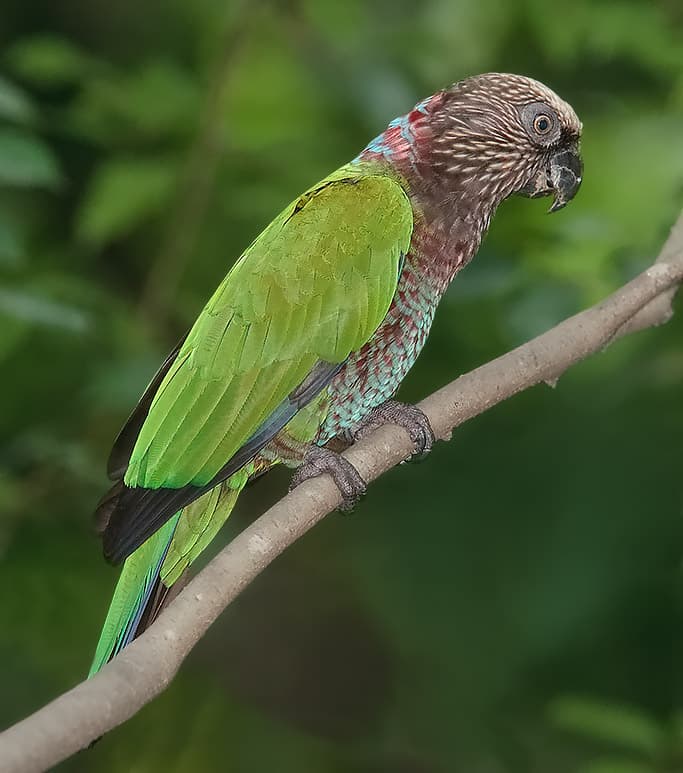
A red-fan parrot can change its outline in an instant. Long feathers behind its head rise into a broad fan, making the bird look much larger than it did a moment before.
Also called the hawk-headed parrot, Deroptyus accipitrinus lives in northern South America's tropical forests. Green wings may help it merge into the canopy, but its neck display is hard to overlook.
A fan made of neck feathers
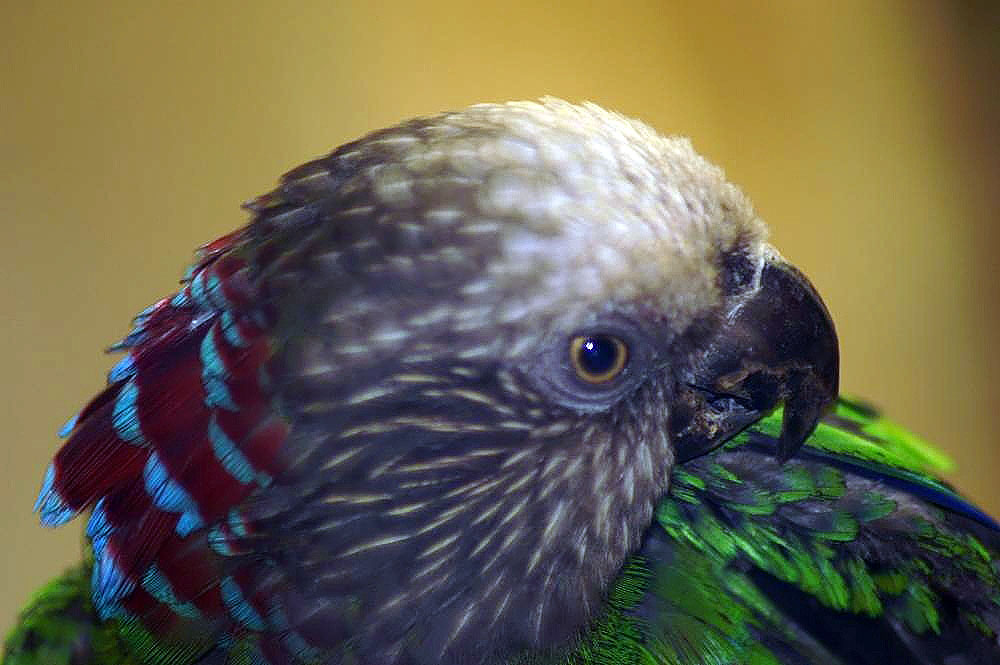
The raised feathers are red with blue edges. Their position behind the head gives the impression of a wide, striped collar.
Sacramento Zoo describes the fan as a response to threat or alarm. Both sexes can raise it. The bird may also sway and give a high-pitched sound.
A dramatic wildlife image can freeze that moment, but it is one part of the animal's behavior. The fan is not permanently open.
Meals in a leafy world
These parrots feed on fruit, seeds, nuts, and other plant material. They move through a forest where food is spread among different trees.
The Hong Kong Zoological and Botanical Gardens account highlights small understory fruits and hard palm fruits. It also describes their high-pitched whistles and squeals.
That soundtrack matters. A bird can be hidden among leaves while its calls make the forest around it feel very much alive.
A family home inside wood
Red-fan parrots use cavities for nesting. Sacramento Zoo describes the female incubating while the male brings food, with both parents sharing the care of chicks after hatching.
A hollow trunk is therefore much more than dead wood. It can provide a protected place where vulnerable young develop before entering the busy canopy.
More than an unusual portrait
Habitat loss and capture for trade are concerns identified by the zoo. Conserving forest protects food sources and nesting places together.
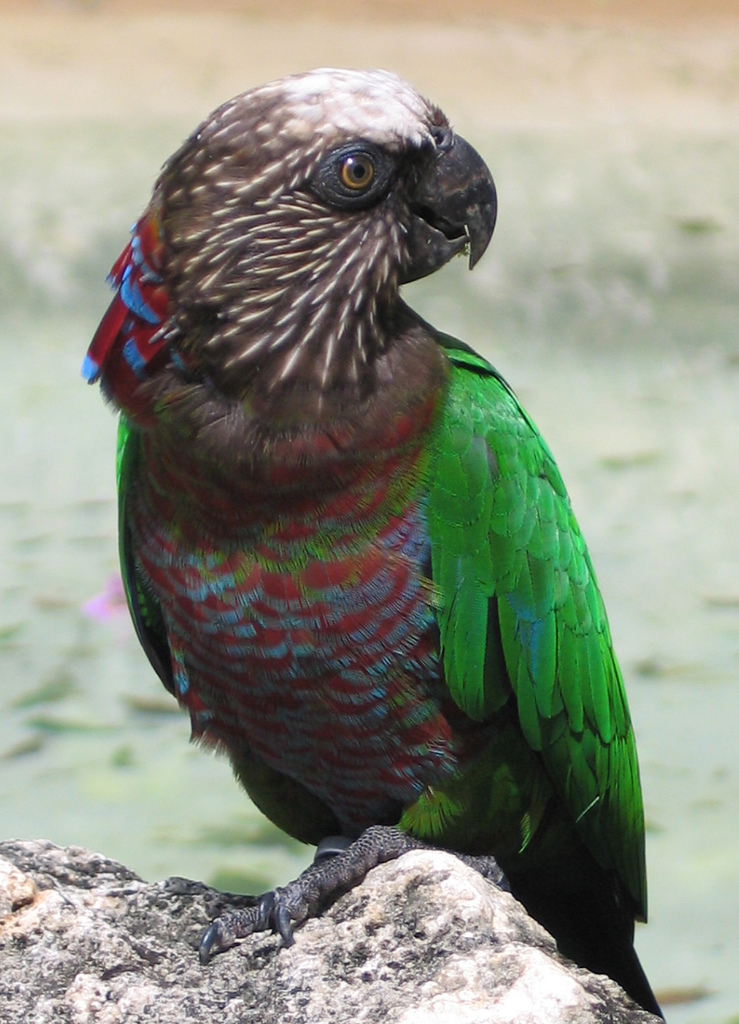
The common name “hawk-headed” refers to appearance; this is still a parrot, with a parrot's forest life and feeding habits.
Its most surprising trick is a simple movement of feathers. Understanding the bird behind that display makes the sight even more memorable.
Photo credits
Featured image: Deroptyus accipitrinus-20090405.jpg — Doug Janson, CC BY-SA 3.0.

Body image 1: Deroptyus accipitrinus 10zz.jpg — Photo by David J. Stang, CC BY-SA 4.0.

Body image 2: Deroptyus accipitrinus or Red-fan Parrot on ground.jpg — Bobby, CC BY 2.0.

Photographs resized to up to 1,280 pixels wide for web display.