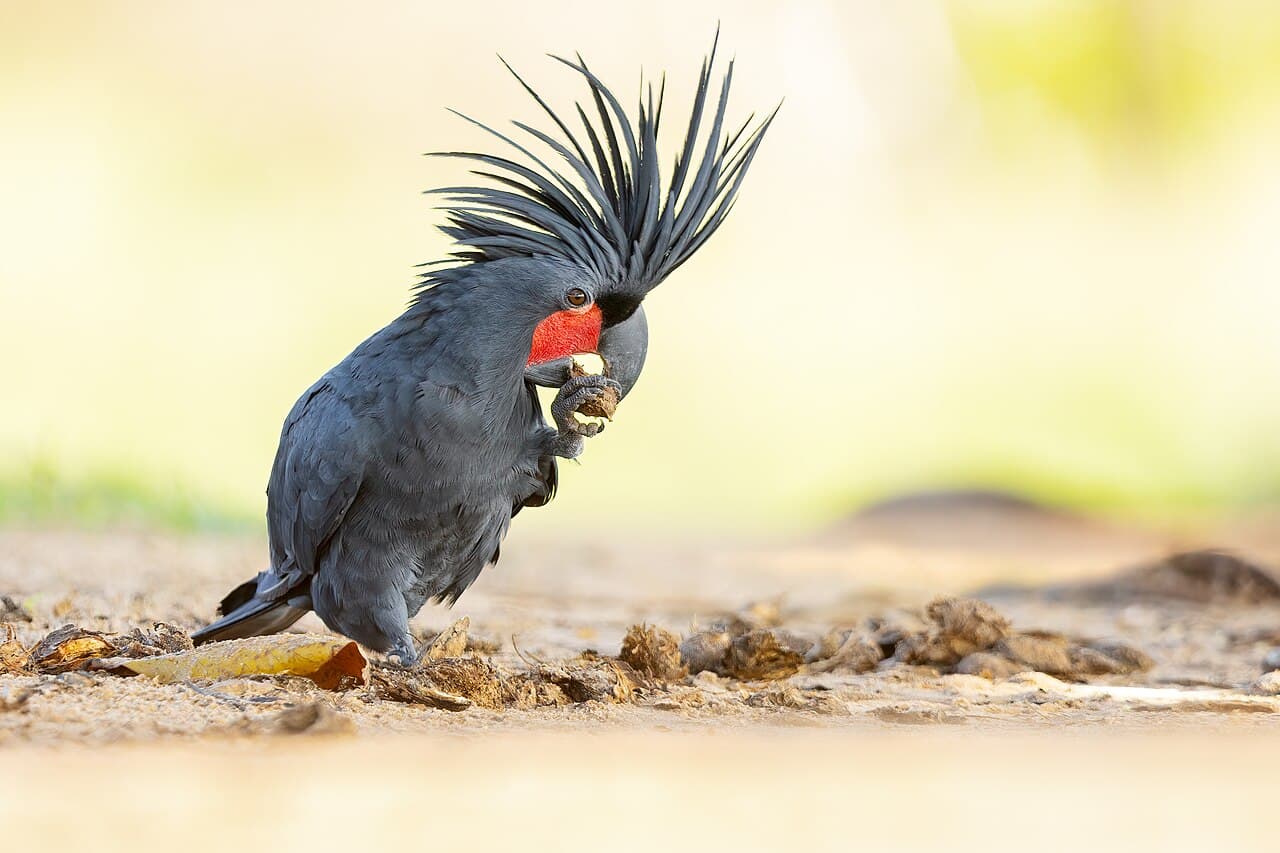
A male palm cockatoo can make a stick, hold it in one foot, and beat a rhythm on a hollow tree. This is a bird using a tool to create a display, with an individual style of its own.
The palm cockatoo, Probosciger aterrimus, is a large dark parrot from New Guinea, nearby islands, and Australia's Cape York region. Its red cheek patches and tall crest make it striking even before the drumming begins.
A handmade instrument
Australian National University research describes males shaping sticks or using seed pods to drum at nest hollows.
Researchers found individual preferences in tool type and design, as well as personalized rhythms. The performance is associated with courtship and territorial display.
It is tempting to focus only on the sound. The preparation is just as remarkable: a bird selects material and changes it into something it can use.
A face with vivid details
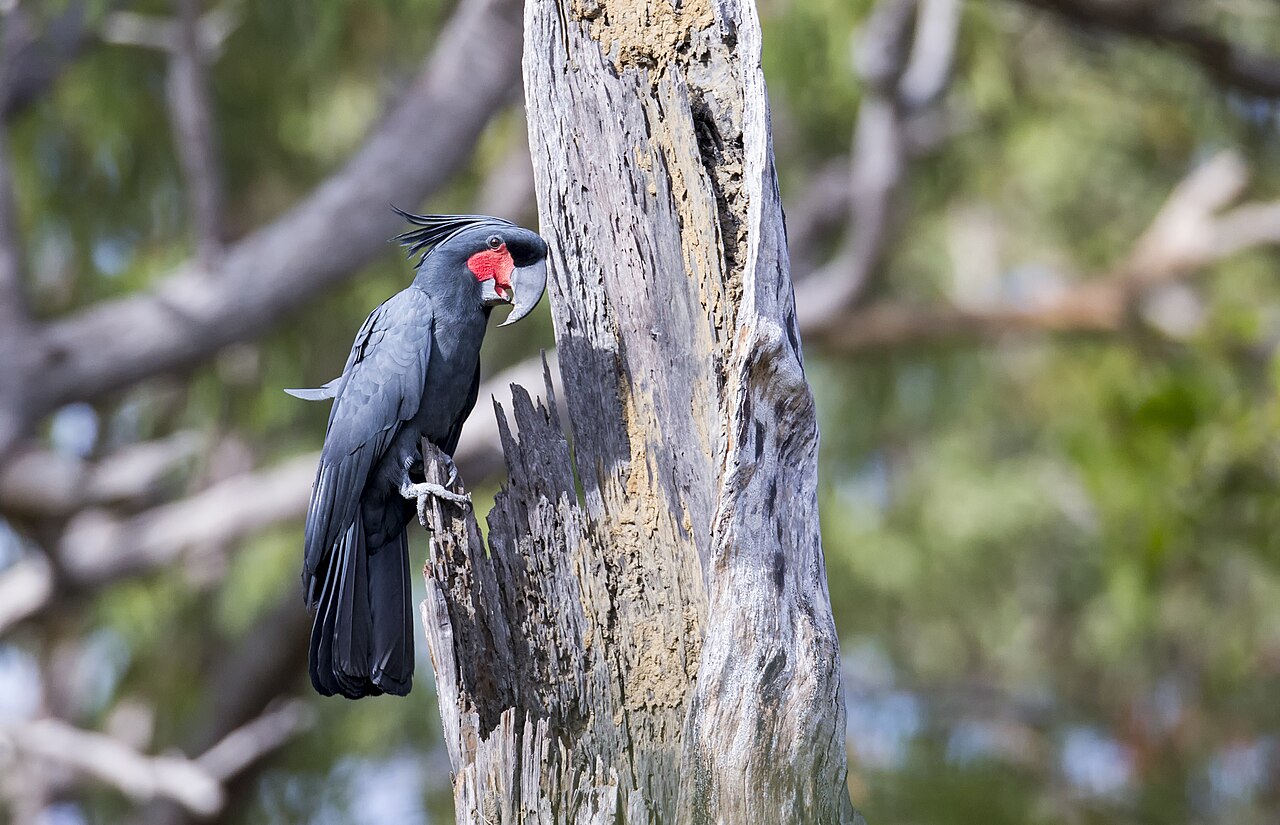
The dark feathers can look gray because of powder down. Bare crimson cheeks contrast with the large black bill, while narrow crest feathers can rise above the head.
The World Parrot Trust describes a diet including seeds, nuts, fruit, and leaf buds. These are substantial feeding tools as well as dramatic facial features.
A very important tree
Palm cockatoos nest in large hollows and build a platform of twigs inside. They lay a single egg in a clutch, making successful breeding especially valuable.
A nest tree can therefore be a shelter, a nursery, and a stage. Losing it removes several parts of a bird's life at once.
Protect the performers and their home
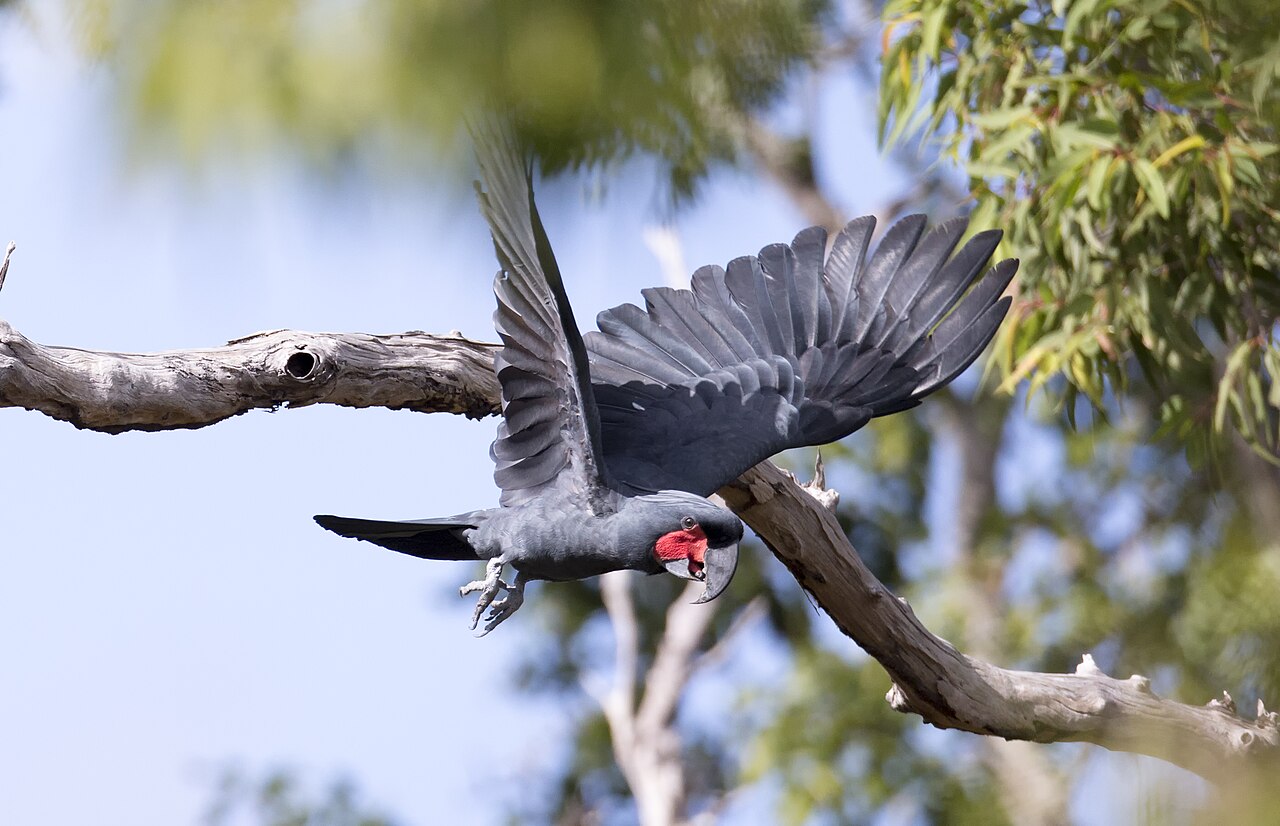
The World Parrot Trust lists the species as Near Threatened. It identifies habitat and nest-cavity loss and trapping among the pressures, with additional local concerns in Australia.
The answer is not just to admire cleverness. It is to protect the habitat that allows that behavior to continue.
Somewhere beyond a line of trees, a hollow trunk can become an instrument. Keeping those trees standing helps keep this extraordinary performance in the wild.
Photo credits
Featured image: Palm Cockatoo 0A2A7769.jpg — JJ Harrison, CC BY-SA 3.0.

Body image 1: Probosciger aterrimus, Cape York 1.jpg — Jim Bendon from Karratha, Australia, CC BY-SA 2.0.

Body image 2: Probosciger aterrimus, Cape York 2.jpg — Jim Bendon from Karratha, Australia, CC BY-SA 2.0.

Photographs resized to up to 1,280 pixels wide for web display.